
For centuries, one of antiquity’s most important cities slipped quietly out of human memory.
Founded by Alexander the Great during his conquests, Alexandria on the Tigris once stood at the centre of global trade networks linking Mesopotamia, the Persian Gulf, and India.
But between the waning of cuneiform writing and the emergence of Islam in the region, the city disappeared not only from the landscape but also from the historical record. Only in the 21st century has archaeology begun to recover its story.
After the Achaemenid Persian Empire was destroyed, Alexander founded the city in the late 4th century BC. Returning from campaigns as far east as the Indus Valley, he envisioned a maritime route linking Mesopotamia to the wider world.
However, Southern Mesopotamia was already under great change. Sedimentation from the Tigris and Euphrates rivers was slowly pushing the Persian Gulf coastline south. To keep the sea open, Alexander established a port city near the confluence of the Tigris and the Karun River—Charax Spasinou.
Charax was a thriving commercial centre, as an ancient Roman writer noted, but its exact whereabouts has long been disputed. The earliest modern clue came in the 1960s, when British researcher John Hansman identified huge ramparts on Royal Air Force aerial photographs.
The site’s location, now called Jebel Khayyaber, was unfortunate for further research, explained Stefan Hauser of the University of Konstanz. Apart from the fact that the heyday of this Alexandria fell during a period long neglected by historical and archaeological research, the site is only 15 km from the Iranian border. The area was a major battleground between Iran and Iraq during the First Gulf War in the 1980s. A military camp was established in the ruins.
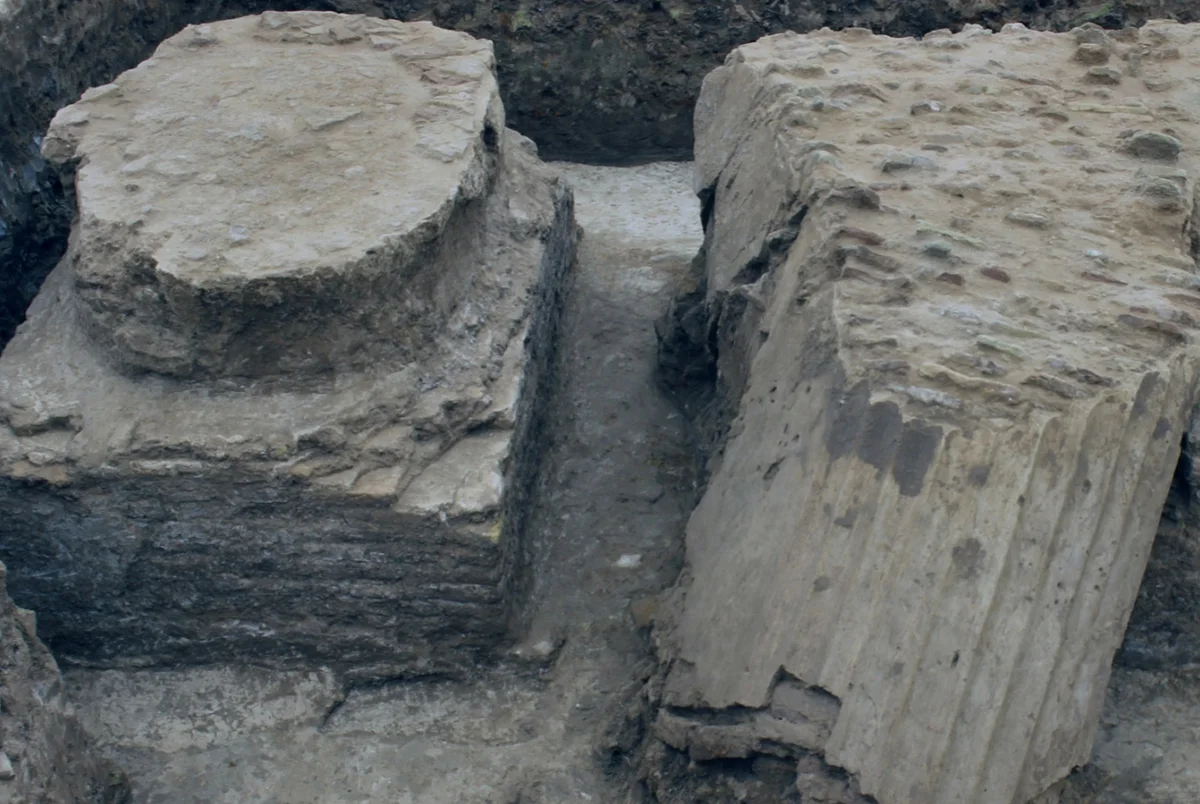
That changed in 2014, after international research teams returned to southern Iraq. During a visit to the site by local officials, researchers were alarmed by the size of the ruins: a city wall more than a kilometre long, soaring up to eight metres high.
Later studies showed that this flattened landscape masked the ancient Alexandria on the Tigris. In 2016, Hauser joined the project, bringing specialised expertise in the Hellenistic Near East. There were many initial works, limited by surface surveys and remote sensing due to security concerns.
Thousands of drone images and fieldwalking revealed pottery, bricks, and industrial debris buried across more than 500 square kilometres of terrain. Magnetometer-based geophysical surveys mapped a vast, carefully planned metropolis. The data yielded sprawling streets, massive city blocks, temples, workshops, canals, and even palace-like complexes. Some city blocks are among the biggest in antiquity.
Different grid orientations show different phases of construction and regions for housing, religion, industry, and agriculture. Satellite images also showed ancient irrigation systems stretching north of the city, providing ample access to the vast grain fields visible in them.
Alexandria on the Tigris was probably the hub of long-distance trade (c. 300 BC–300 AD). Goods from India, Afghanistan, and possibly China flowed through the port, creating vast markets in cities such as Seleucia and Ctesiphon farther north. But the city’s success depended on its access to the rivers.
“We now realise that we truly have the equivalent of Alexandria on the Nile, the famous city in Egypt. The situation is essentially the same: a city is founded where the open sea and the river systems, i.e., the further transport systems into the interior, meet. Alexandria on the Tigris must have perfectly fulfilled its function as one of the central hubs of ancient long-distance trade for over 550 years,” said Professor Hauser.
Alexandria lost its strategic position as the Tigris moved west and the Gulf shore retreated. By the 3rd century AD, it was far from either river or sea and largely abandoned.
Today, the rediscovery of Alexandria on the Tigris is transforming our understanding of ancient global trade and urban growth. More digging is planned to uncover other secrets about a city that once bridged worlds — and then vanished into the sands of history.
Sources : University of Konstanz