
A previously unknown fortification has been identified in Chełm County, eastern Poland, following a study using airborne laser scanning and other remote sensing techniques.
According to experts, the finding significantly contributes to understanding the area’s defensive history during the turbulent 17th and 18th centuries, which sits adjacent to the Bug River on the site of a historic manor and park complex.
While the structure was evident in the terrain, it had never been confirmed from archaeological and conservation documents. Previous interpretations were mistaken, as they believed the remains were part of a horseshoe-shaped structure.
An analysis using LiDAR has now confirmed that the features are part of a bastion fortification, or fortalicium, characteristic of early modern military infrastructure.
There is only a portion of the northwestern section that survives, but traces of the earthworks indicate that its original configuration is probably rectangular with bastion projections at four corners.
Such arrangements are characteristic of permanent or semi-permanent bastion systems and correspond with themes of the French school of fortification engineering, most notably those associated with Sébastien Le Prestre de Vauban.
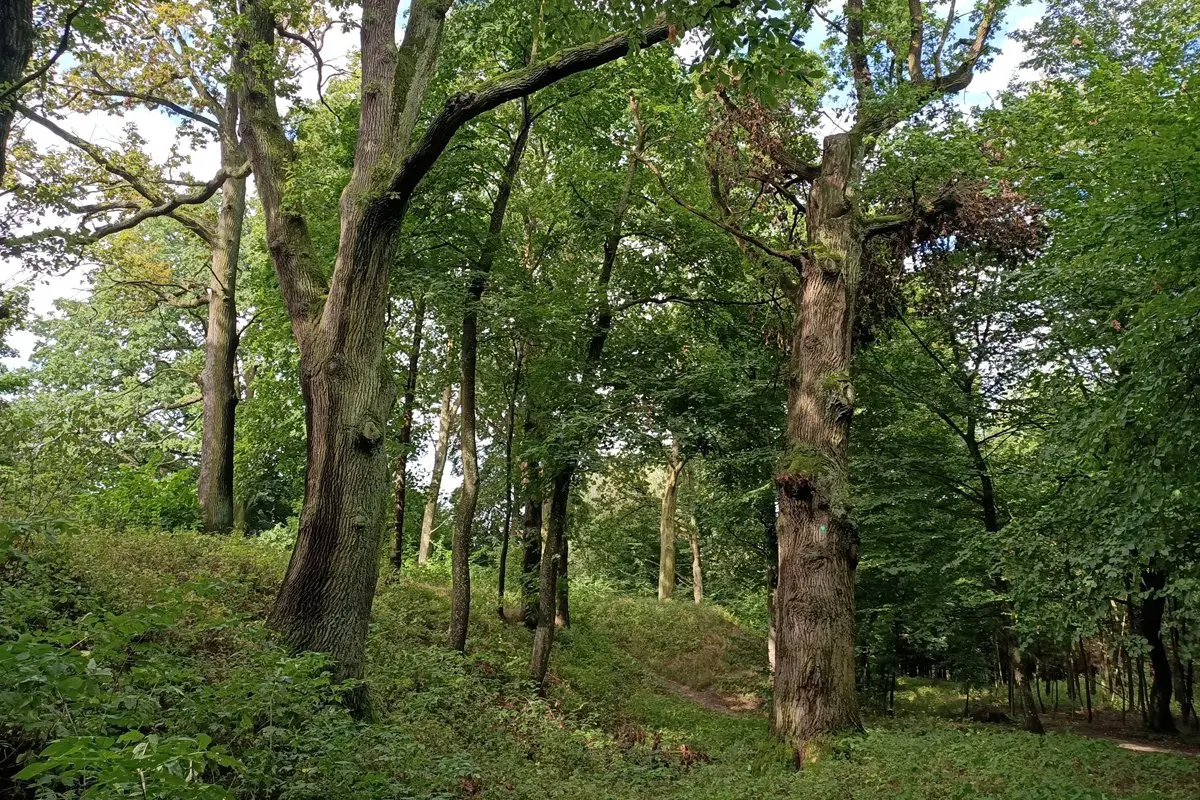
Today, the surviving earthwork rises to about 2 metres and covers 0.4 hectares. The researchers speculate that the initial complex may have covered roughly 1.5 hectares with a perimeter of 120 by 140 metres.
The archaeological findings are backed by historical cartography. The fortification is shown on the Austrian military map “West Galizien” from 1801–1804 as a ruin. This indicates that its protective role was over by the end of the 18th century.
Later 19th-century maps show progressive degradation, believed to have resulted from both agriculture and landscape reshaping. The southern portion of the fortification was eventually completely obliterated, perhaps during the construction of the Church of the Holy Apostles Peter and Paul in the 19th century.
Archival references further support the identification. A 1694 record describes a “trench” near the Bug River, and an 18th-century note mentions the arable land referred to locally as “the shaft”, probably retaining the testimony of the lost earthworks.
Researchers only tentatively date the fortification to the 17th or 18th century, a time of Cossack incursions, the Swedish Deluge, and Polish-Russian conflicts.
“The finding provides a new perspective on the regional defensive actions taken up along the Bug River frontier, at one of the most tumultuous episodes in the Polish-Lithuanian Commonwealth’s history,” said archaeologists from the Lublin Voivodeship Conservator of Monuments.