
In this blog post, author Miki Jahn – an Associate Lecturer in Biology and Ecology at the University of Sydney – discusses the article “Increased energetic cost of movement reduces reproductive output in zebrafish at different temperatures and water flow rates“, which was recently published in Functional Ecology. Miki shares the implications of warming on reproductive investment in zebrafish, unexpected outcomes, and the importance of a strong support network.
About the paper
Locomotion underpins essential behaviours such as foraging, social interactions, and avoiding predators, but it is also energetically costly. How animals balance energy spent on movement with other fitness- traits, particularly reproduction, becomes especially important in environments that are changing through human-driven climate change. In ectotherms such as fish, the energetic cost of movement is strongly influenced by environmental conditions, including temperature and water flow. As freshwater systems experience warming and altered flow regimes, understanding how these conditions shape behaviour and reproductive outcomes is increasingly important.
In this study, we asked whether higher energetic costs of movement are associated with changes in voluntary movement, and whether variation in these costs correspond with reduced reproductive investment and output under different temperature and water flow conditions. We found that female zebrafish exposed to warmer temperatures and flowing water showed diminished reproductive investment and output. Interestingly, movement behaviour did not follow the simple expectation that fish would reduce activity when conditions were more energetically demanding. Instead, fish changed how they moved, including changes in swimming speed, yet reproductive investment and output still declined.
Together, these results suggest that as freshwater systems warm and flow regimes shift, reproductive investment and output may be reduced in aquatic ectotherms.
About the research
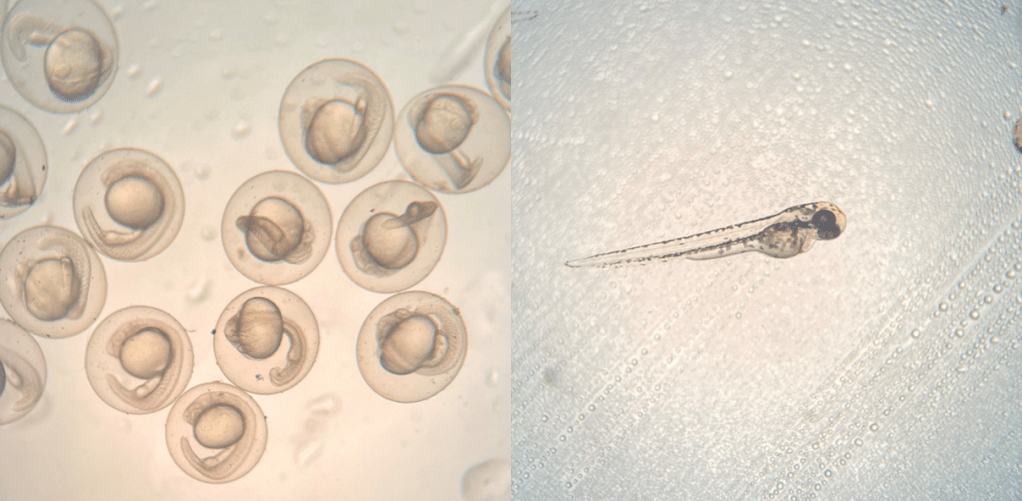
To address our questions, we combined measurements of movement energetics, group behaviour, and reproduction in female zebrafish under controlled temperature and flow conditions. We quantified the energetic cost of swimming using swim tunnel metabolic measurements across a range of swimming speeds, then integrated these measurements into a single value for each fish so we could compare individuals across treatments. We assessed behaviour in a social context by testing females in their familiar groups in a purpose-built observation arena. From video recordings we quantified voluntary swimming speed and group cohesion using nearest neighbour distance.
We focused on females because female reproductive traits provide direct measures of fecundity and maternal investment. Females were bred with males from the same treatment conditions to quantify reproductive output (clutch size, offspring survival, and offspring length after 14 days). We also measured gonadosomatic index and protein concentration of unfertilised eggs to capture maternal reproductive investment directly.
One of the more unexpected outcomes of this study was how movement behaviour responded under energetically demanding conditions. Rather than reducing activity, fish changed how they moved, including changes in swimming speed, while reproductive investment and output still declined. This reinforced the value of measuring reproductive responses alongside behaviour, and it raises questions about how often behavioural changes can mask energetic constraints. More broadly, it highlights the need for future work linking movement energetics, behaviour, and longer-term consequences for populations.
About the author
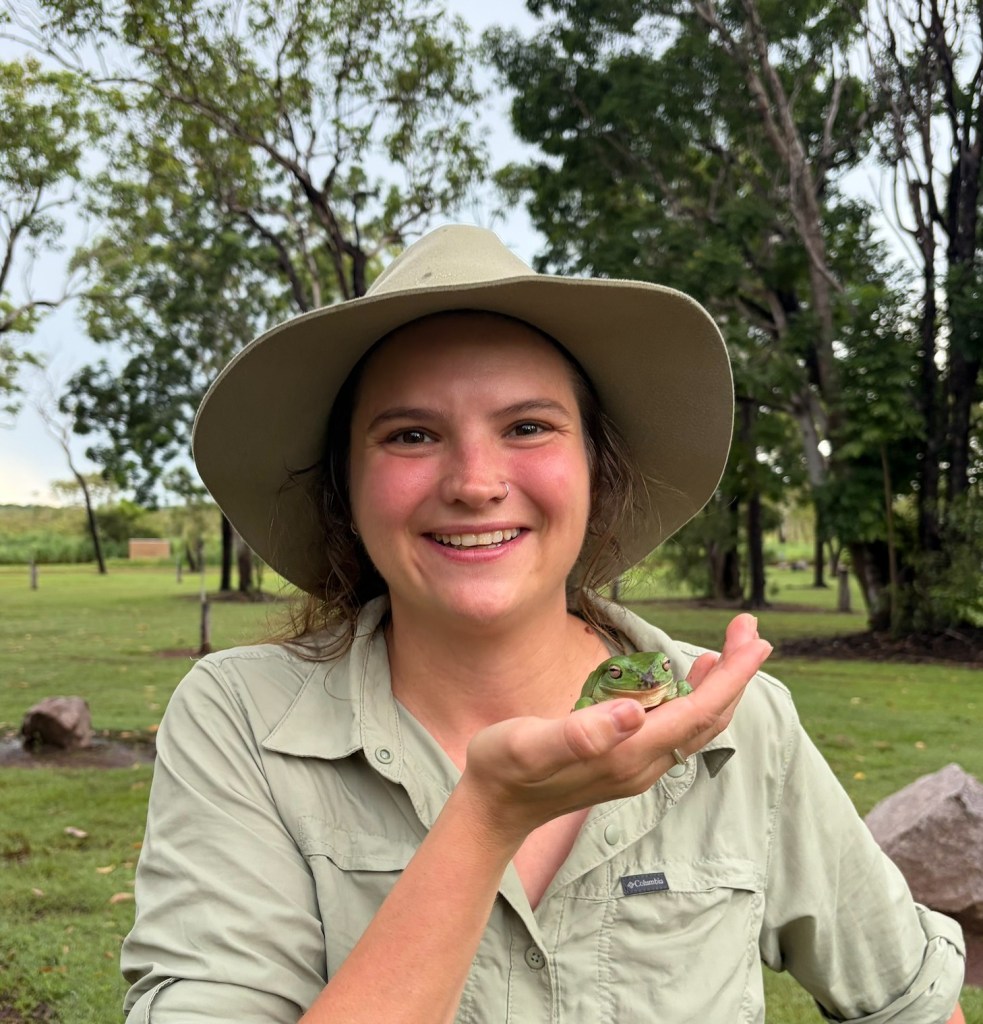
I have been interested in science since I was very young and decided I wanted to be a scientist of some kind from about 6 years old. My particular interest in ecophysiology began during my undergraduate degree when I became fascinated by phenotypic plasticity, and how organisms can respond rapidly to environmental change. That curiosity carried into my PhD, where I researched how movement energetics connect with ecological pressures. I am currently an Associate Lecturer in Biology and Ecology at the University of Sydney. I feel particularly passionate about the education of young scientists and enjoy fostering a supportive teaching and research environment. In my spare time I enjoy gardening and watching sport with my family and friends. I have been fortunate to feel genuinely well supported by the people around me, which has made the tougher parts of early career academia much easier to navigate.
