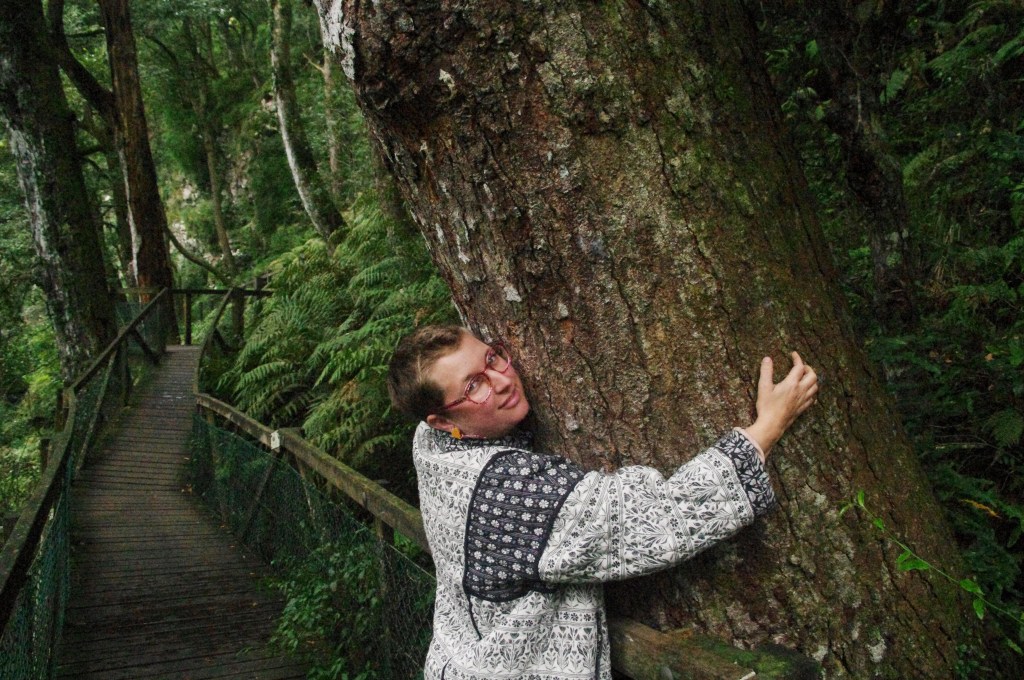
In this ‘Behind the Paper’ blog post, author Hannah Carle – a Postdoctoral Research Fellow at the Hawkesbury Institute for the Environment, Western Sydney University – discusses the article “Trait variation driven by tree size more than environment and shows limited translation to species vital rates“, which was published in Functional Ecology in August 2026. Hannah discusses the challenges of linking traits with species survival and growth outcomes, conducting fieldwork on the eve of the COVID pandemic, and the awe-inspiring nature of forests.
About the research
Ecology and evolutionary sciences tell us that the unique characteristics of each species determines how well individuals of that species can grow or survive in different environments. In other words, the characteristics, or ‘traits’, of species and individual plants are expected to decide who lives, dies, or grows fastest.
This thinking is important in practice because it enables us to make predictions and management decisions. For example, there is growing need to predict how species will respond to climate change, or where in a landscape we should replant certain species to support the success of restoration projects. As such, there has been widespread adoption of the use of traits in ecological sciences and in studies of tree performance the world over.
But this picture is more complex than it is often given credit for, as our study and a growing body of evidence shows.
Contrary to our fundamental expectations, ecological models that try to predict tree survival and growth using species traits generally do a poor job, and scientists are unsure why.
Our study tried to address this mismatch by investigating and accounting for things that are known to drive changes in the expression of traits, and to incorporate those additional factors in our ecological models of tree survival and growth. Our expectation was that, in doing so, we could ‘clean up’ the signal showing how traits influence plant outcomes.
Our study was based in a tree seedling translocation experiment in secondary tropical rainforest in Malaysian Borneo, which was selectively logged in the past and is now a model site for tropical forest restoration. This brings to the fore questions about what to plant where, and whether traits could help us make those decisions. The restoration of degraded tropical forests will be an important ingredient in tackling the worst effects of climate change because tropical forests contribute disproportionately to regional and global water and carbon cycles.
Our experiment was established by Dr Michael O’Brien (Estación Experimental de Zonas Áridas, Consejo Superior de Investigaciones Científicas, Spain). In it, seedlings of six tree species with differing traits and drought ecologies were planted in a structured design across the landscape. The experiment captured a range of light, soil and topographic settings, which are expected to drive survival and growth of the trees to a greater or lesser extent depending on each species traits. The growth and survival of individual seedlings was tracked for nine years.
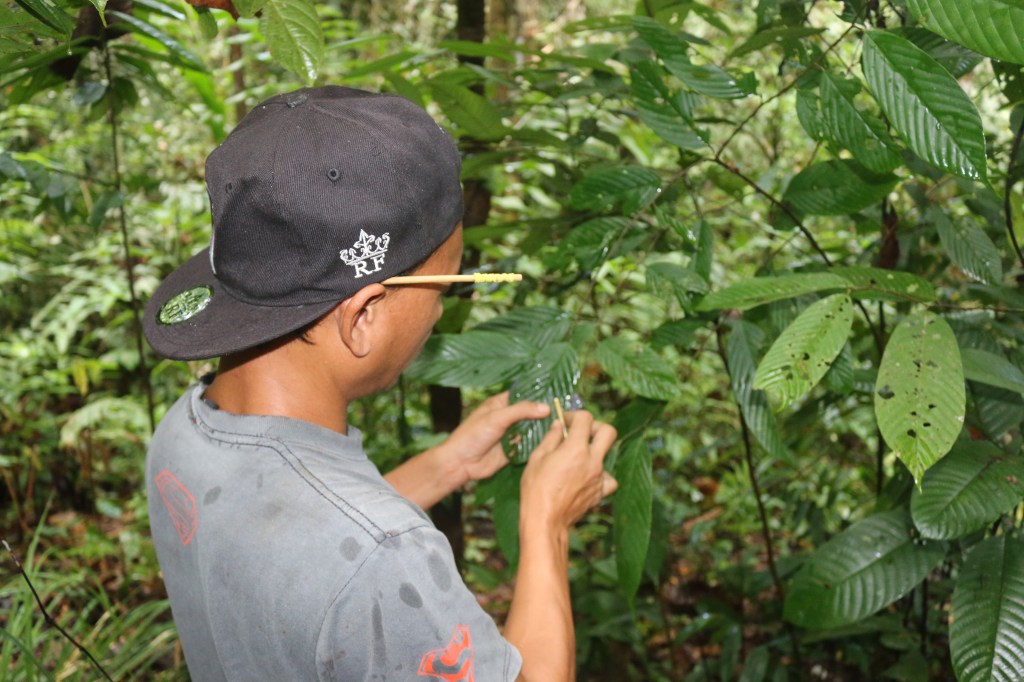
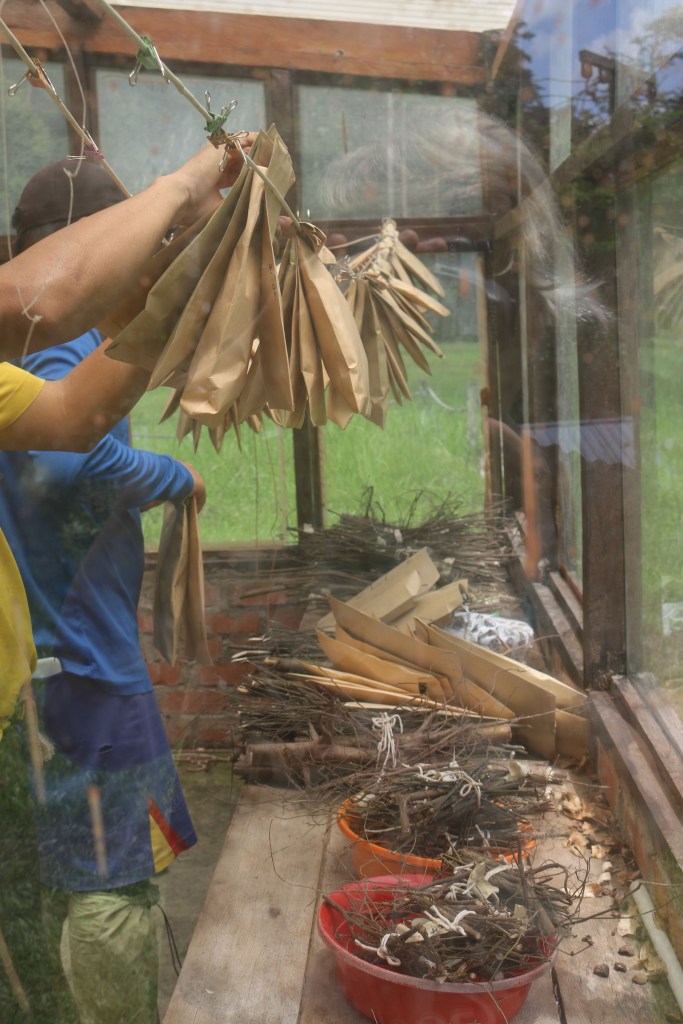
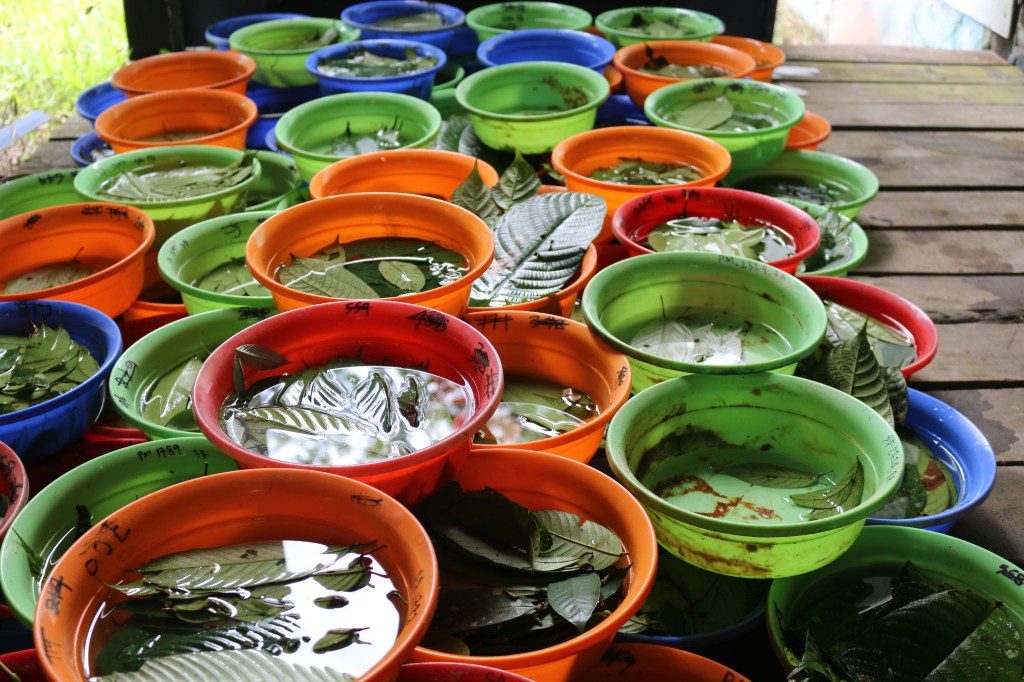
Then, in January 2020 on the as-yet unrealised eve of the COVID pandemic, I mounted a campaign to measure and sample the traits of some 700 trees, involving local research assistants and Malaysian tertiary student volunteers. We got our main collections finished just as borders were closing, and I took one of the last planes out of Borneo in March 2020, where I then quarantined at home for two weeks. The research station was closed shortly thereafter (elephants ransacked the station while unattended, raiding the fruit trees and water tanks with fervour and creating our mountain of work for the local team on return post-COVID).
Findings
To our surprise, traits varied a lot in relation to the environment, but more so with differences in tree size. Most importantly, these variations in trait expression did not widely predict species survival or growth. In fact, our approach to incorporating more context (by looking at the environment and size of individual trees) did little to ‘clean up’ the signal of traits. None of the traits we measured were associated with growth, and only two traits—wood density and specific leaf area—were associated with survival, consistent with prior studies.
There are many ideas about why the field continues to be challenged in explicitly linking traits with species survival and growth outcomes. Intelligent experimental designs will be needed to draw out that thinking. In the meantime, our study suggests caution that traits might exert controls on populations on evolutionary timescales that are difficult to resolve at the ecological scales captured by most studies.
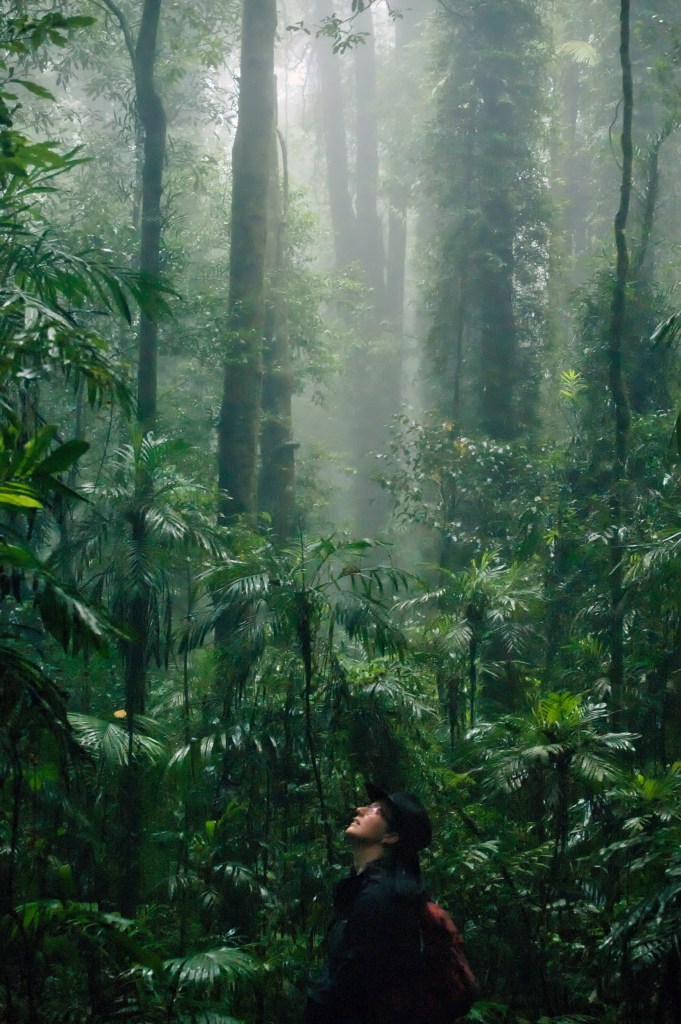
About the author

I got involved in ecology by following my love of nature and deep connections to forest ecosystems. Forests vibrate with life and bring me peace, endless entertainment, and hope.
My time as a PhD student in the Bornean rainforest was unmatched. At the Malua Forest Research Station, I lived in mostly open-air accommodations, fell asleep in puddles of sweat to the pattering sound of gecko’s feet, ran and hid from swarming wasps, encountered wild Orangutans fishing in the river, and felt my spirits soar with the towering canopies of dipterocarp trees. My research has also taken me to remote tropical forests in Far North Australia and, more recently, to drier eucalyptus forests on sandstone country around Sydney.
I am now a Postdoctoral Research Fellow at the Hawkesbury Institute for the Environment, Western Sydney University. I run climate change experiments where I grow diverse plants in future climate conditions to identify which groups of plants are more sensitive or resilient to warming, drought and heatwaves, and why. I also lead the Queensland Permanent Rainforest Plots Network (www.qprp-aus.com), which is an alliance of tropical rainforest research sites with six decades of repeat tree measurements.