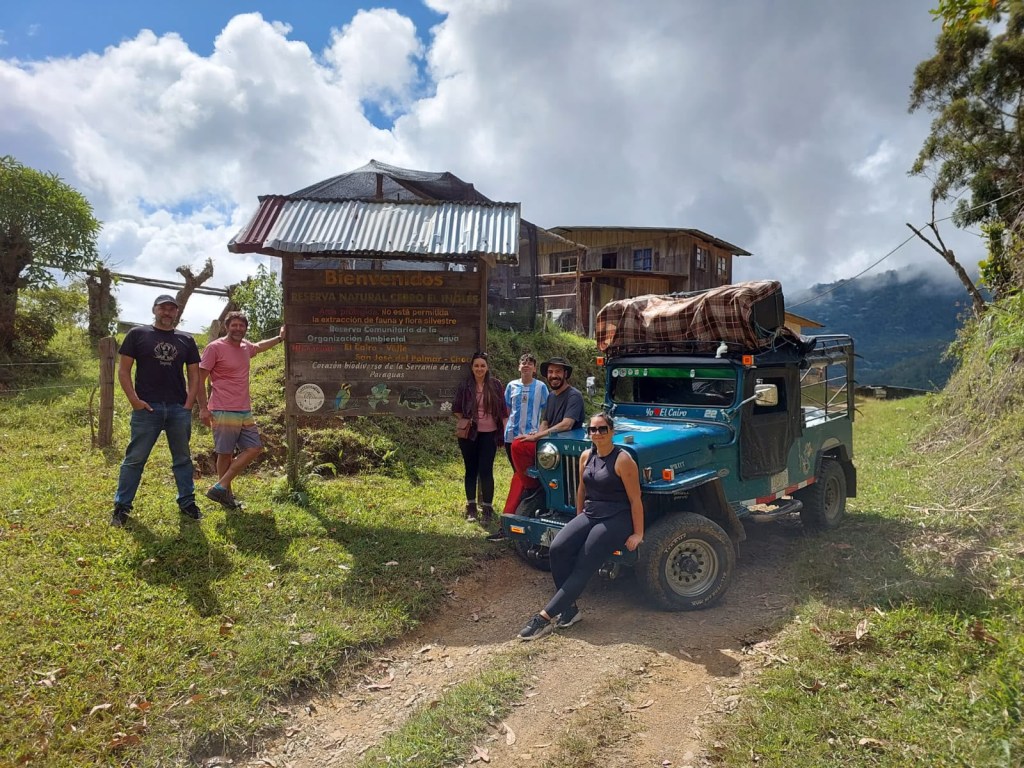
In this ‘Behind the Paper’ blog post, author Vinícius Brito – a professor at the Federal University of Uberlândia, Brazil – disucusses the article “Pollen landscape saturation on pollinator bodies reduces pollen deposition by subsequently visited bat-pollinated flowers“, which was recently published in Functional Ecology. Vinícius discusses how competition among pollen donors changes over a flower visits, mastering the art of quantum-dot labelling, and pondering luck.
A Portuguese translation of this blog post in available here.
About the paper
In animals, male and female sexual roles are often clearly divided among individuals. In many plants, however, these roles are less distinct because flowers can perform both male and female functions. We are familiar with the idea that animals compete for access to mates, but whether plants compete through their male function for access to female reproductive resources, and whether this generates sexual selection, is less straightforward. Because plant reproduction involves several stages, competition among pollen donors may occur at multiple points along the pollen journey.
One potential arena for this competition is the pollinator’s body. Pollen grains must first attach to an animal and remain there until they reach a compatible stigma. Grains that secure a favourable position on the pollinator may therefore have a greater chance of being delivered. From this perspective, a pollinator’s body can be viewed as a competitive landscape occupied by pollen from different donor flowers.
An important unresolved question was whether pollen from flowers visited early or late in a foraging sequence has the advantage. Previous studies suggested that later donors could outperform earlier ones. However, these experiments generally used short sequences of flower visits, leaving us unsure whether this advantage would persist once a pollinator was carrying a large amount of pollen.
Using nectar-feeding bats, whose fur can carry thousands of pollen grains, we showed that this pollen landscape has a limited capacity. Once the bats’ fur became saturated, flowers visited later deposited only half as much pollen because little space remained available. Thus, arriving later does not necessarily provide an advantage: when the pollen landscape is crowded, earlier donors may instead occupy the most valuable space.
These findings help us understand how competition among pollen donors changes over a sequence of flower visits. More broadly, they suggest that the limited capacity of pollinator bodies may influence the evolution of floral traits and mechanisms that remove, reposition, or replace pollen already present on a pollinator. Behaviours such as grooming may also “reset” this landscape, creating new opportunities for subsequently visited flowers.
About the research
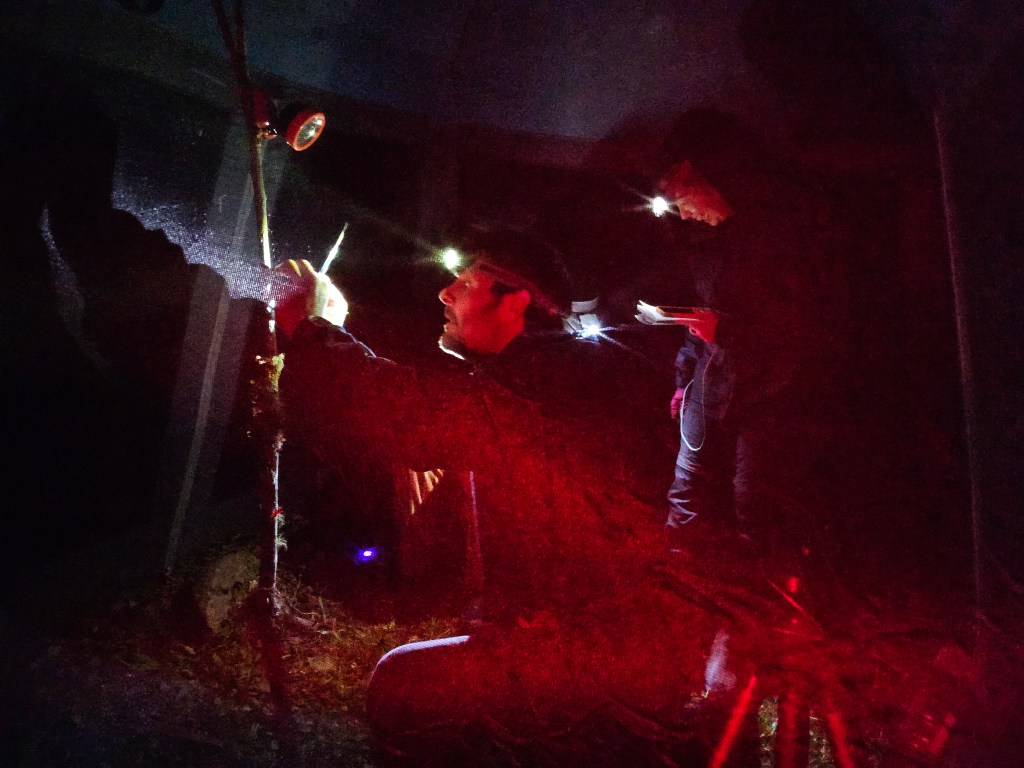
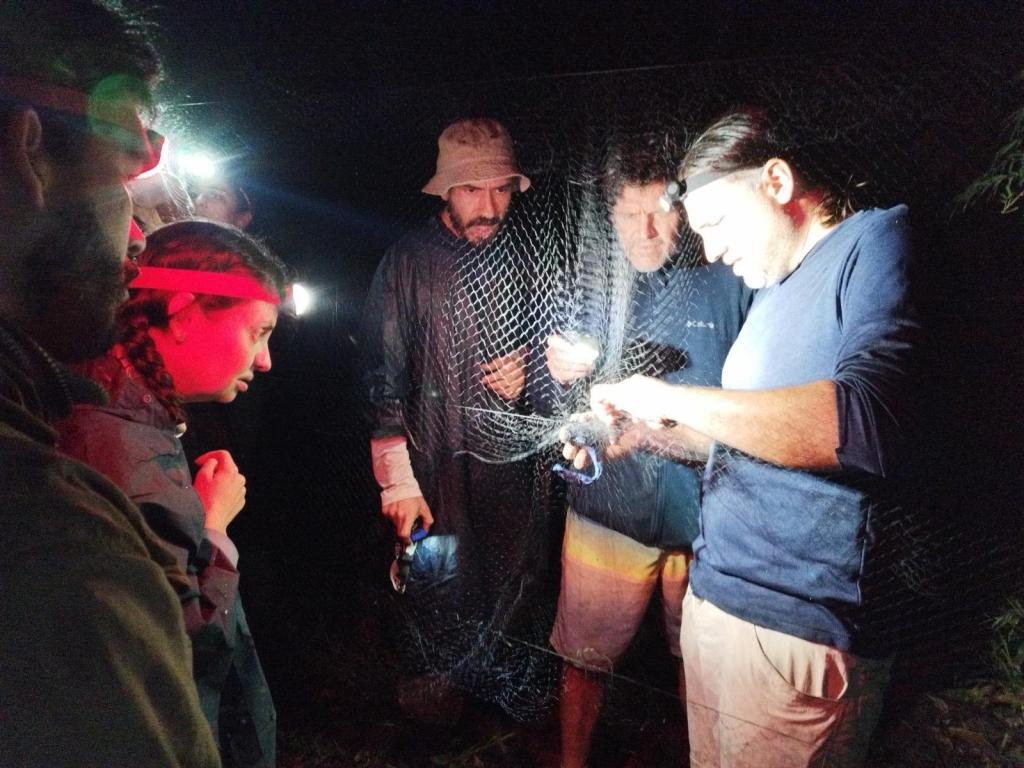
Carrying out this type of experiment under natural conditions is not easy. Bats do not always visit flowers frequently, and it is virtually impossible to follow the complete sequence of flowers visited by a free-flying animal. We therefore captured bats using mist nets and brought them into flight tents, where we could control and follow the sequence of flowers they visited. One of my co-authors, Nathan Muchhala, has long used this experimental approach to investigate bat pollination.
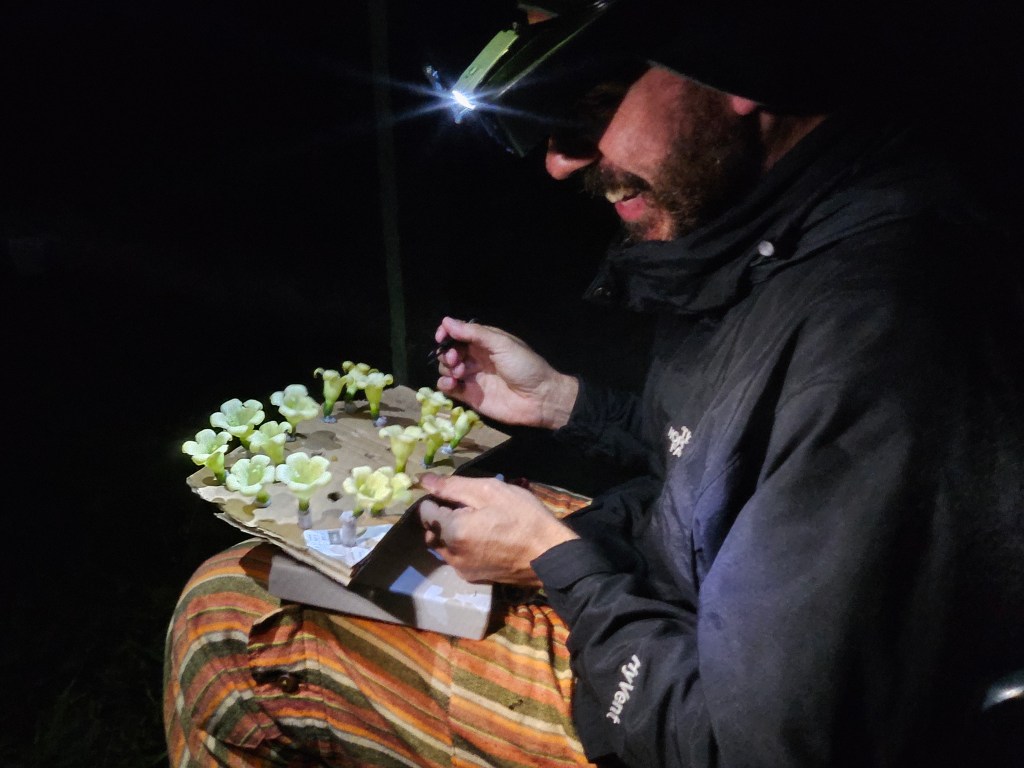
Another major challenge when studying the male function of flowers is tracking the extremely small pollen grains produced by different donor flowers. To overcome this problem, we used a recently developed technique mastered by another of my co-authors, Bruce Anderson, to label pollen grains with quantum dots, or Q-dots. By using different Q-dot colours, we could distinguish pollen originating from different flowers without altering the grains’ mechanical or transport properties. One difficulty we encountered was counting the labelled grains in the field, where we had no access to a fluorescence microscope. Fortunately, a simple ultraviolet torch allowed us to detect and count them.
The results were not entirely surprising, as the saturation of pollen landscapes had already been predicted by theoretical models. However, testing this prediction empirically was extremely challenging. I believe that combining bats flying under semi-natural conditions with Q-dot technology was crucial for obtaining reliable data and finally demonstrating this phenomenon. This kind of research is possible only with a diverse, skilled, and collaborative team, and I feel very fortunate to have worked with such wonderful colleagues.
This experimental system also opens several avenues for future research. We already know that pollen landscapes are dynamic, but we still lack empirical data showing just how dynamic they are. How does grooming reshape the pollen landscape? Does pollen accumulate in layers? Can grains deposited earlier return to the surface as newer grains are removed, as theoretical models predict? These are some of the questions we hope to explore next.
About the author
I am a botanist by training and currently work as a professor at the Federal University of Uberlândia, Brazil, where I teach botany to undergraduate students. Many years ago, I became fascinated by a coastal interaction involving a bromeliad, a hummingbird, and, believe it or not, a crab. Since then, I have primarily studied plant reproduction, always considering how plants interact with their pollinators, mostly bees, within ecological and evolutionary contexts.
Vertebrate pollinators such as bats and hummingbirds are relatively new research subjects for me. I became interested in them through my work on pollen landscape dynamics, which is currently my main ecological obsession. Interestingly, my first approach to pollen landscapes was theoretical rather than empirical. Now, however, I am very excited to test those ideas using real organisms.
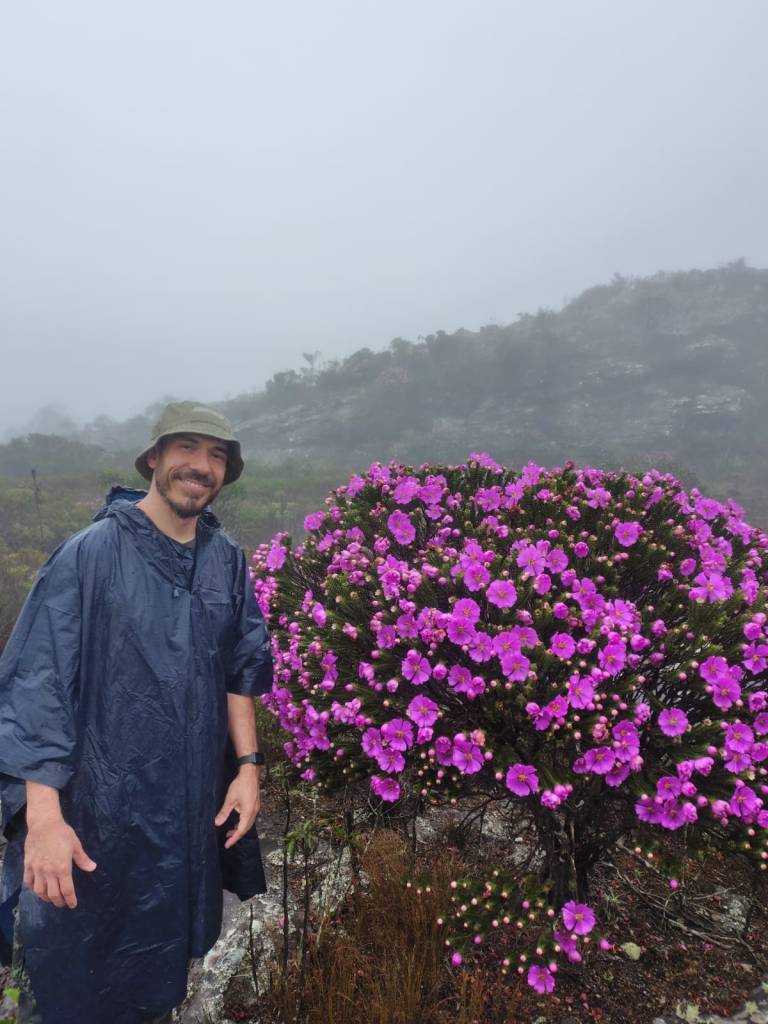
Outside research, I enjoy a quiet countryside lifestyle with my dogs and cats. I also love swimming and reading beyond science, although I am currently struggling to find enough time for the latter.
As a scientist from the Global South, I have become increasingly aware that conducting science involves barriers that are often less severe in the Global North, including limited funding and language inequalities. Nevertheless, scientists from the Global South are remarkably creative and resourceful in finding ways to overcome these challenges. Artificial intelligence may also become a useful tool for reducing some of these barriers, although it cannot resolve the deeper inequalities affecting global science.
Many years ago, I heard a rather unusual piece of advice for young ecologists from a prominent member of an ecological society: “Be lucky!” At the time, I did not fully understand what he meant, but those words stayed with me. Today, I often repeat the same advice to myself and others, and I do not mean it naïvely. I believe that luck tends to favour those who are prepared. We can work throughout our careers to be ready when opportunities arise, but we must also recognise that some aspects of success remain beyond our control. So, prepare yourself as well as you can, and try to be lucky!