
Archaeologists investigating the Duvensee Moor in northern Germany have uncovered new evidence on the lives and beliefs of early hunter-gatherer communities more than 10,500 years ago.
Excavations between 2022 and 2023 have uncovered what researchers believe is the oldest known cremation burial in northern Germany. Dating to roughly 10,500 years ago, the burial site is among only three known cremation graves from the early Holocene era in Europe, the others in the Netherlands and Denmark.
Researchers also discovered that cremated remains were interred with fragments of the funeral pyre, suggesting that the burial site may have remained visible in the landscape for an extended period.
The preservation of the original ground surface beneath later peat deposits helped archaeologists to reconstruct the burial context with remarkable precision, a project leader Dr. Harald Lübke said.
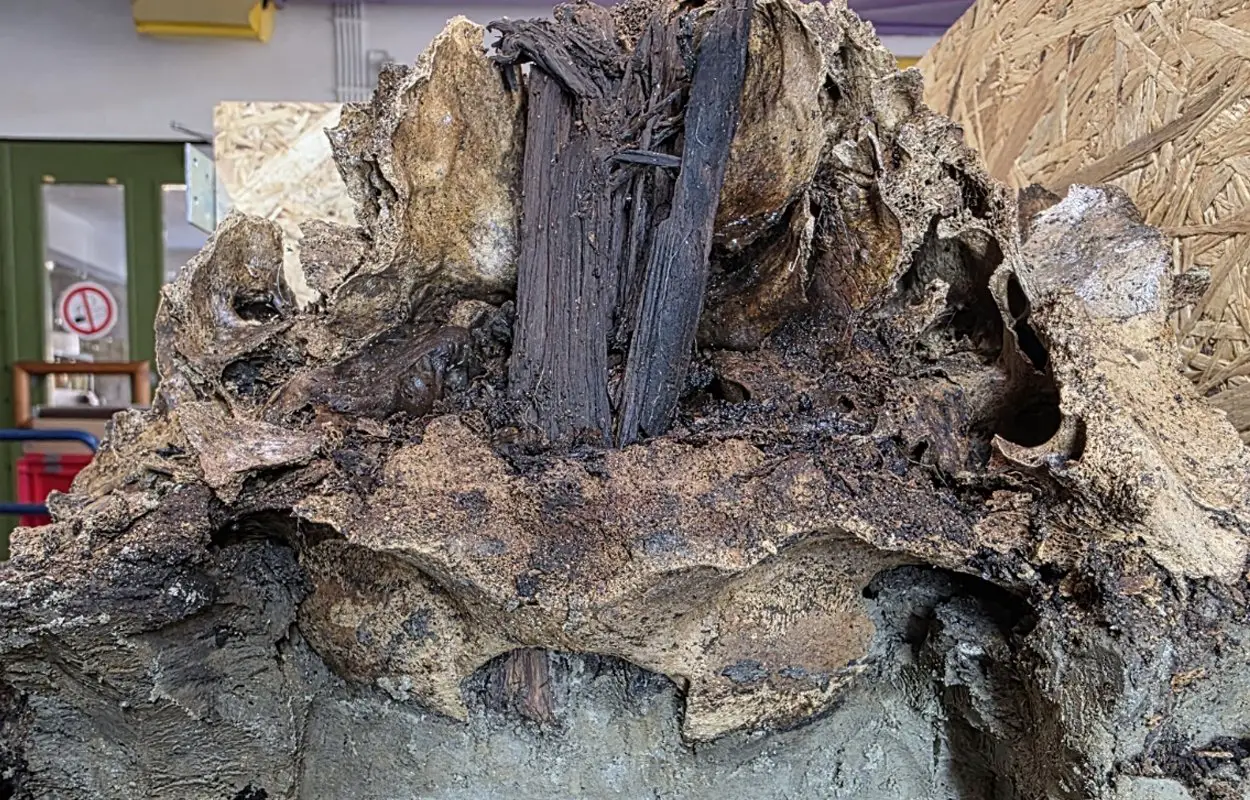
Later excavations in 2025 uncovered another astonishing find nearby: the complete skull of an aurochs, a large wild cattle that once roamed Europe. Unlike other finds considered butchery waste, the skull found in the case demonstrated no evidence of cutting or dismemberment.
When the fragile skull was carefully removed for conservation at the Museum of Archaeology at Gottorf Castle, researchers made an unexpected discovery. Inside the skull was a broken wooden post made of pine. A CT scan carried out at the Fraunhofer Institute for Individualised Medical Technology in Lübeck confirmed that the skull had originally been mounted onto the post through its natural opening at the base.
The find suggests the skull had been displayed upright on a post near the burial. Archaeologists believe it may have been part of a ritual arrangement surrounding the cremation site.
Researchers now suspect the grave may once have been marked by several animal skulls mounted on wooden posts. Such displays may have been intended to protect the deceased or represent spiritual connections between humans and animals—beliefs commonly associated with animistic traditions.
Excavations at Lüchow LA 11 are continuing as part of a training programme for students from several German universities. Further research aims to determine whether additional posts or ritual objects remain buried in the surrounding landscape, potentially revealing even more about the belief systems of Europe’s earliest post-Ice Age communities.
Sources : LEIZA
