
2025 HALDANE PRIZE SHORTLIST: João Vitor Messeder discusses the paper “Rethinking the role of colour in avian fruit choices and foraging mechanisms“, which has been shortlisted for Functional Ecology’s 2025 Haldane Prize for Early Career Researchers.
About the paper
Whether in a supermarket or hiking in the tropics, you may have wondered about the amazing diversity of fleshy fruits. Similarly, ecologists have long questioned the functional role of fruit colors, asking whether they evolved to attract specific seed dispersers – an idea formalized in the dispersal syndrome hypothesis. In this paper, we tested whether fruit colors can reliably predict bird-plant interactions by conducting field studies and fruit-selection experiments across the Americas. Surprisingly, our findings show that fruit color syndromes do not adequately explain birds’ foraging behaviors and fruit preferences in Puerto Rico, Brazil, Peru, and Argentina. Additionally, the experiments with artificial fruits in Pennsylvania, Puerto Rico, and Argentina revealed that birds were initially more attracted to novel, unfamiliar colors. Our results suggest that fruit colors are not reliable predictors of which animals consume and disperse seeds. We reconcile evidence and theory proposing a foraging model in which fruit color plays a more dynamic role in foraging decisions, with birds’ choices being shaped by a mix of exploratory behaviors, where they discover new resources, and exploitative behaviors, where they use memory and prior experiences to make decisions based on their dietary needs.
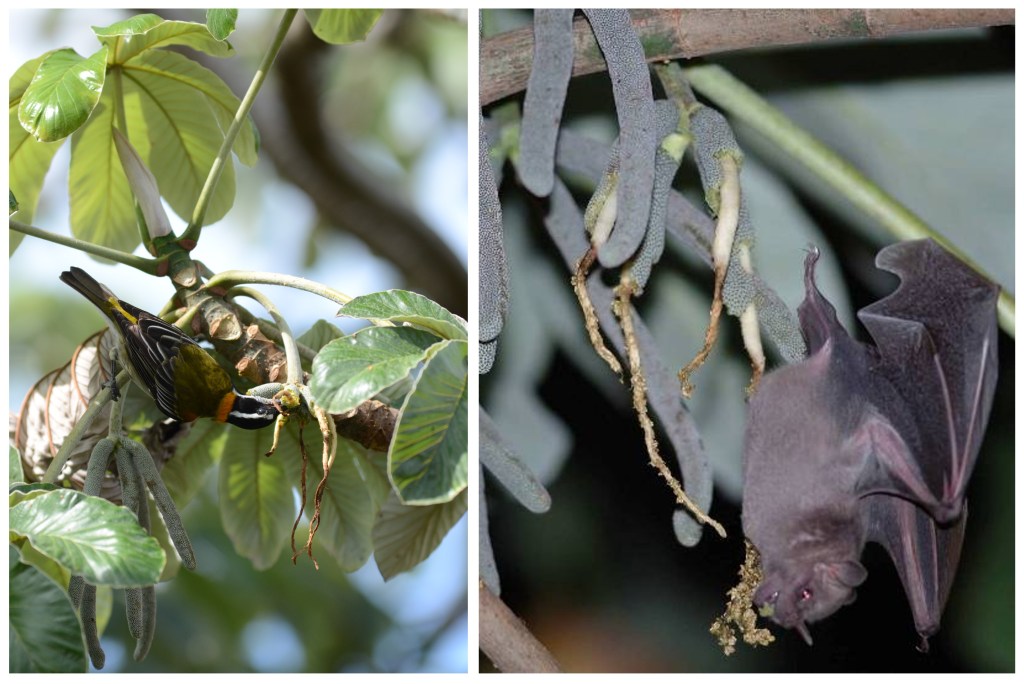
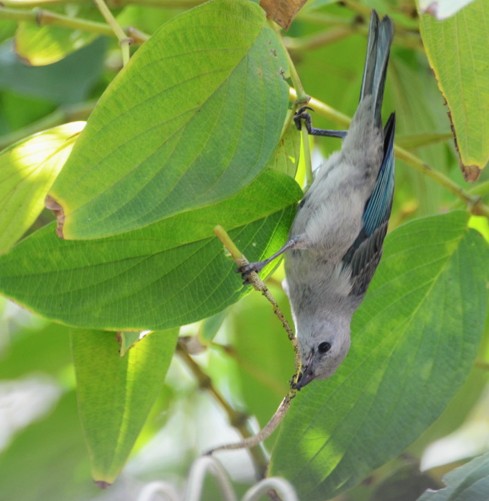
I was genuinely surprised by how little predictive power fruit color had across communities and that fruit-eating birds don’t preferentially interact with fruits of specific colors. Given how influential the dispersal syndrome hypothesis has been, I expected clearer patterns. One major challenge was designing an analytical framework that fairly tested color preferences while accounting for fruit availability, as more interactions with a certain fruit do not always mean that the fruit is preferred. To address this, we developed a null-model approach to assess interaction preferences. At the same time, it was also a fun challenge to try to think as a frugivore and integrate the results into a novel conceptual foraging model.
To move the field forward, I think we need to better connect trait-matching frameworks with process-based approaches that integrate fruit nutritional traits with animal behavior and cognition. Rather than only relying on static trait-matching rules, it is relevant to ask how animals balance visual cues, nutritional rewards, exploration of novel resources, and memory when making foraging decisions, especially under uncertainty and changing resource landscapes. From the plant perspective, it is equally important to understand how nutrients and secondary metabolites present in the fruit relate to dependence on animal dispersal, and how animal behavior ultimately shapes seed rain and seedling recruitment dynamics.
About the author
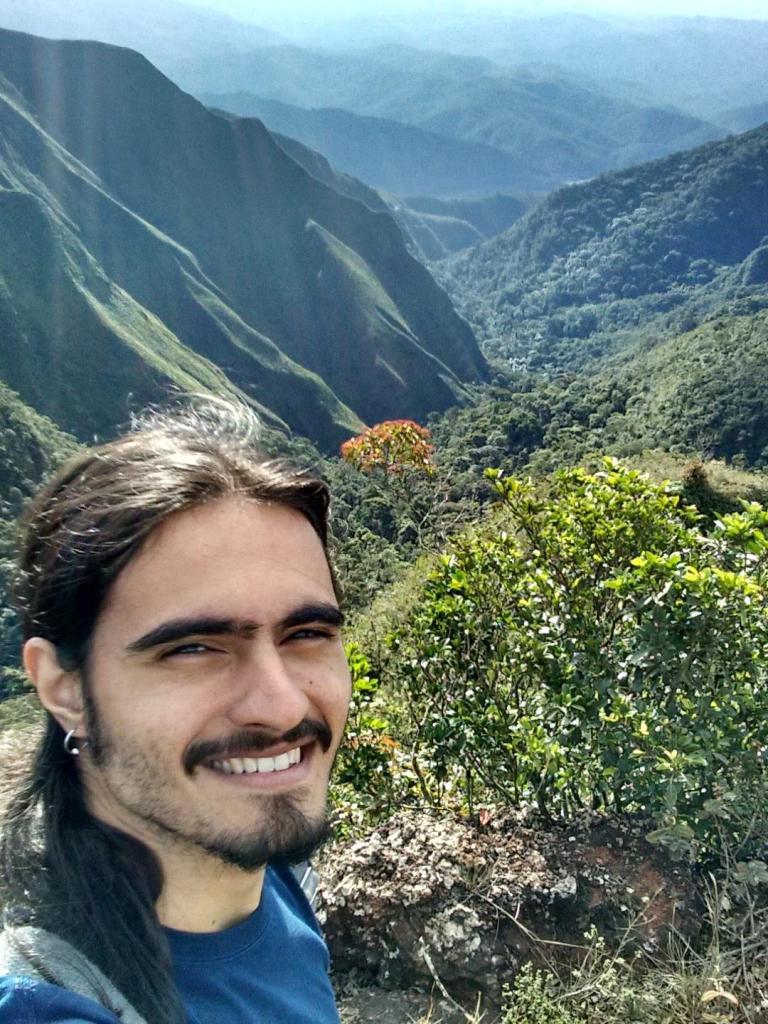
I’ve always been fascinated by plant diversity and their interactions with animals. Growing up in Minas Gerais, Brazil, I was surrounded by the extraordinary biodiversity of the Cerrado and of the campos rupestres, a unique montane ecosystem rich in endemic species. Exploring those landscapes sparked my curiosity about how plant traits evolve and how they shape ecological interactions. During my undergraduate studies in Biology at the Universidade Federal de Minas Gerais (UFMG), that curiosity turned into a research path. Since 2016, I have focused on the ecology and evolution of frugivory and seed dispersal, which led me to complete a Master’s in Plant Biology at UFMG and a PhD in Ecology at The Pennsylvania State University as a Fulbright Scholar at Dr. Tomás Carlo lab. I feel extremely fortunate to have had the opportunity to work with extraordinary mentors that supported me along my journey and further fueled my interest in seed dispersal ecology.
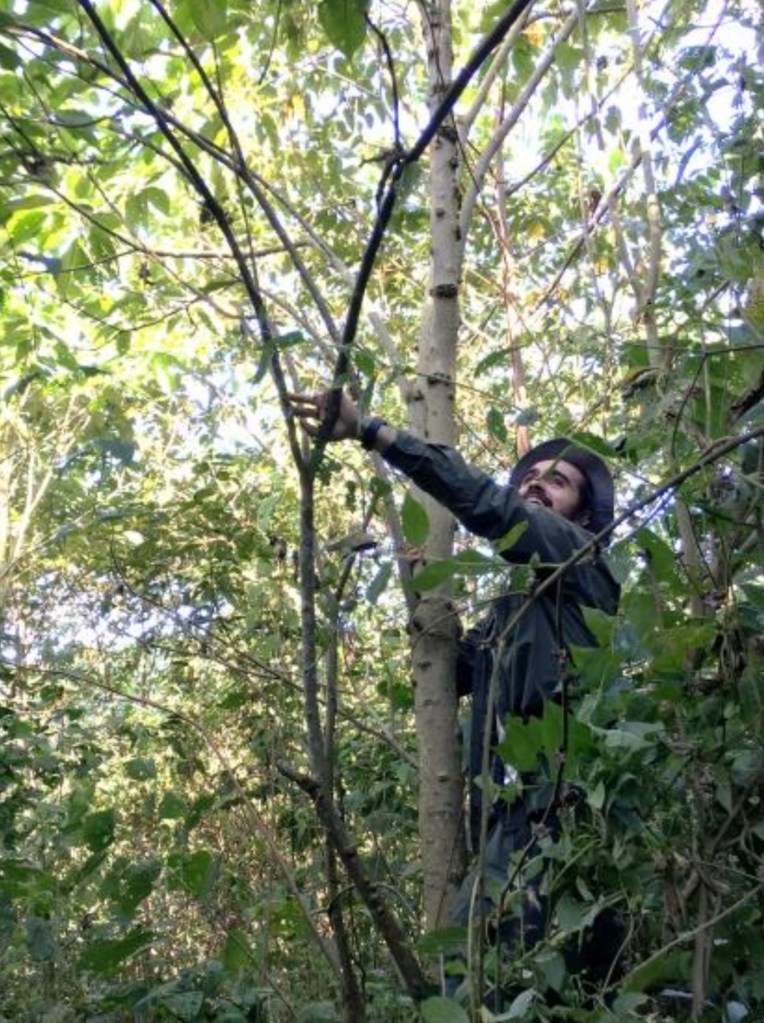
I’m currently a postdoctoral researcher at Virginia Tech, working with Dr. Haldre Rogers to understand how defaunation reshapes plant communities in island ecosystems. Specifically, I’m investigating how shifts in frugivore community composition alter seed dispersal and seedling recruitment, ultimately influencing regeneration trajectories and future forest composition. This work uses the Mariana Islands as a natural experiment encompassing a gradient of frugivore loss, in which the island of Guam lost all native frugivores due to the invasion of the brown tree snake. This system allows us to examine how the loss of animal mutualists cascades through forest regeneration processes.
Have I continued the research my paper is about? Yes and no. While my current postdoctoral research is not a direct extension of this paper, as it focuses more on the ecological consequences of frugivore loss, both are grounded in the same overarching theme. Nevertheless, this study sharpened my interest in linking functional traits with foraging decisions and, importantly, in examining the plant side of the interaction. It led me to explore how fruit nutrients, secondary metabolites, and seed dormancy relate to plant dependence on mutualistic frugivores for dispersal, a work recently published in Oikos (https://doi.org/10.1002/oik.11848). Moving forward, I aim to integrate nutritional ecology, cognition, and interaction networks into a more process-based framework across ecological and evolutionary scales.
One piece of advice I would give is not to be afraid to question ideas that seem well established. Some hypotheses become so widely accepted that we stop rigorously testing them – a reification process as described by L. B. Slobodkin. My work on fruit color began by revisiting a century-old assumption. Challenging foundational ideas can feel intimidating, especially early in your career, but it is often where meaningful progress and productive scientific debate emerge. Be respectful of the literature, but remain curious enough to ask whether foundational hypotheses truly hold under careful examination of the patterns we observe in nature.
Read the full list of articles shortlisted for the 2024 Haldane Prize here.
