
Archaeologists have uncovered dozens of rare gold-enamelled terracotta artefacts at the Ho Dynasty Citadel World Heritage site, marking one of the most significant discoveries at the historic complex in recent years.
The objects were found behind a pair of headless stone dragons sitting at the centre of the citadel — a place long thought to harbour significant architectural remnants.
Among the most remarkable finds are gold-glazed Bodhi leaf terracotta ornaments decorated with intricate dragon motifs. Archaeologists have identified dozens of these gilded Bodhi leaves, a specialised architectural material used for ornamental purposes in royal structures.
Nguyen Ba Linh, Director of the Management Board, described the discovery as highly significant. He explained that the distribution pattern of the gold-glazed materials has enabled researchers to accurately locate the main hall of the ancient Tay Do Citadel, the former name of the Ho Dynasty Citadel. The identification of the main palace area offers critical new insight into the layout and ceremonial architecture of the imperial complex.
Their preservation serves as an indicator of the advanced craftsmanship and aesthetic sophistication of craftsmanship at the time of the Ho Dynasty. The gilded surfaces and sophisticated detailing evoke the splendour of the royal architecture of that period.
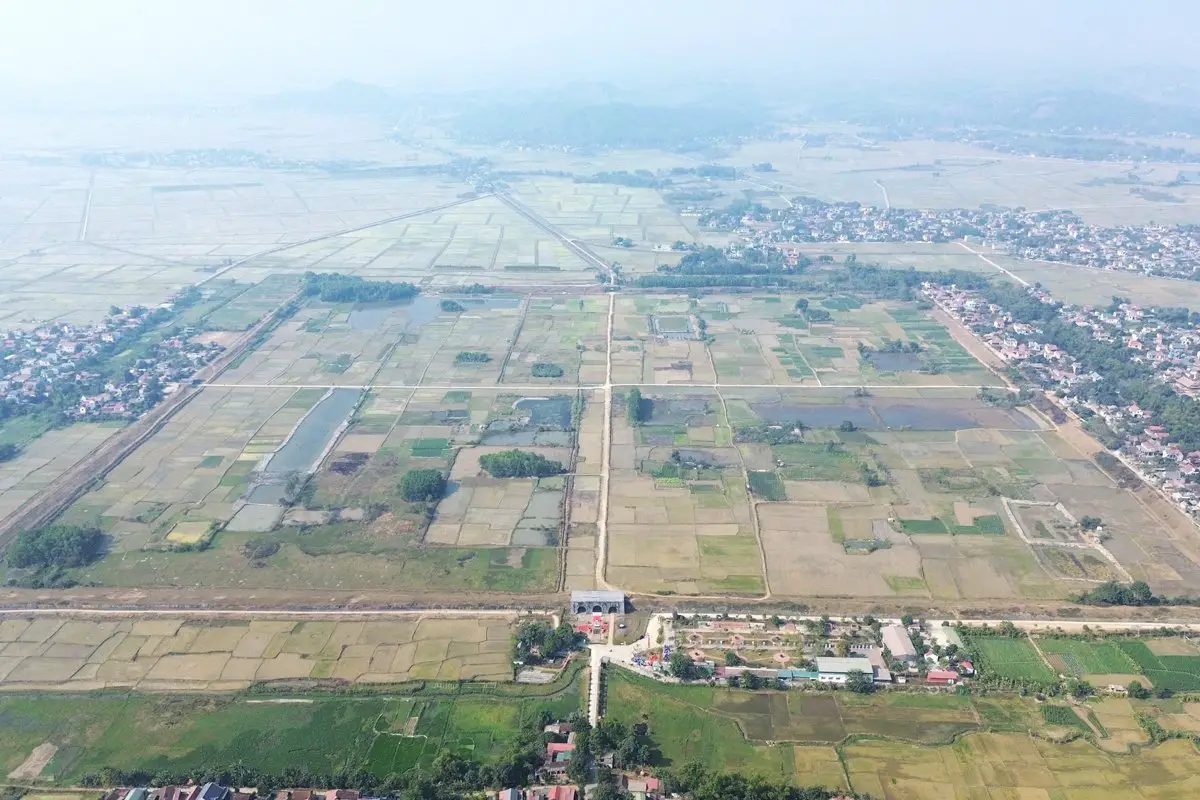
Built in AD 1397, the Ho Dynasty Citadel contains an inner citadel, outer defensive walls, and the Nam Giao sacrificial altar. The site covers 155.5 hectares, but it is bounded by a buffer zone that exceeds 5,078 hectares.
Located between the Ma and Buoi rivers in the present-day Tay Do commune, the citadel was the capital of Vietnam from 1398 to 1407.
In addition to its temporary status as the capital, the citadel remained a key political, economic, and cultural centre throughout the North Central region of Vietnam from the sixteenth to the eighteenth centuries.
Header Image Credit : MINH HAI
Sources : Vietname.vn
