
In this week’s blog post, we find out how relationship woes are abundant in the bird community! Through her paper: “Avian extra-pair paternity in the last European primeval forest”, author Joanna Sudyka provides an explanation for the question: “why do birds cheat?”. Joanna explains the mating and parental behaviour in blue and great tits, building on decades of research in Poland’s Białowieża National Park. Joanna and team found that different paternal DNA in nestlings is the result of an evolutionary behaviour that can persist in both wilderness and your own backyard – challenging the hypothesis that it’s about gaining a survival advantage and not just simple promiscuity (cheeky birds!). Beyond her research, Joanna shares a pivotal piece of advice for younger scientists: have a loose career plan, that way you stay curious as to what’s out there!
About the paper
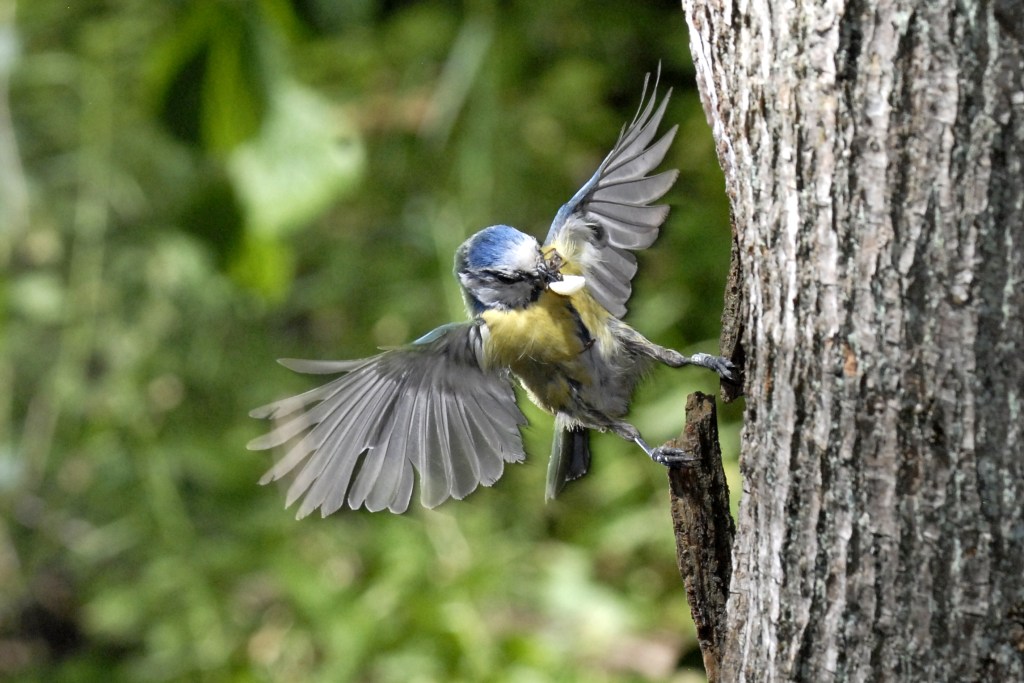
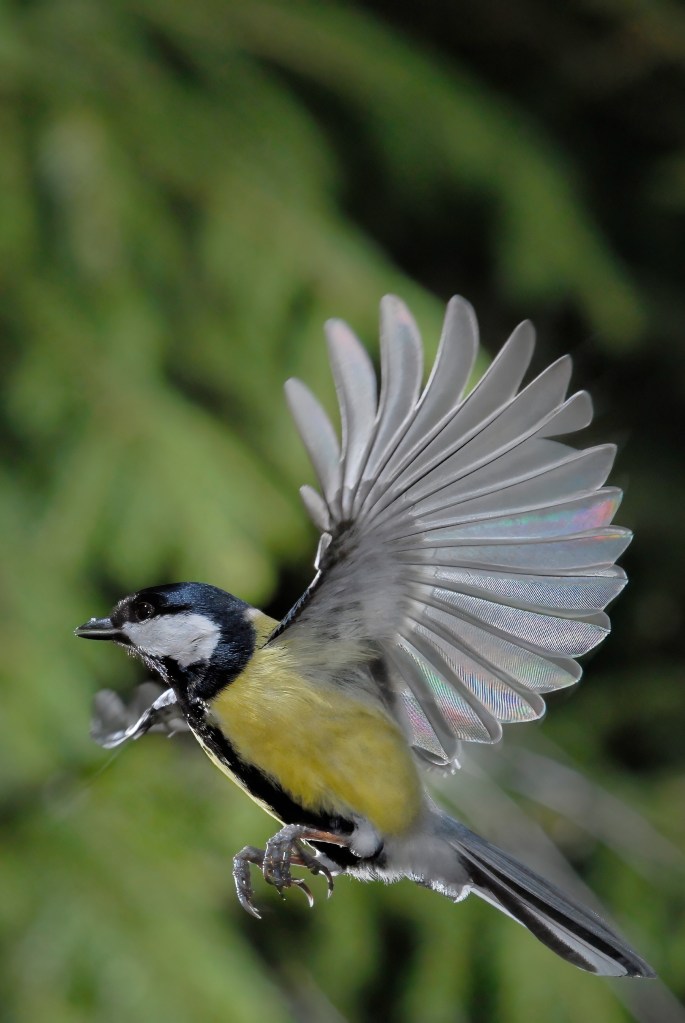
Deep in Poland’s Białowieża National Park, the last remaining slice of Europe’s primaeval forest, we set out to explore a long-standing mystery: why do bird species that appear monogamous so often cheat? We studied blue tits and great tits, familiar backyard birds, but this time in the wild habitat where they evolved. And the results were striking: almost half of all nests contained at least one nestling fathered by a male outside the pair. In total, 15% of blue tit and 14% of great tit nestlings had different fathers. What surprised us most was that it matched rates found in nestboxes in suburban gardens and managed forests. The pristine wilderness wasn’t any more “faithful” than your backyard. We expected extra-pair mating to be rarer or clearly linked to benefits, but that wasn’t what we found.
Extra-pair mating isn’t a modern problem or survival tactic; it’s how these birds have always operated. This behaviour persists everywhere, from ancient woodlands to city parks, suggesting it’s hardwired through millions of years of evolution. Rather than being about gaining advantages, promiscuity appears to be the natural default for these species. It’s not a bug, it’s a feature.
About the research

This work builds on decades of research in Białowieża conducted by dedicated ecologists and ornithologists. We collected DNA from nearly 900 blue tits and more than 1,250 great tits breeding in natural tree cavities, allowing us to check how often males outside the social pair fathered nestlings. With genetic parentage analysis, we could match each nestling to its real father. Working in a primaeval forest came with challenges. Many nests were high up in several century-old oaks, requiring climbing gear and real skill. Just locating a single nest took patience and stealth; unlike birds in nestboxes, these birds aren’t used to people and are extremely shy. It could mean hours of quiet observation and careful tracking.
But the effort was worth it. Our findings challenge the assumption that extra-pair mating only occurs when it offers clear evolutionary benefits. By studying an ecosystem untouched by humans, we discovered something profound: some natural behaviours are remarkably resilient, persisting across thousands of years of environmental change.
About the author
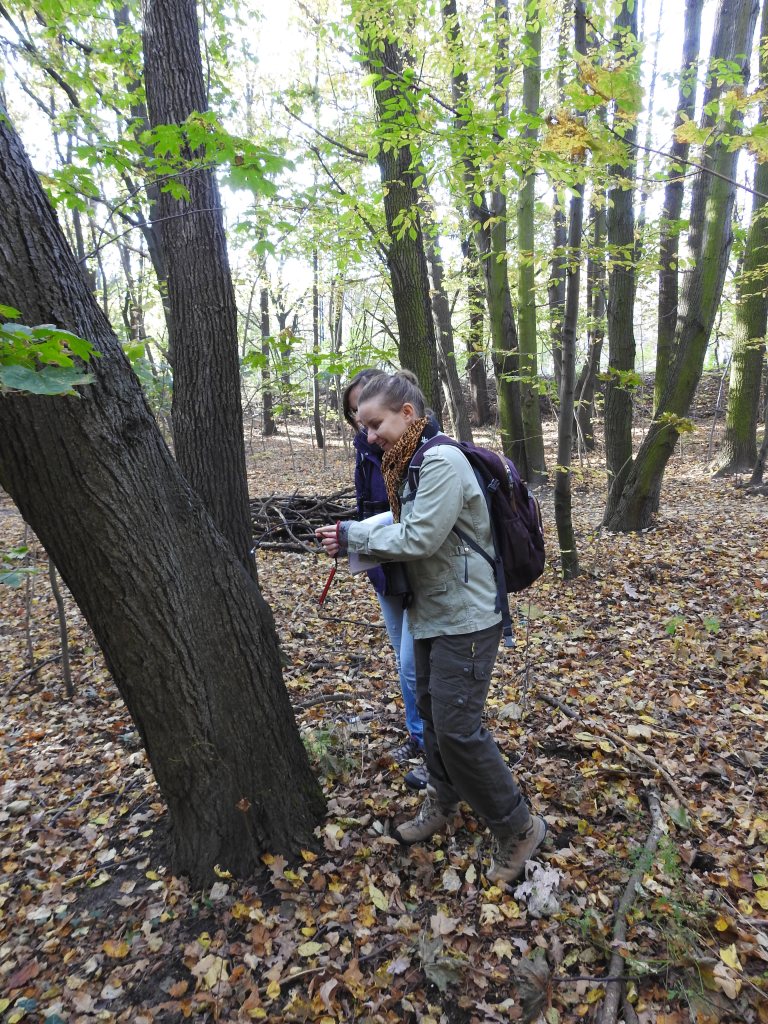
I’m an evolutionary ecologist and molecular biologist, currently an assistant professor at the Institute of Environmental Sciences at Jagiellonian University in Kraków. What drew me to ecology was a simple fascination: we can actually predict how the living world works and then test those ideas in real life. Today, I’m especially fascinated by epigenetic mechanisms and how human-driven shifts affect life histories.
I haven’t faced dramatic career barriers, but there were obstacles. Coming from Central Europe, research is sometimes seen as less “visible,” which can make high-impact publishing and citations harder, but funding opportunities are strong. I’ve had wonderful support, including independent research grants, even as a PhD student. Being a woman with a child also came with assumptions that I would be less capable or dependent on others. I hope these views are fading, for the sake of all current and future women in academia.
I love spending time with my family, reading, and solving puzzles. These days, I cherish quiet time at home more than constant travel. If I could give my younger self one piece of advice: have a loose career plan. Not every step mapped out, but a sense of direction. Curiosity will open many doors, but knowing where you want to end up makes the journey easier, especially when life gets more complicated. You can keep the adventure, just add a compass.
