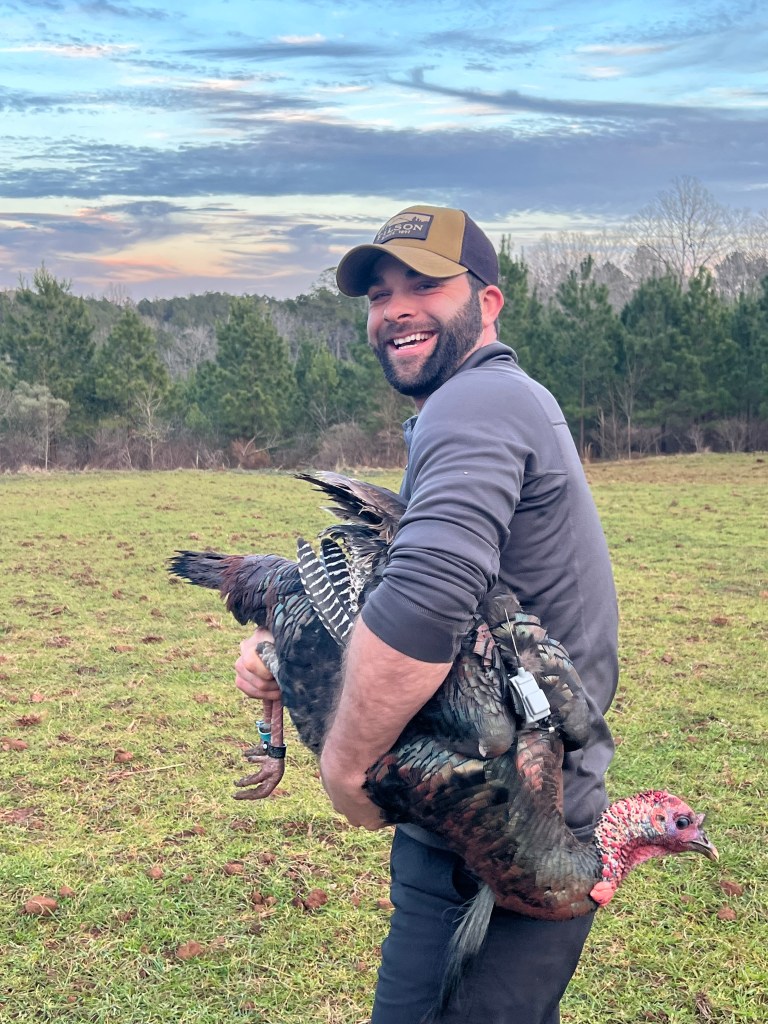
In this ‘Behind the Paper’ blog post, author Nick Gulotta – a postdoctoral researcher at the University of Georgia, USA – helps us get “familiar” with turkey behaviour! Discussing the article “To stay or to roam? Behavioural type influences trade-offs in male wild turkey survival“, Nick delves into how the benefits of familiarity for turkeys depend on the threats they face, the process of tagging and tracking turkeys over 40,000 acres, and the importance of pursuing what genuinely excites you!
About the paper
In this study, we set out to understand whether familiarity with space truly improves survival, and whether that benefit depends on the type of threat animals face. Many animals repeatedly return to certain areas, gradually building detailed knowledge of those places. Site familiarity is often assumed to be advantageous because it can increase efficiency and reduce exposure to danger, but most research has focused only on natural predation. We were interested in what happens when animals face both natural predation and human harvest. Using GPS data from 106 male wild turkeys in Georgia and South Carolina, we mapped each bird’s network of roosting sites and identified central “hub” roosts that individuals relied on most heavily. We found consistent differences among males in how closely they stayed to these familiar hubs, and those differences carried clear survival consequences. Males that ranged farther from familiar hub roosts were more likely to be harvested, suggesting that familiarity with space may reduce risk from hunters. At the same time, individuals that remained tightly anchored to hub roosts experienced higher predation risk, likely because repeated use of the same locations makes them more predictable to natural predators.
The broader implications of our work is that site familiarity is not universally beneficial. In certain contexts, especially when multiple sources of mortality operate simultaneously, behaviors that are typically considered advantageous can actually reduce fitness. Recognizing these trade-offs helps us better understand how animals navigate competing risks and highlights the importance of evaluating behavior within the full ecological context in which it occurs. Looking ahead, I think the next steps for research on site familiarity are threefold. First, we need studies across a wider range of species, including both prey and carnivores, to determine how general these patterns are. Second, it is essential to evaluate fitness consequences at the individual level, because that level of resolution can reveal important trade-offs among different mortality sources that would otherwise go undetected. Finally, we should expand our focus beyond average behavioural tendencies and examine other hierarchical components of behavioural variation. In particular, understanding how predictable or flexible individuals are in their behaviour represents a promising and likely important direction for future work.
About the research
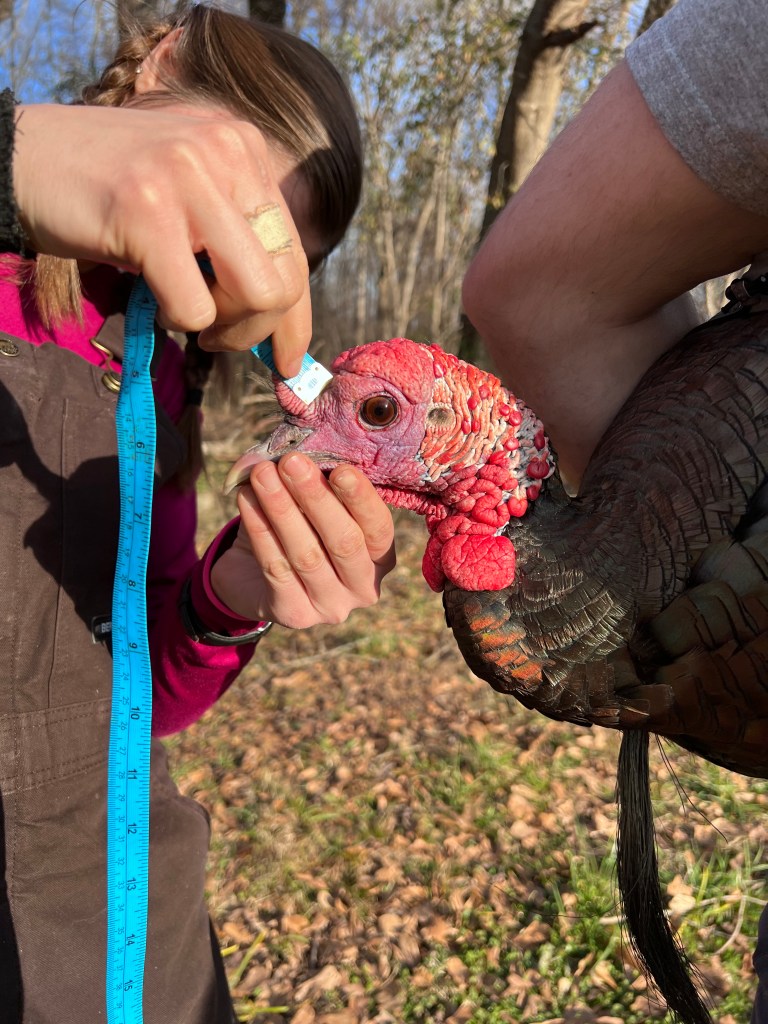
For this project, we collect high-resolution GPS data from wild turkeys across roughly 40,000 acres of mixed public and private land, and gathering that data requires an enormous amount of field effort. Each winter, we capture birds using rocket nets, which means spending about two and a half months sitting in blinds from sunup to sundown waiting for the right opportunity. Wild turkeys in the southeastern U.S. are incredibly wary, so patience is critical as we work to capture around 50 birds per year and fit them with backpack-style GPS transmitters.
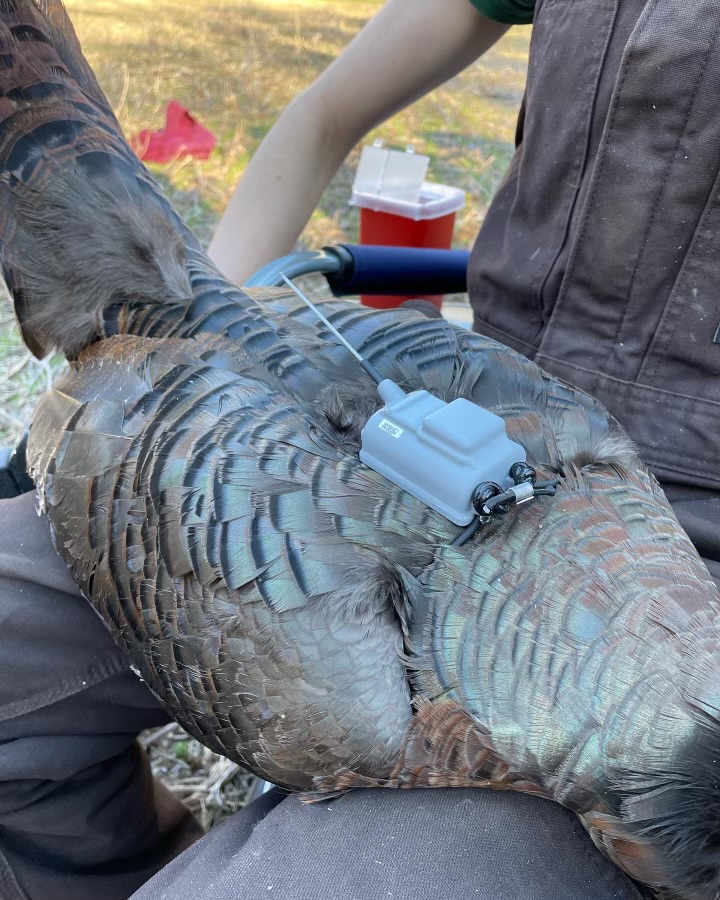
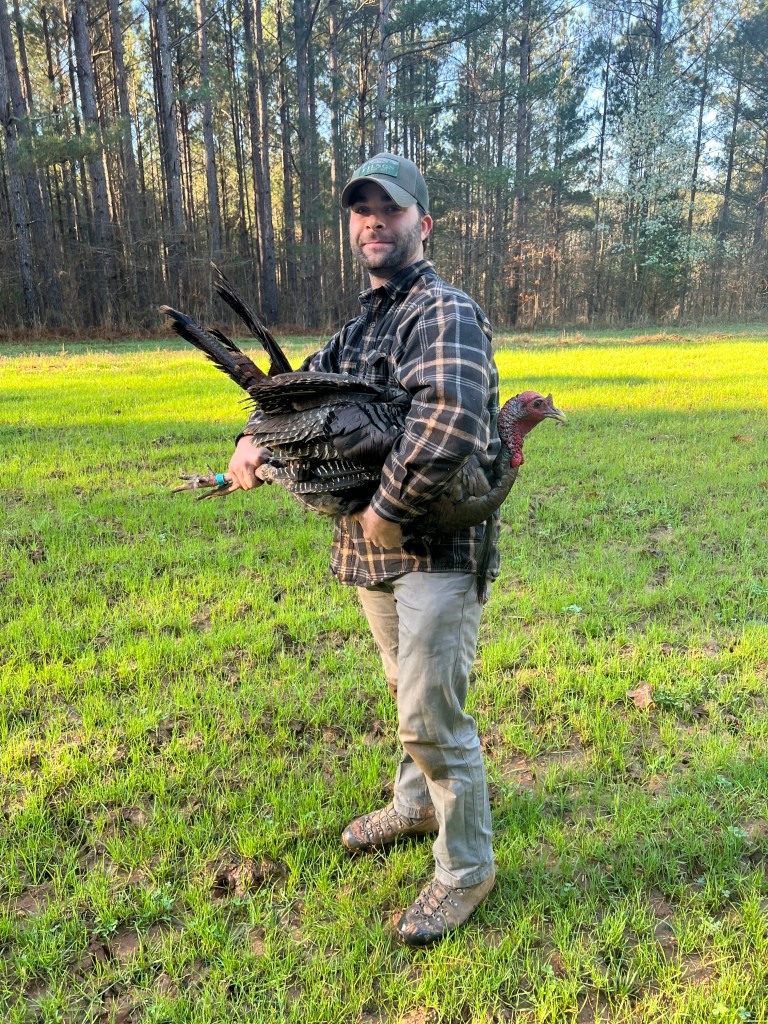
Some shots from the field (Credit: Nick Gulotta)
Once birds are tagged, the real work begins. We track individuals daily using UHF telemetry and aim to download GPS data weekly for each bird to monitor movements, detect mortality events, and follow reproductive activity. During breeding season, the pace intensifies even further, with daily tracking, nest checks, vegetation surveys at nest sites, and early-morning brood surveys to monitor survival. At the same time, we deploy approximately 54 autonomous recording units across the study area to monitor male gobbling behavior during the breeding season, and in winter we set out around 100 camera traps to estimate abundance. Altogether, our field seasons typically stretch close to eight months each year and generate data on movement, genetics, survival, reproduction, vocal behavior, and population dynamics. It’s an enormous effort, but that level of detail is what allows us to ask meaningful questions about turkey ecology.
About the author
I am currently a postdoctoral researcher at the University of Georgia, and this research originated from my PhD dissertation, which I completed in August 2025. My path into ecology was not entirely straightforward. As an undergraduate, I initially pursued health science and spent my first two years playing collegiate baseball at two different universities. Growing up, I had always been fascinated by wildlife and the outdoors, but much of my time and energy was devoted to competitive sports.
After my sophomore year in undergraduate, I took a week-long camping trip to the Rocky Mountains, and that experience reignited my interest in nature in a way I hadn’t anticipated. When I returned, I enrolled in a summer evolution course taught by Dr. Kurtis Dean. That course proved to be a turning point. Like many students in their late teens or early twenties, I was uncertain about my long-term direction, but his class was my first real introduction to ecology and evolutionary biology, and I was immediately captivated.
Dr. Dean’s enthusiasm and ability to communicate the beauty and complexity of ecological systems had a lasting impact on me. After completing the course, I decided to switch my major to biology, even though I was already well into my undergraduate program and my parents were understandably not thrilled about the late change. Once I made that transition, I jumped into research right away, assisting with various graduate student projects. Through those experiences, I quickly became hooked on field research, the early mornings, long days outside, and the process of collecting data to answer ecological questions. From that point forward, I knew I wanted to pursue ecology as a career, and I’ve been involved in field-based research ever since.
I tend to have several ecology and science “obsessions” that shift over time, but at the core of my work is a deep fascination with individual differences in behavior and the fitness consequences of those differences. I’m particularly interested in why individuals within the same population behave differently and how those differences shape survival, reproduction, and ultimately evolutionary outcomes. That question drives nearly all of my research.
Over the past few years, I’ve become increasingly interested in bridging my behavioral ecology background with more applied questions. What really excites me right now is understanding how multiple sources of mortality, particularly human harvest and natural predation, interact to shape behavioral variation within populations. These are powerful stressors, and they don’t act in isolation. I’m fascinated by how individuals within the same population respond differently to selective pressures, and how that variation influences fitness. To me, that’s where behavioral ecology becomes especially meaningful. If we can understand how different mortality sources influence behavior, we gain insight not only into evolutionary processes but also into how to manage and conserve wildlife populations more effectively.
Outside of research, I’m happiest when I’m outside. Whether it’s hiking, camping, hunting, or fly fishing, I love being in the woods and on the water. I didn’t grow up hunting or fly fishing, but once I got into them, I was hooked. There’s something about being immersed in wild places that just resets everything. Spring turkey hunting season is easily one of my favorite times of year. What I love most about pursuing wild turkeys is how interactive it is. During the breeding season, male turkeys gobble to communicate, so the experience becomes more of a dialogue than a one-sided pursuit. You’re listening, responding, adjusting, and trying to interpret what the bird is doing in real time. It feels less like simply being in the woods and more like participating in a dynamic behavioral exchange.
If I could give one piece of advice to my younger self, it would be to trust your curiosity and pursue what genuinely excites you, even if the path feels uncertain. It’s easy to second-guess yourself or worry about whether you’re making the “right” decision, but the moments where you lean into what energizes you are often the ones that shape your future the most. I’ve learned that creativity and persistence are absolutely essential in science. Things rarely work perfectly the first time, and setbacks are part of the process. What matters is staying persistent in your pursuit of knowledge and being creative enough to ask meaningful questions and think deeply about the answers. If you stay curious, work hard, and don’t give up when things get difficult, you’ll end up exactly where you’re meant to be.