
An exceptional El Niño is building. The World Meteorological Organization (WMO) says it has intensified to very strong levels and is likely to last at least through February 2027. If its current trajectory holds, it could become stronger than anything seen since WMO monitoring began four decades ago.
That is bad news for agriculture. El Niño – a naturally occurring weather phenomenon – can scramble rainfall patterns across the world, bringing drought to some regions and floods to others. And this time it is unfolding against the backdrop of a significantly hotter climate, with farmers already contending with unreliable growing seasons, extreme heat and less predictable rainfall because of global warming.
Already have an account?
Log in here →
Sign up for a free account today. In return, you’ll get a selection of our top reporting in full each week, our Climate Weekly roundup newsletter every Friday, and invites to our webinars and online events.
Create a free account →
It takes less than a minute.
An exceptional El Niño is building. The World Meteorological Organization (WMO) says it has intensified to very strong levels and is likely to last at least through February 2027. If its current trajectory holds, it could become stronger than anything seen since WMO monitoring began four decades ago.
That is bad news for agriculture. El Niño – a naturally occurring weather phenomenon – can scramble rainfall patterns across the world, bringing drought to some regions and floods to others. And this time it is unfolding against the backdrop of a significantly hotter climate, with farmers already contending with unreliable growing seasons, extreme heat and less predictable rainfall because of global warming.
El Niño expected to bring next record-hot year as soon as 2027
We are seeing the consequences already. In Sri Lanka, drought linked to El Niño has dried wells and reservoirs and cut into crops and farmer incomes. Indonesia is experiencing its worst wildfire season in 11 years, with prolonged drought and extreme heat exacerbated by El Niño. And in Peru, authorities are preparing for the opposite extreme: intense rains, flooding and landslides which the national civil-defence agency says could affect around 1.2 million people.
These impacts will multiply as El Niño intensifies.
And yet, just as the risks to food production are rising, the money available to help farmers withstand them is shrinking.
10% funding decline in 2024
A forthcoming analysis from the Food and Agriculture Organization (FAO) shows that climate-related development finance for agrifood systems is moving in the wrong direction. In 2024, the latest year for which data is available, it fell by 10 percent compared with a 2 percent overall decline. The sectors that put food on our tables — crops, livestock, forestry and fisheries — received just 5 percent.
Yet this is precisely the moment when climate investment in agriculture needs to grow, not shrink. It can help communities adapt, build resilience and protect food security, while unlocking larger flows of public and private finance. Agriculture feeds us, supports the livelihoods of well over a billion people, and is often the first sector hit by drought, floods and extreme heat. Cutting that investment now is a false economy.
One failed harvest can plant the seed for the next crisis, forcing farmers to eat the seed they have saved for planting, sell livestock or tools, or take on debt. It can also deepen food insecurity, disrupt supply chains and drive up prices, showing up months later in supermarket aisles far away.
Comment: A supercharged El Niño is coming – are we ready?
The Central American Dry Corridor, stretching through much of the region, shows both how exposed farmers are, and what investment can do. Based on an analysis of 41 years of satellite observations, FAO finds that some crop and pasture areas there face more than a 50 percent chance of agricultural drought over the coming months.
About half of Central America’s 1.9 million producers of maize, beans and other basic grains live in the Dry Corridor. Many grow food both for sale and for their own families. When a harvest fails, they lose both income and dinner.
El Salvador project conserves water and soil
In El Salvador, which lies within the Dry Corridor, more than 50,000 farmers have adopted practices to better withstand drought and increasingly unreliable rainfall through RECLIMA, a project financed by the Green Climate Fund and implemented by FAO in partnership with the government of El Salvador. It has substantial national co-financing, including from the country’s Environmental Investment Fund.
El Niño can intensify El Salvador’s annual mid-season dry spell, known as the canícula, turning it into a longer, harsher drought just as maize needs water most.
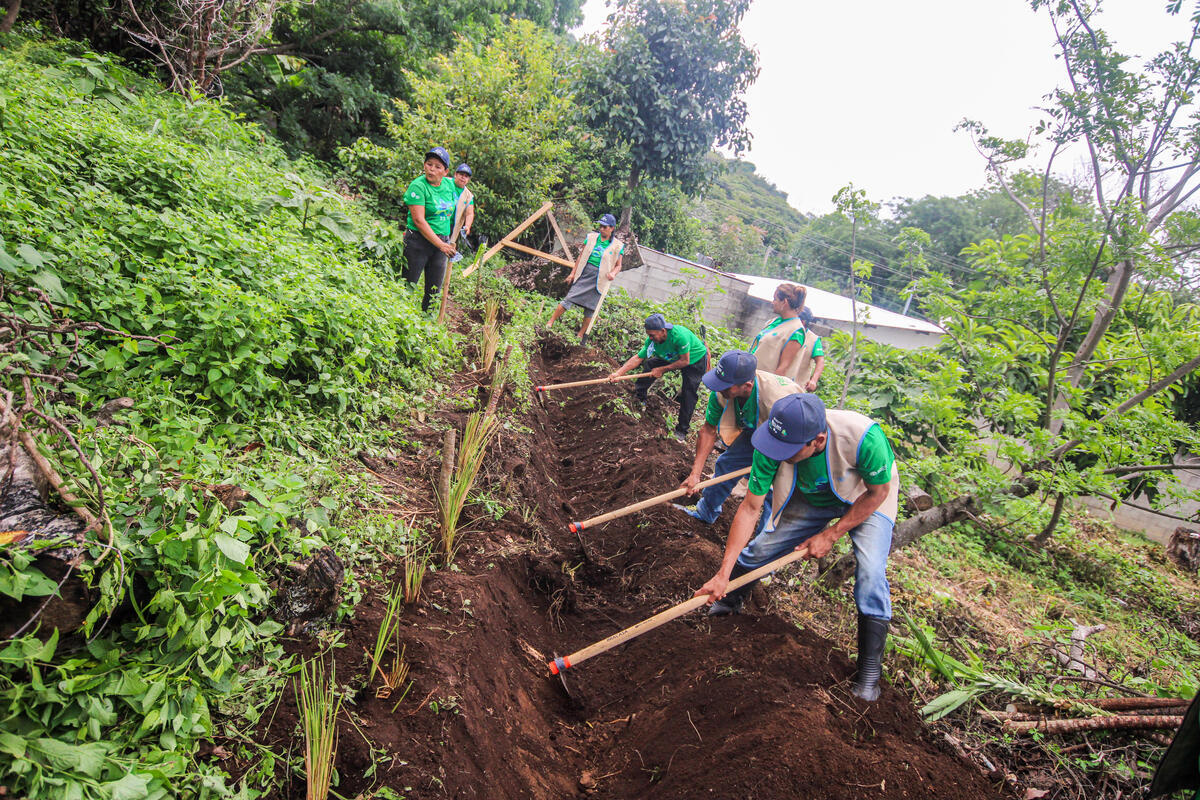
For María Cristina Corvera de López, a second-generation farmer in rural Nahualapa, adapting means changing how every drop of rain is captured and used. She plants trees alongside her crops to provide shade and minimise evaporation and uses simple irrigation channels and a homemade drip system to conserve water. Instead of burning stalks, leaves and husks after harvest, as generations before her did, she turns them into mulch to hold moisture in the soil.
“The effects of climate change are a constant challenge,” she says. But the new techniques have made her farm more resilient to El Niño as well. Where she once harvested about 50 bags of maize per acre, she now gets around 80, even during droughts. It’s enough to feed her family and sell the surplus.
Managing risk now cuts future costs
Together, these adaptations can mean the difference between losing a crop and getting through a dry season with enough food, seed and income to plant again. They are also the result of climate finance invested before disaster strikes.
RECLIMA shows what that kind of adaptation investment can buy. Adaptation accounted for 45 percent of climate-related development finance to agrifood systems in 2024, and multilateral development banks are directing more agricultural finance towards resilience. That shift reflects a growing recognition that adaptation is a form of risk management, not just a development cost.
We need much more of it. The same investments that help farmers withstand El Niño also enable them to adapt to a hotter, more unpredictable future. Cutting investment in the people who produce our food just as climate risks intensify does not save money. It simply pushes a much larger bill into the next harvest, the next food crisis, and the next El Niño.
