Gita Chaudhary is Nepal’s Minister of Agriculture, Forests and Environment.
We are still grieving the thousands dead and missing from the Rasuwa-Bhotekoshi climate catastrophe on August 26. The ice-rock avalanche originated at 5,200m above sea level and carried roughly 100 million cubic metres of debris-laden water, at an average speed of 150km/h, burying homes, farms, schools in minutes. We lost more than 1,400 lives and more than 5,200 people remain missing.
Scientists have classified 21 glacial lakes in Nepal as dangerous due to melting permafrost and ice in the Himalayas, so even as we work on the recovery, we believe this can happen again.
Already have an account?
Log in here →
Sign up for a free account today. In return, you’ll get a selection of our top reporting in full each week, access to all Comment pieces, our Climate Weekly roundup newsletter every Friday, and invites to our webinars and online events.
Create a free account →
It takes less than a minute.
Gita Chaudhary is Nepal’s Minister of Agriculture, Forests and Environment.
We are still grieving the thousands dead and missing from the Rasuwa-Bhotekoshi climate catastrophe on August 26. The ice-rock avalanche originated at 5,200m above sea level and carried roughly 100 million cubic metres of debris-laden water, at an average speed of 150km/h, burying homes, farms, schools in minutes. We lost more than 1,400 lives and more than 5,200 people remain missing.
Scientists have classified 21 glacial lakes in Nepal as dangerous due to melting permafrost and ice in the Himalayas, so even as we work on the recovery, we believe this can happen again.
Heavy rain in late September and again in October has caused further deadly avalanches, landslides and flooding, adding to people’s pain.
The “roof” of the world – mountain top glaciers that more than 1.9 billion people rely on for water and energy – is no longer stable.
New conversation on climate justice
I represent a young nation. Our administration was elected into office by young people who want transparency and accountability in politics, just like their peers around the world.
In addition to the massive challenges our administration now faces – it will cost at least 10% of our GDP to respond to the glacial collapse – we are committed to building a state that delivers decent jobs, social protection, and a fair chance for every Nepali to thrive at home.
This is why we also believe in multilateralism. We are ready to lead a new conversation about climate justice in today’s context, shaped by the aspirations of a new generation.
Nepal seeks stronger recognition of mountain issues in UN climate process
We may be at the sharp edge of the climate crisis, but the whole world is in this together. The impacts we now face are precisely what the international agreements on climate change were designed to protect against. The science was clear this would happen. That’s why the world agreed over ten years ago, together, to limit warming to 1.5ºC – to avoid dangerous climate change.
Solidarity for one another was at the heart of those agreements, along with the “common but differentiated responsibilities and respective capabilities” principle that those who have historically contributed more to the problem, and those with greater capacity to respond, must do more.
Push for formal recognition at COP
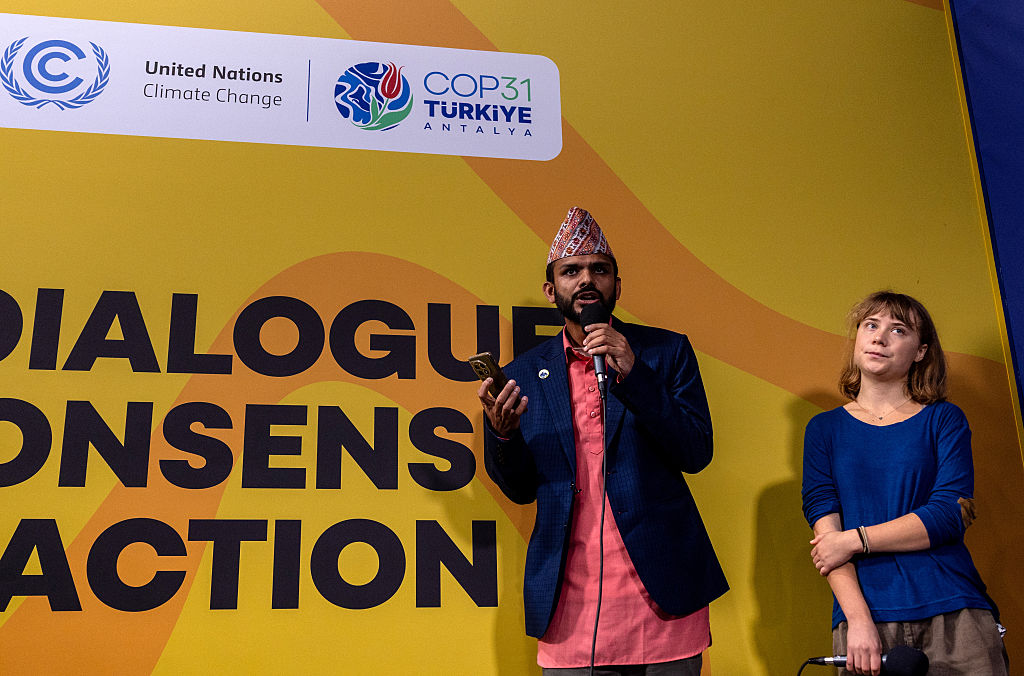
In the mountains, the climate crisis arrives early. This is why Nepal has proposed a new Himalayan Climate Resilience Mechanism, and why we joined with the Royal Government of Bhutan, and the government of Kyrgyzstan to push for COP31 to formally recognise the challenge mountains are facing with a standalone agenda item in Antalya. We urgently need to discuss with the international community how we can better access finance that is adequate, timely, accessible, predictable and grant-based, as well as support for research and early warning systems.
Nepal and Bhutan’s submitted agenda will now be further discussed at the COP presidency consultation, where we have also highlighted that the mountain framework should be focused and reflected in the cover decision. This week and next we will be engaging with governments and the COP presidency for the mountain agenda. Progress in these dialogues is essential.
Meanwhile, we are deeply grateful for the support of our neighbours and other friendly countries who came to our immediate aid in August. Individuals and companies from all over the world have donated to the Prime Minister’s Disaster Relief Fund, touching our hearts when they are most tender.
Solidarity and friendships you can count on are essential when disaster comes to your door.
And every door is at risk. Climate-charged floods, wildfires and droughts that destroy lives and livelihoods and affect supply chains across borders are here to stay.
Funding and technology needed
This is why it’s more critical than ever that dedicated, predictable, adequate, accessible grant-based funding is available, fast and fair to help people cope with the loss and damage now, and adapt to what is coming and build community resilience.
We also need to see clear, actionable roadmaps for transitioning away from fossil fuels, aligned with the 1.5ºC temperature limit, with clear timelines, and protections for workers and communities, as the UN Secretary-General recently called for in New York.
Loss and damage fund agrees $20m for Nepal but rich nations warn it should not set precedent
Last year the International Court of Justice reinforced the fact that all nation-states have strict legal obligations under international law to protect the climate system and curb greenhouse gas emissions.
In Nepal, we see great potential for revolutionary developments in information and power to drive down emissions and support new state-of-the-art solutions to the climate crisis. These could include sophisticated yet easily accessible early warning systems that save lives and livelihoods.
We may not be able to put the roof of the world back together by ourselves, but with solidarity from the global community, in the spirit of multilateralism, we can look at new ways of building the future for the safety and security of us all.