
Archaeologists have discovered the remains of rare 16th-century gallows during excavations in advance of the redevelopment of the Boulevard de l’Esplanade in Grenoble, France.
The Esplanade is located on land gradually reclaimed from the flood-prone plains of the Isère and Drac rivers, where excavations have found alternating deposits of river alluvium and man-made fill, reflecting centuries of flooding and gradual drainage.
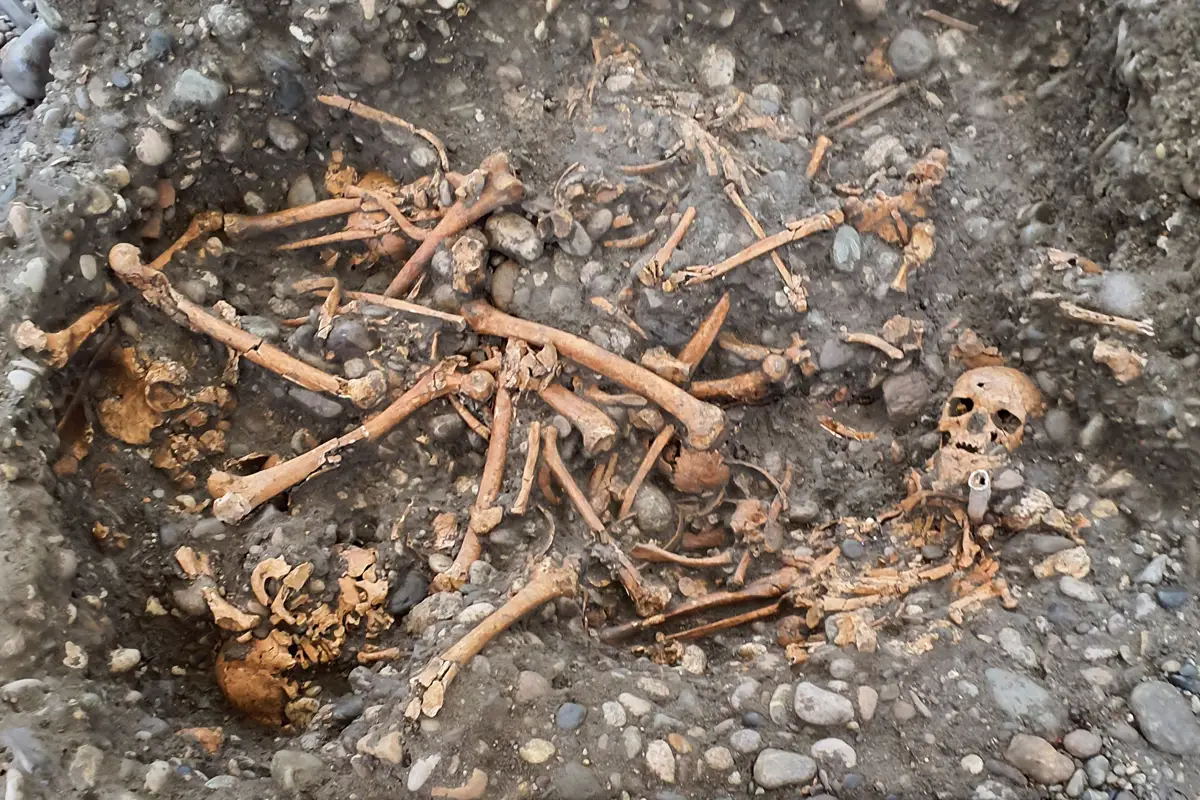
At the edge of the site, archaeologists from Inrap discovered a quadrangular masonry foundation, along with ten pits containing at least 32 individuals buried with no orientation or funerary practices.
Upon weighing all potential theories to the purpose of the masonry foundation and burials, archaeologists were able to identify the structure by cross-referencing it with historical construction accounts. These records matched the remains to the Port de la Roche gibbet – Grenoble’s historic gallows.
Archival documents indicate that the gallows were built between 1544 and 1547. It consisted of eight stone pillars standing on a square masonry base measuring 8.2 metres per side, supporting a timber framework raised around five metres high.
Its elevated position and surrounding drainage ditch protected it from flooding. The eight pillars were significant: in the judicial hierarchy of the kingdom, the number of pillars reflected authority, ranging from two or six for local courts to 16 for the royal gallows at Montfaucon in Paris.
Those condemned to death were executed publicly within Grenoble, then their bodies were displayed on the gallows outside the city. Judicial archives identify some of the individuals whose remains may have been found on site, including Protestant rebels such as Benoît Croyet and Huguenot leader Charles du Puy Montbrun during the Wars of Religion.
The burials reflect deliberate degradation. Bodies were thrown into pits, sometimes dismembered or rearranged, denying the condemned proper burial and extending punishment beyond death. The gallows likely fell out of use in the early 17th century as political tensions eased and Grenoble expanded.
Header Image Credit : Nordine Saadi
Sources : Inrap