
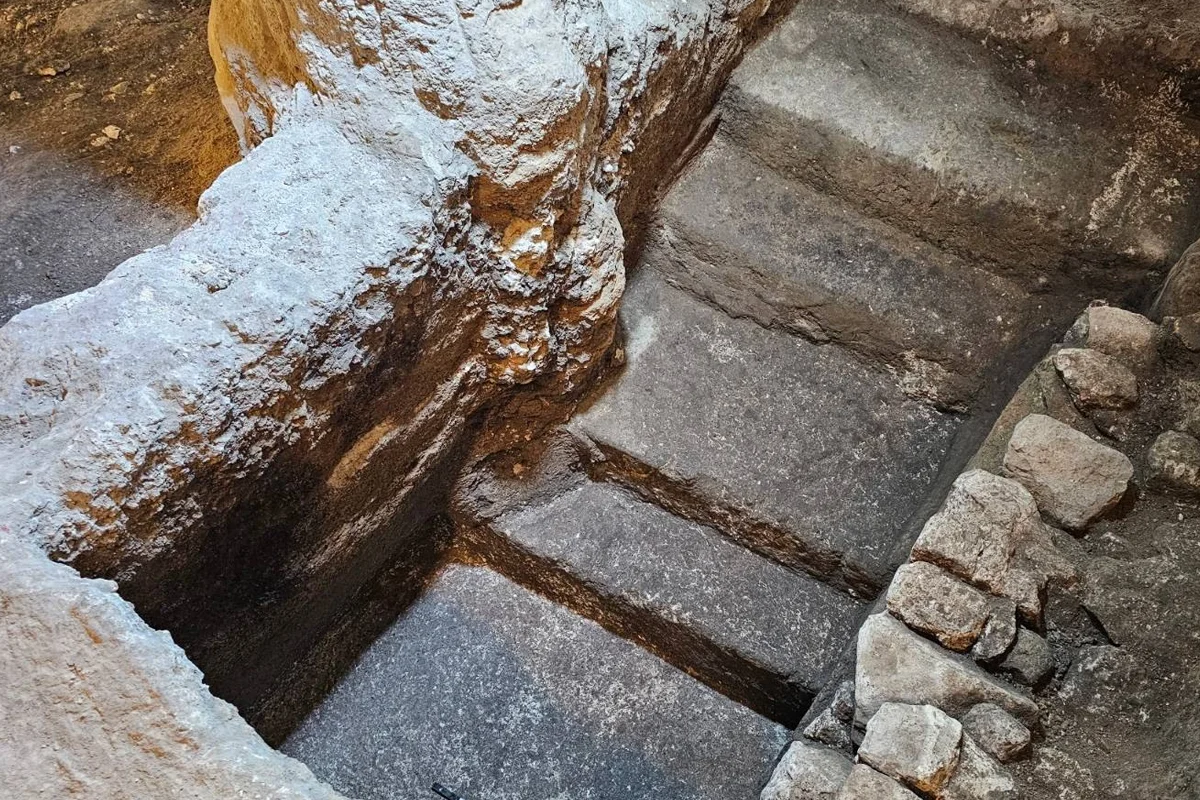
A rock-cut mikveh from the late Second Temple period has been uncovered during excavations beneath Jerusalem’s Western Wall Plaza.
A mikveh is a ritual bath used for full-body immersion in naturally gathered water to attain ritual purity.
The discovery was made by the Israel Antiquities Authority (IAA) during excavations beneath a destruction layer dated to AD 70 when the Romans razed Jerusalem. The mikveh was found sealed in ash deposits that directly attest to the conflagration that followed the fall of the city and the Temple.
Hewn directly into the bedrock, its walls were coated with plaster, and four stone steps descend from the southern end into the basin. The rectangular installation measures approximately 3.05 metres in length, 1.35 metres in width, and 1.85 metres in height.
Within the destruction layer filling the mikveh, archaeologists also uncovered numerous pottery vessels, stone tools, fragments of glass, and a coin – all characteristic of the Jewish population living in Jerusalem at the close of the Second Temple era.
The excavation area lies close to two of the Temple Mount’s principal entrances in antiquity: the Great Bridge to the north and Robinson’s Arch to the south.
Previous excavations in this zone have already revealed multiple mikva’ot, stone vessels, and other finds associated with ritual purification, indicating that this part of the city served residents and pilgrims who were required to maintain a state of ritual purity before entering the Temple.
Ari Levy, excavation director for the Israel Antiquities Authority, explained that Jerusalem functioned as a “city of sanctuary,” where daily life was shaped by strict observance of the laws of purity and impurity. “This phenomenon is clearly reflected in the archaeological record,” he said, noting the widespread use of stone vessels, which Jewish law considered immune to ritual impurity.
Minister of Heritage Rabbi Amichai Eliyahu said the discovery underscores how closely intertwined religious practice and everyday existence were in Jerusalem during the Temple period, adding that continued archaeological work is essential to preserving this heritage.
Header Image Credit : IAA
Sources : Israel Antiquities Authority
