
A team of detectorists have discovered V-2 rocket fragments during a survey near the Blizna Historical Park in Ropczyce-Sędziszów County, Poland.
The V-2 “Vengeance Weapon 2”, also known as Aggregat-4 (A4), was the world’s first long-range guided ballistic missile, developed by Nazi Germany during WWII in retaliation for the Allied bombings of German cities.
Designed by Wernher von Braun and a team at the Peenemünde Army Research Centre, the V-2 would also become the first man-made object to travel into space by crossing the Kármán line.
During WWII, over 3,000 V-2 rockets were launched against Allied targets, resulting in the death of an estimated 9,000 civilians and military personnel, not including the thousands of forced labourers and concentration camp prisoners who died during the production of the vengeance weapons.
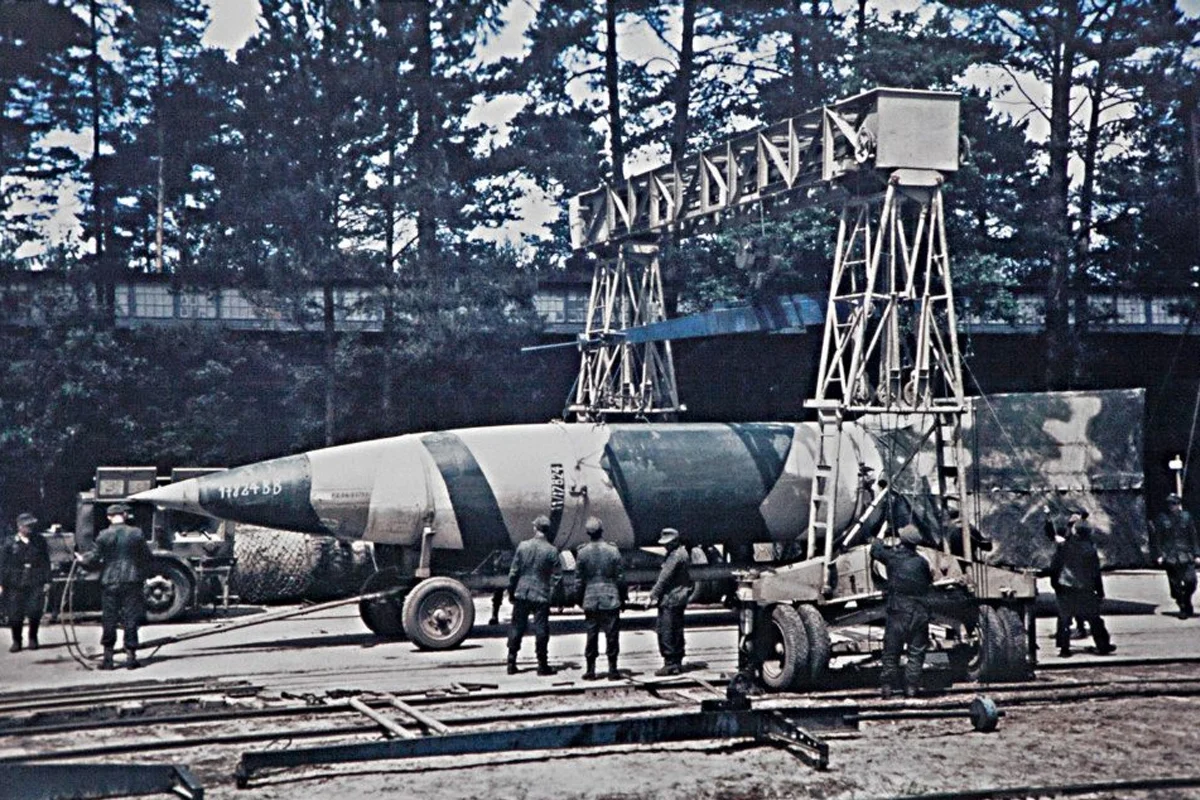
Members of the Podkarpackie Military Enthusiasts Association, working in coordination with local authorities and two other detectorist groups, discovered fragments of a V-2 rocket during a survey of an impact crater near the Blizna Historical Park.
Blizna Historical Park was the main test site for V-2 rockets following the strategic bombing of the rocket launch site in Peenemünde, Germany. Its strategic importance is underscored by inspections by several leading Nazi figures, including Adolf Hitler, SS chief Heinrich Himmler, SS-Obergruppenführers Hans Kammler, and Gottlob Berger.
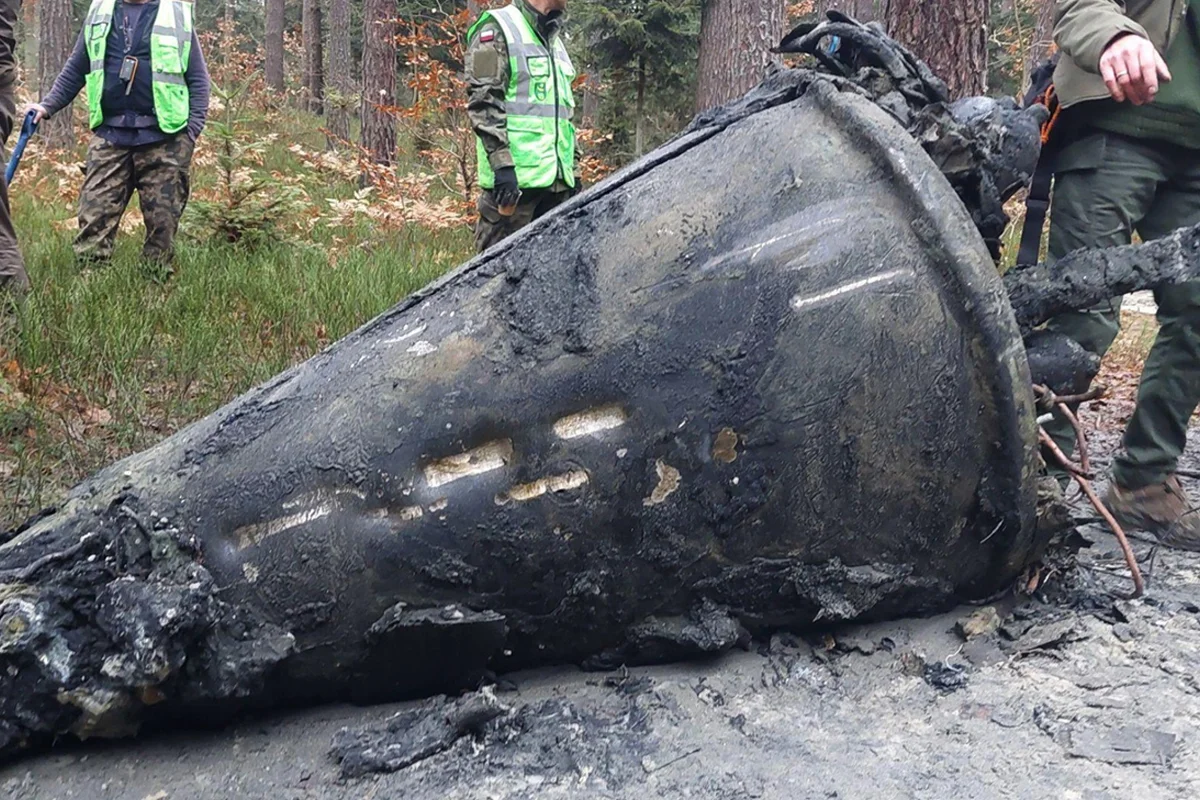
The team found fragments of a turbopump, injectors, and a virtually intact ballistic cone – a distinctive element of the V-2 rocket’s design. The entire rocket warhead was found embedded in the ground, together with part of the second stage which had driven into the first segment upon impact. Because this was a practice warhead, no detonation occurred.
The recovered rocket components will be transferred to the Blizna Historical Park, where they will become part of the permanent exhibition.
Header Image Credit : Podkarpackie Military Enthusiasts Association
Sources : Rzeszow News