
In this week’s blog post, we’re discovering how common it is to be rare! Through his paper: “Functional divergence drives the prevalence of low-abundance species in bat assemblages”, author Andrés F. Ramírez-Mejía explores the commonness of rarity: why there are so many rare species and explains why every bat has a role in our ecosystem. In his blog, Andrés explores the complexities of morphological uniqueness in bats, highlighting new methods and perspectives on how to capture and release these flying beauties. Outside of academic, Andrés reminds us to focus on the things that really matter, with a guest appearance from his cat, Ziggy!
About the paper
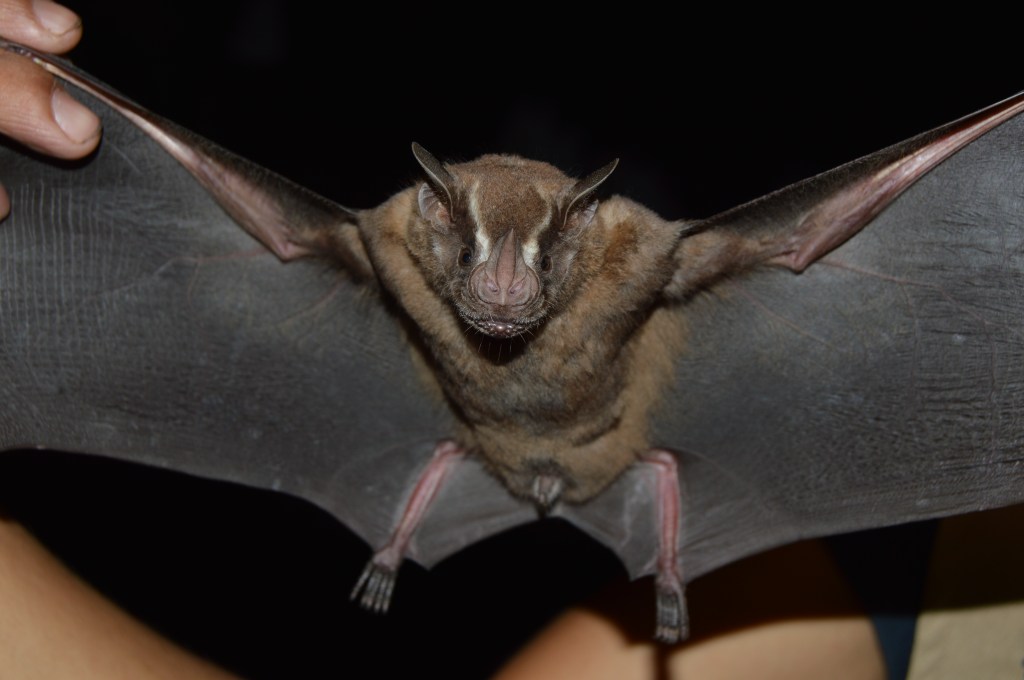
Ecology is often seen as “the science of exceptions”. Ecological systems are so dynamic and context-dependent that only a handful of ecological patterns are truly scalable through time and across the globe. Community structure is one of such patterns. In nature, animal and plant communities across terrestrial and aquatic ecosystems are typically composed of a majority of species occurring at low abundance, whereas only a few are highly common. Why does this happen? To answer this question, we investigated bat communities in Neotropical forests along the Colombian Orinoco.
Bats are a great group for testing this idea because they are highly diverse and play a myriad of ecological roles in ecosystems; from pollination and seed dispersal to carnivory and insectivory. Specifically, we wanted to know whether the morphological uniqueness of bats explains the distribution of species abundance in their communities—that is, if a species is rare or common. We hypothesized that bats with more unique morphologies are more specialized for specific roles in nature, which in turn limits their abundance in the community. Our data support this idea. We found that bats with unique wing and ear morphology tend to occur at lower abundance in their communities. Specifically, we estimated that possessing unique flight and sensory morphology implies an abundance reduction of 13% – 57%! These results remained consistent, even when accounting for variation across space and time in species integration within communities.
Our study is the first to demonstrate that morphological uniqueness is a key driver explaining species abundance in communities of terrestrial vertebrates. These findings, together with previous evidence from aquatic animal and terrestrial plant communities, suggest that the degree of morphological uniqueness may be a universal mechanism underlying the rarity of species in nature.
About the research
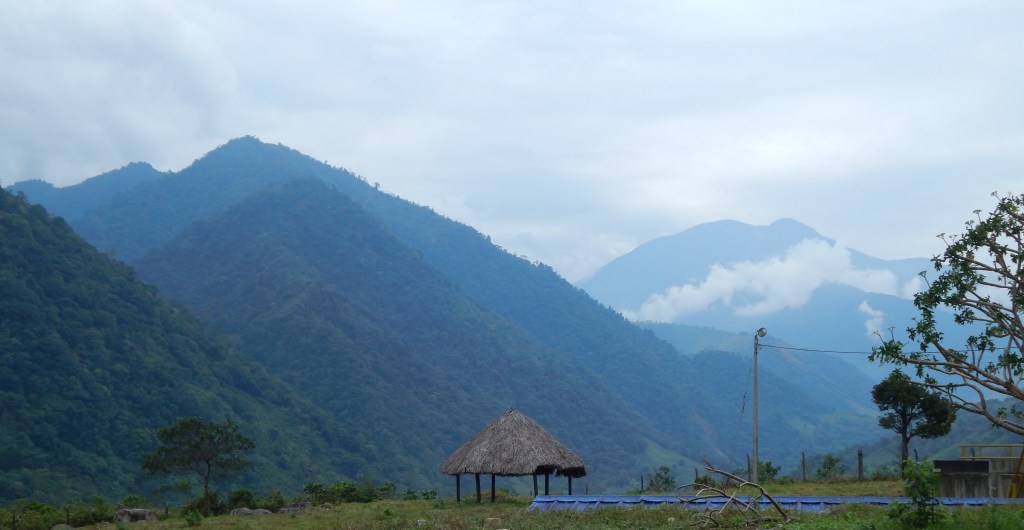
We collected the data in the Andean piedmont (i.e. the foothills) of the Colombian Orinoco as part of my M.Sc. thesis at the Pontificia Universidad Javeriana. This area is a transitional zone between the Andean mountains and the lowlands, extending from the eastern slope of the Eastern Cordillera of the Andes to the shores of the Orinoco River. The region possesses extraordinary biodiversity paradoxically embedded in a highly urbanized environment surrounded by grasslands and remnants of native forest. The fauna is so rich that one can observe groups of frugivorous bats foraging in the middle of urban areas, alongside giant anteaters (Myrmecophaga tridactyla), deer, and ocelots (Leopardus pardalis), on a university campus at the periphery of the city! Our study took place in this particular context.
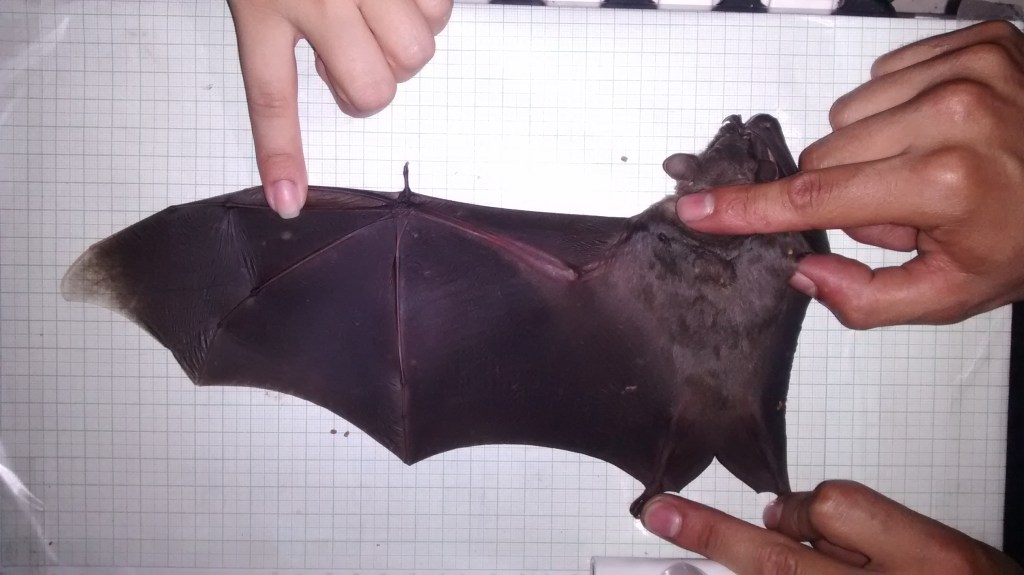
Collecting the data was challenging. Bats were extremely abundant, and measuring over ten morphological traits (including wing shape, ear dimensions, and forearm length) for every captured individual often required 12 hours of uninterrupted work. I was fortunate to have an army of undergraduate students from the Mastozoology research group (MSU). The word is the Spanish acronym for Mamíferos Silvestres UNILLANOS—from the Universidad de los Llanos.
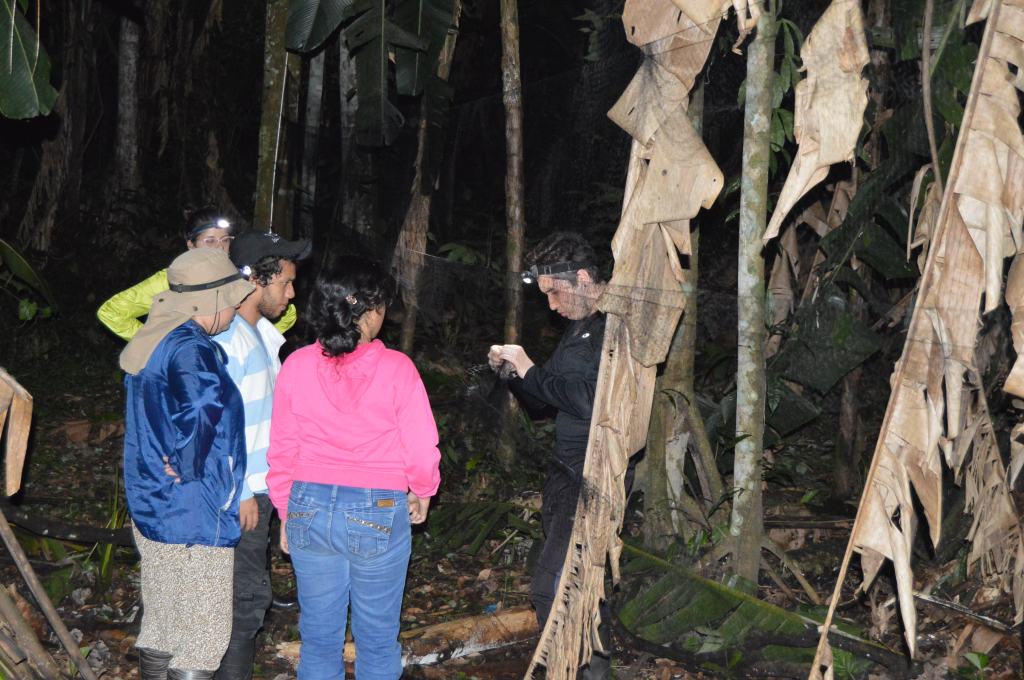
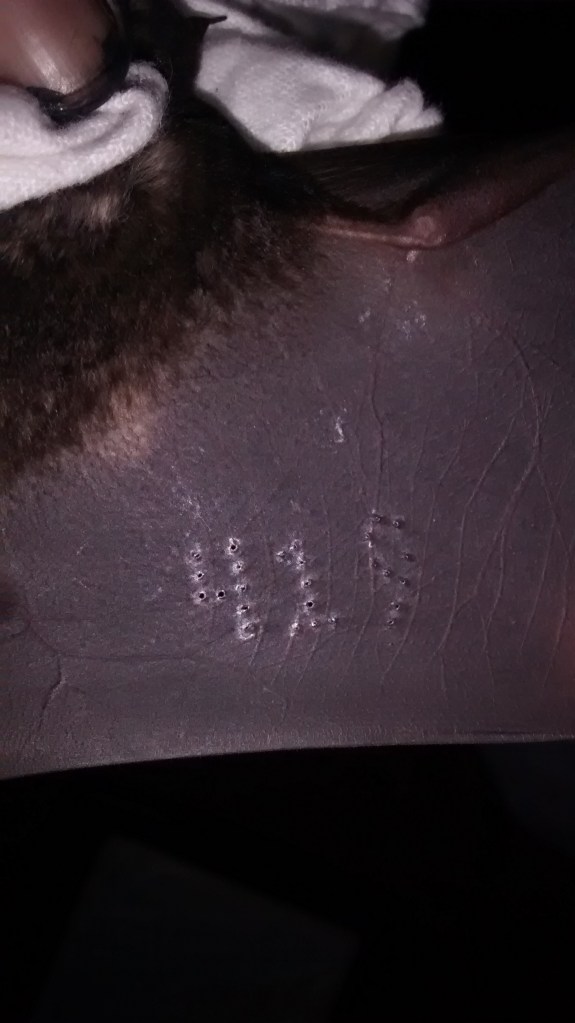
Beyond the challenge of processing large amounts of data, we also had to account for recaptures in our abundance estimates. Francisco—one of the coauthors and my thesis advisor at that time—came up with a solution: we tattooed the wings of every single bat with a numerical code. This way, we could identify individuals collected during the same sampling visit, or even weeks or months later.
The most exciting part of our results was the confirmation that processes previously shown to explain abundance in fish and tree communities also operate in bat communities. Our work provides the first empirical evidence of this mechanism operating in terrestrial vertebrates. Therefore, future research should explore whether morphological uniqueness predicts rarity in other taxa and across different ecological regions. Testing whether this mechanism holds across the globe or human-modified vs. natural landscapes would be especially valuable to understand if functional uniqueness is a universal mechanism that explains the prevalence of low-abundance species in nature.
About the author
I started my career hoping to become an agronomist, but somehow, I ended up as a biologist interested in community ecology, species interactions, ecosystem processes, and ecological modelling. Currently, I am a postdoctoral fellow with double affiliation with the Universidade Federal de Pelotas (Brazil) and the University of Wyoming (USA), studying the mechanisms explaining bird-fruit interaction in Hawaii and interspecific interactions of ant-following birds in Panama. When I am not writing papers or coding Bayesian models, I love spending my time with my family (my wife and our two cats), reading literature or history about the Eastern Front during WWII, biking, or doing Muay Thai.

Something that younger me would have appreciated: Everything passes, the good and the bad. So don’t take ‘failures’ too seriously and don’t overvalue victories; only a few things in life are truly important. If you’d like to learn more about me and my work, check out my personal website https://andres-frm.github.io/
