
In this week’s blog post, we’re working together to beat the cold! Discussing their paper: “Endogenous colony dormancy shapes seasonal cold tolerance in temperate ants” author Quentin Willot – a Marie Skłodowska-Curie Postdoc at Namur University, Belgium – guides us through how these social insects anticipate and adapt to the cold season. Quentin explains how two biological levels of organisation, the individual and the colony, interact to shape the seasonal acquisition of cold-tolerance in temperate ants based on an internal colonial time. Outside of research, Quentin also reminds us to show some kindness and keep the passion alive!
A French translation of this blog post is available here.
About the paper
Seasonality (i.e. pronounced climatic differences between seasons) is a major ecological constraint for cold-blooded organisms. In temperate climates, this typically means that harsh winters, prolonged cold temperatures, and food scarcity are predictably just around the corner. In response, many organisms across the tree of life have evolved dormancy, a state where development is halted and metabolism reduced to survive unfavourable conditions until spring.
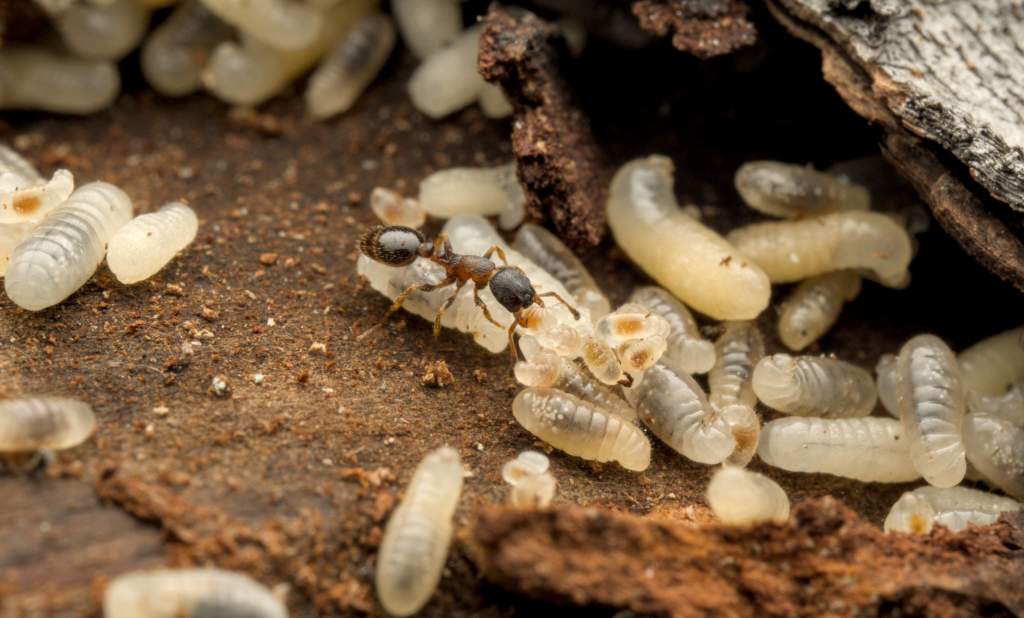
Ants are no exception. They are found across a wide range of environments, even up to the Arctic. What makes their adaptation to seasonality particularly interesting is their ability to operate at two biological levels: the individual, such as a worker, and the colony, which functions as a superorganism. In temperate climates, ant colonies enter a form of winter dormancy where brood development stops and worker activity declines until reactivation in spring. This phenomenon was extensively studied by Vladen Kipyatkov and Elena Lopatina from St. Petersburg University, who spent their career exploring the forms of colony-level dormancy in ants. One of their key findings is that cold-adapted species rely on an internal colony timer, sometimes referred to as “Kipyatkov’s sandglass device”. After emerging from dormancy in spring, temperate species’ colonies follow a relatively fixed schedule (for example six months of activity), after which they re-enter an obligate dormancy with limited temporal flexibility, even when environmental conditions remain favourable.
This research builds on Kipyatkov’s sandglass device, to explore how two biological levels: individual responses and colony organization, interact to shape worker cold tolerance. It is framed around a simple question: “if dormancy at the colony level in temperate ants is unavoidable, how does it interact with the cold tolerance of its composing individuals?” In many insects, cold tolerance is acquired, meaning individuals become more tolerant after direct exposure to low temperatures. However, what we found was the onset of colony dormancy alone, even when workers were not exposed to cold, is sufficient to increase worker cold tolerance. We tested this across five common ant species from western and northern Europe. Our results showed that the seasonal clock controlling dormancy also partially modulates workers’ cold hardiness. When exposed to cold, all species increased their cold hardiness even more by accumulating molecules such as trehalose to likely buffer against cold stress. In a sense, this work is both oddly specific and remarkably general. It builds on detailed knowledge of ant seasonal adaptation, yet highlights a broader principle of social insects: in these superorganisms, colony-level processes can modulate individual physiology. Thus, much like in The Ant and the Grasshopper from Lafontaine, temperate ants do not simply wait for winter to become cold tolerant, but begin preparing well in advance based on their internal colony clock!
About the research
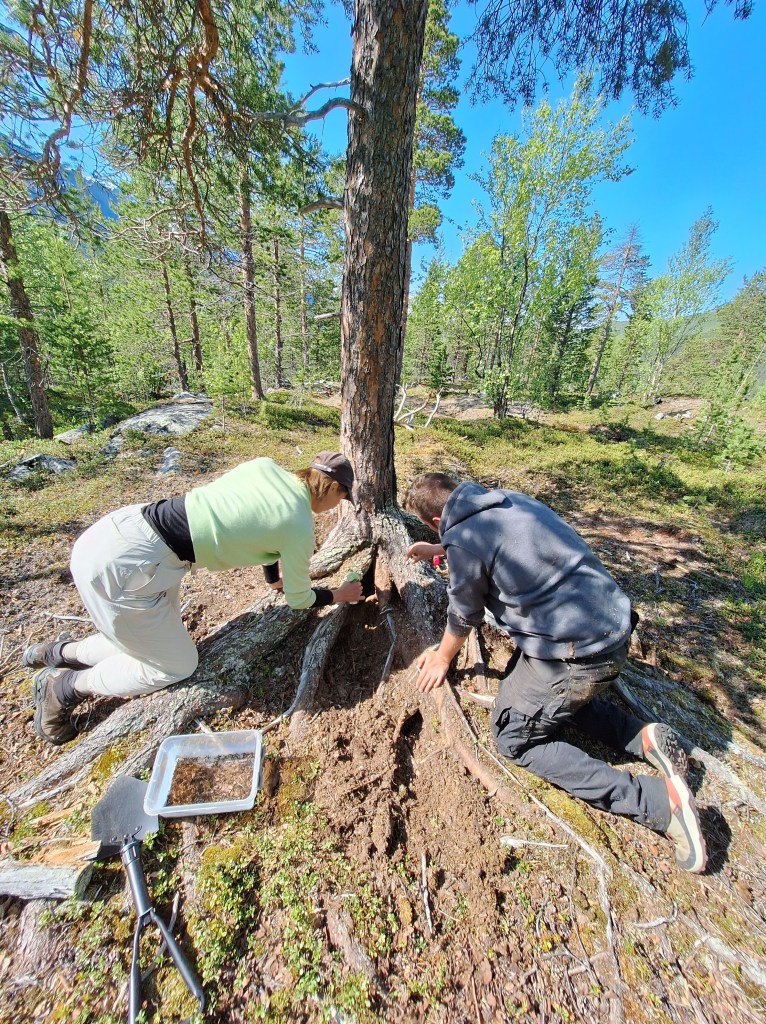
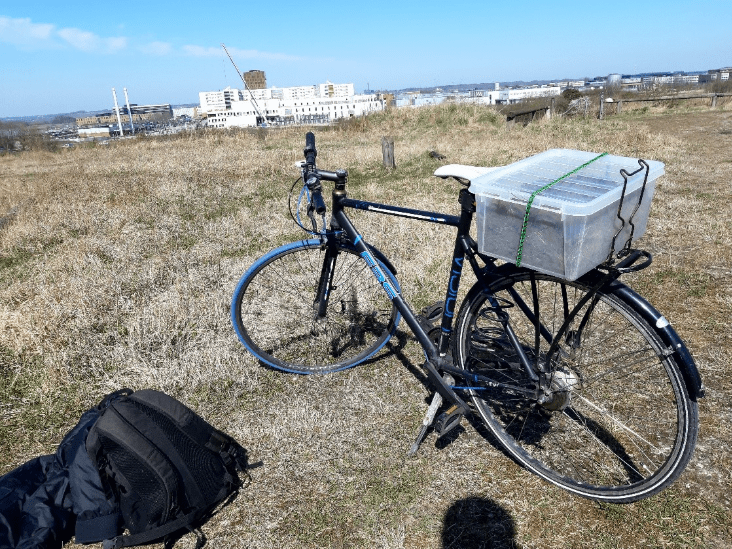
Data collection for this project was particularly challenging because we needed to decouple the onset of colony dormancy from environmental conditions using a full factorial design. To do this, we collected ant colonies in the field, allowed them to overwinter in the lab, and then monitored how worker cold tolerance changed over time. This required maintaining multiple species for up to 1.5 years while tracking their physiological changes across a full annual cycle. We measured worker cold tolerance using complementary techniques and analysed their metabolic composition via metabolomics to identify how molecules associated with cold acclimation varied across conditions. Our design allowed us to isolate the respective effects of colony dormancy and cold exposure by comparing non-dormant colonies with and without cold acclimation, as well as dormant colonies before and after cold acclimation.
Studying seasonal cycles in insects presents a unique challenge because these processes unfold over a full year, leaving only one opportunity per year to run each experiment. To minimize risks, we relied on strict environmental control and careful planning, although the long timescale makes this type of research both exciting and frustratingly slow to replicate. I was personally surprised by how consistent the directionality of the results was. This project initially started as a side project to test how Vladen Kipyatkov’s framework might interact with cold tolerance. I always try to maintain a healthy dose of scepticism about experimental data, but we did not expect such consistent patterns! In the end, colony dormancy had similar effects across all five species tested, and cold acclimation consistently triggered the accumulation of molecules known to be involved in cold tolerance, such as trehalose and certain phospholipids.
Of course, this study also had its limitations. Due to operational time constraints, we could not replicate the experiment across multiple years in the lab, and we focused on five populations from Denmark without colony-level replication. While the directionality of our findings appears fairly robust, the next step will be to test this framework across a broader sample of ants, including greater colony-level replication and wider ranges of populations, to test the repeatability of these findings at broader scales.
About the author
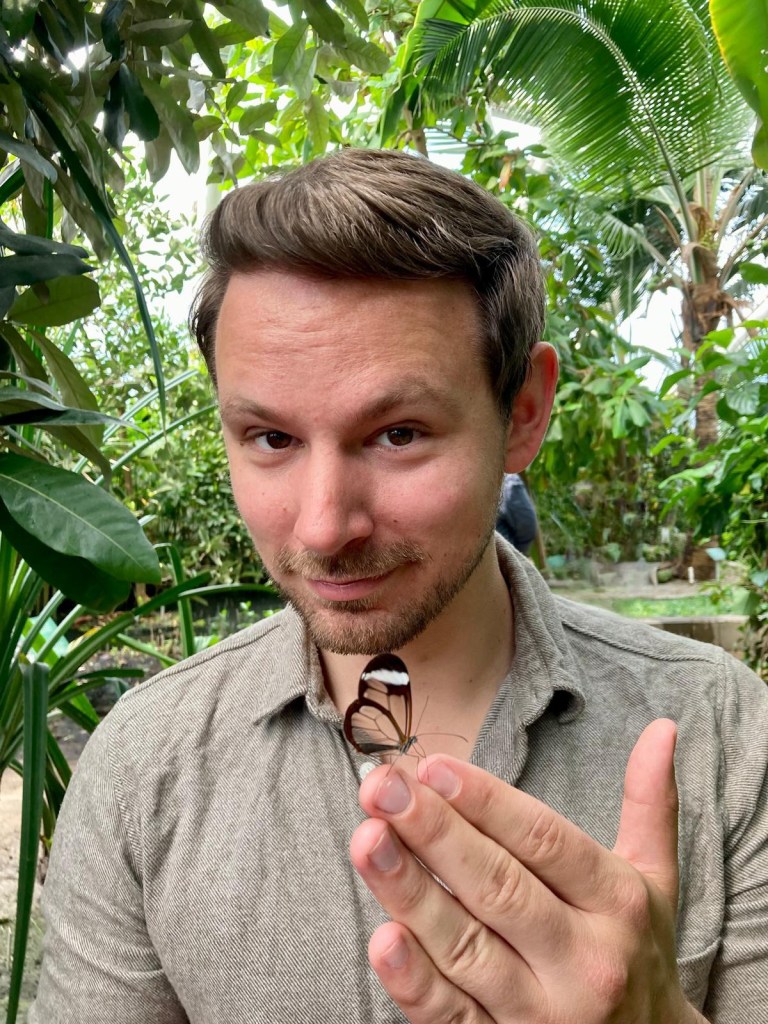
I’ve been passionate about how life adapts to environmental constraints and changes since a young age. Ants initially sparked my interest as a kid, and my career allowed me to build on that to explore more broadly how organisms and especially a diversity of insects adapt to climatic conditions over time. There are so many interesting systems to explore, and many growing problems linked to this, such as biodiversity loss and biological invasions, that need to be studied deeper within the context of global change. Currently, I’m a Marie Skłodowska-Curie Postdoc at Namur University, Belgium. This is my third postdoc position, after Stellenbosch University in South Africa and Aarhus University in Denmark. All of them have been a great source of learning and excitement, with great mentors, and I thank Vladimir Koštál and Johannes Overgaard, without whom this work would certainly not have been possible. If I had one piece of advice to share, it would be to keep the passion alive and always show kindness, even though research can be rough. . As for what I do to unwind, I love macrophotography, hiking, chilling with my cat, and I never turn away from a good moment with friends!