
In our latest ‘Behind the Paper’ blog post, author Erliang Gao shares insights into the article “Anthropogenic nitrogen addition interrupts seasonal connectivity and structures of plant–pollinator networks“, which was published in Functional Ecology in April 2026. Erliang Gao discusses the impacts of anthropogenic nitrogen enrichment on plant-pollinator networks, the joys of conducting curiosity-driven research, and the importance of establishing a work-life balance.
About the paper
Biotic interactions (e.g. plant-pollinator interactions, plant-herbivore interactions) in ecological communities had their own temporal dynamics over long-term evolution. However, rapid and complex anthropogenic changes disrupt natural dynamics of biotic interactions, threatening associated ecosystem functions. To better understand the underlying ecological process and predict our impacts on ecosystems, we need to investigate changes in interaction networks over time caused by anthropogenic disturbances. Here, we used a long-term community field experiment involving nitrogen (N) addition to investigate the impacts of anthropogenic N enrichment on how plant-pollinator changes over the season and structures of plant-pollinator network in a N-limited, fast-changing ecosystem: the alpine meadows on the Tibetan Plateau.
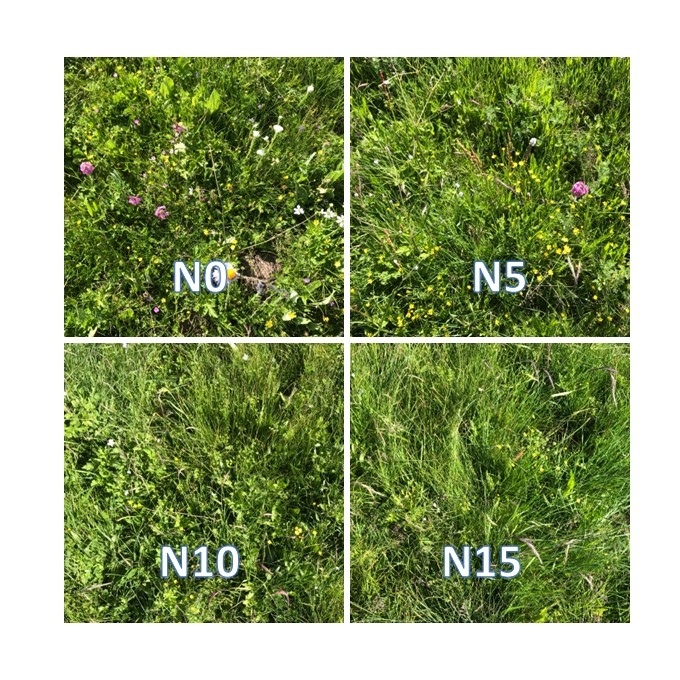
We found that N addition markedly decreased floral resources in alpine meadows, which in turn resulted in unstable pollinator visitation on meadow plants over the season. Consequently, temporal changes of plant-pollinator interactions were mainly driven by temporal turnover of pollinator species under N addition, while natural interaction rewiring processes (pollinators switch interacting partner from one to another) among temporally persistent species was affected by N addition, suggesting a markedly lower seasonal connectivity and stability of plant-pollinator interactions in meadows with high N input. N-induced changes in plant-pollinator interaction dynamics further disrupted the structure of pollination networks through reduced specialization and modularity, which suggests that pollinators interact with plants more opportunistically over time, resulting in more simplified and homogenized communities under N input.
By considering temporal dimension, our study demonstrates that anthropogenic N enrichment can interrupt seasonal connectivity and stability of plant-pollinator networks, with potential negative consequences for ecosystem functioning. Our study provides novel insights on how and why anthropogenic pollution affects multi-trophic biotic interactions in vulnerable alpine ecosystems.
About the research
This research is special for me as it is largely curiosity-driven, rather than based on a specific project. My supervisor encouraged me to think about what kind of research I’d like to do that he could support me with. At that time, I was reading some papers about the temporal dynamics of species interactions and found them very interesting, which made me very curious to find out about the temporal dynamics of plant-pollinator networks in high-altitude, fast-changing Tibetan alpine meadows and how they would respond to anthropogenic environmental changes.
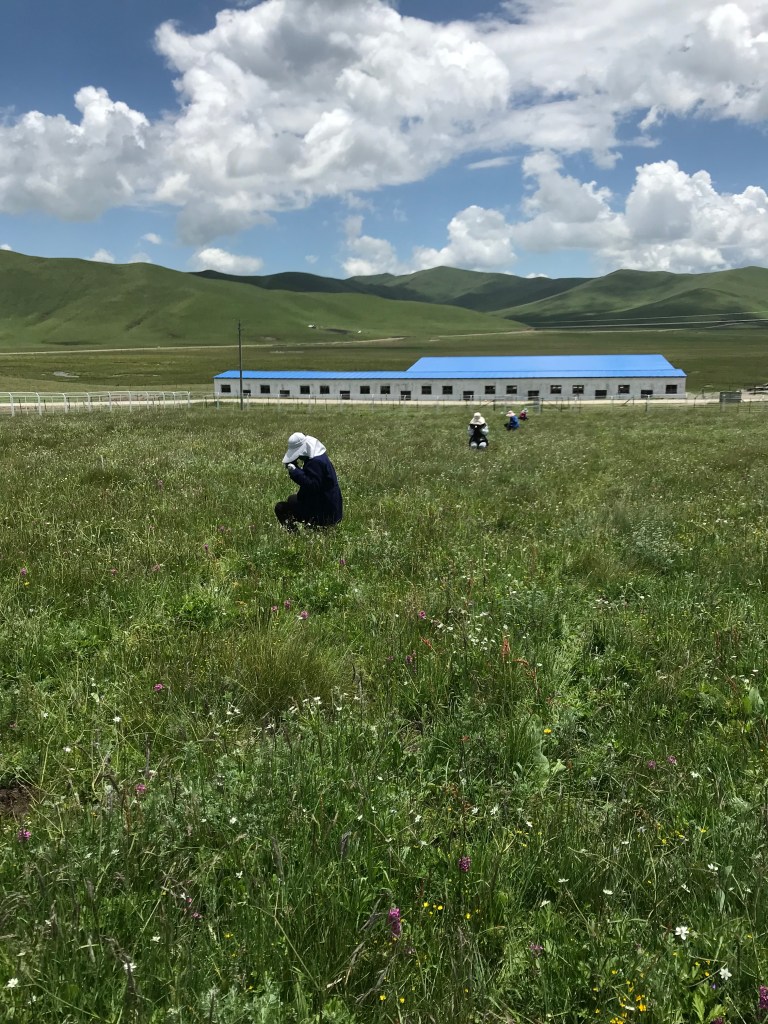
With the preliminary idea in mind, I decided to use a long-term N addition experiment platform as I’ve seen additional N in soil result in dramatic reductions in floral resources, an effect that I suspected would scale up to pollinators. The main challenge of the fieldwork was needing to finish a round of observation of 24 study plots within a relatively short temporal period and under unstable weather. It required a highly coordinated and cooperative crew. Big thanks to all lab mates!
I learnt a lot about the peer review process with this paper. Reviewers wanted us to address the spatial range of our experiment and the close distance between study plots, so we ended up conducting conducting additional spatial analyses. This process taught me that the most effective way to deal with ‘negative’ comments in peer review is to not take it personally, stay rational and find a way to address them. It will nearly always result in an improved paper!
About the author
I studied biological science as an undergraduate, but frankly I am neither fond of nor good at biological experiments in the lab 😦 Instead, I like ecology because both theories in books and experiments in the field are fascinating to me :). At this moment, I am coming to the end of my first postdoc and looking for mynext academic position. I think time is an important and interesting dimension (both in science and life), which could be added on many existing frameworks in ecology and generate novel insights. In the future, I will try to go deeper into the seasonal dynamics of plant-pollinator networks and reveal the underlying mechanisms driving specific dynamical patterns.
It seems that the academia is becoming more and more competitive, for example, getting fundings, publishing on high-quality journals, etc. Under these circumstances, I think it is very important to keep up physical and mental health and establishing work-life balance. So, I keep the tenet in mind that research is an important part of my life, but not more than that. Outside of research, I enjoyed hanging out with friends, traveling, and doing a variety of sports!