
Perrine Fournier is a trade, mining, and forest campaigner at Fern.
The threat that mining critical raw materials poses to some of the planet’s most important ecosystems is beyond dispute. To prevent it, some places on Earth must be declared off-limits for mining under any circumstances. Work has already began to identify them.
A global power struggle to secure strategic resources powering the energy transition, AI and weapons systems is driving growing demand for minerals such as copper, cobalt, lithium, nickel and manganese, which are used to make electric vehicles (EVs), batteries, wind turbines and other clean energy technologies needed to transition away from fossil fuels.
This mining boom is compounding the threats that extraction poses to precious ecosystems – including tropical forests which are vital to address climate change – and the communities who depend on them.
Preventing this environmental destruction and ensuring that mining is carried out within planetary boundaries is urgent. One solution that is gaining traction has long been advocated by Indigenous groups: creating mining no-go zones.
Fern and a group of NGOs in consultations with Indigenous Peoples’ organisations have began to sketch out a methodology to map out where mining poses unacceptable social, environmental and human rights-related risks and should be prohibited.
Off-limits: Fragile ecosystems that store carbon
The methodology is based on six criteria to determine where mining should be off-limits.
This includes areas protected under international conventions; areas with high conservation value from intact forests to key biodiversity hotspots; forests, peatlands and wetlands that are critical for carbon storage; significant ecosystems such as small islands, mangroves and grasslands; critical water bodies and Indigenous Peoples’ territories.
Around half of the of the metals and minerals needed for the energy transition are located on or near Indigenous Peoples’ territories.
A case in point is Brazil, one of the most mineral-rich countries on earth. Recent research shows that the expansion of mining threatens the conservation of about 363,000 km2 of protected land in the Brazilian Amazon, which consist mainly of forests, and is home to 195,000 traditional and Indigenous people.
Deforestation is a major driver of climate change as it releases carbon stored in the trees into the atmosphere, weakening the forests’ role as a carbon sink. Most of the Brazilian Amazon should therefore be off-limits to mining, both to protect Indigenous Peoples’ rights and because of its crucial role for the climate and biodiversity.
In the Democratic Republic of Congo, mining has had a devastating impact on the precious Miombo forest, one of the world’s largest dry forest ecosystems, and local peoples’ food security. This too is an area where mining should not be allowed to take place.
Protected areas must be default no-go zones
In Europe, efforts to secure access to minerals is also threatening fragile ecosystems. Recent reporting revealed that the European Commission disregarded expert advice when selecting “strategic” mining sites eligible for streamlined permitting procedures, with several environmentally and socially controversial projects added to the list after they initially failed to meet expert assessments.
One project which met the expert assessment but is nevertheless attracting controversy is the Sakatti nickel mining project in Finnish Lapland.
-

Brazil jostles for rare earths share as US-China rivalry heats up
With the world’s second-largest reserves of rare earths after China, Brazil is catching the eye of US and Chinese companies – spurring the government’s critical minerals policy push -
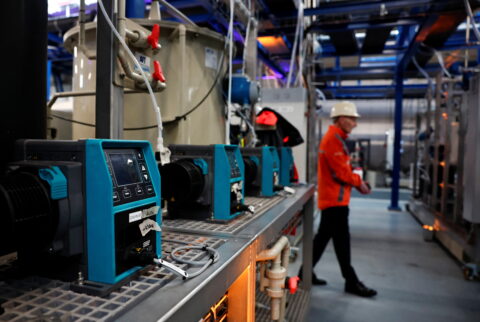
Recycling could meet half of Europe’s critical mineral needs by 2050
A new report by an EU-funded research project says the bloc could harness its “urban mines” to reduce its dependence on China for energy transition minerals -
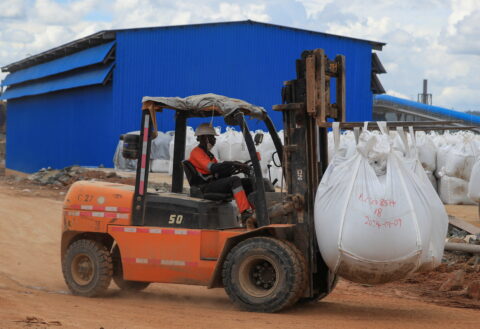
The scramble to stockpile critical minerals could drive up energy transition costs
Researchers warn that uncoordinated stockpiling could push up prices of minerals needed for clean energy technologies and delay their roll out
Part of its nickel deposit lies under a rich peat bog ecosystem, a major carbon store which developed when glacial rivers and a lake melted at the end of the late Ice Age. The site is protected under Finnish law and is as part of the Natura 2000 network intended to protect Europe’s most valuable species and habitats. These legal safeguards are on the verge of being overridden. Such protected areas should always remain off-limits to mining.
Kicking starting a discussion
To prevent mining from undermining human rights and global climate and biodiversity goals, we urgently need to adopt a global and precautionary approach. This should start with a shared definition of which areas on land and sea should be considered off-limits for extraction.
The methodology we propose is intended to kick-start a broader and transparent discussion, based on scientific, legal and social criteria, in which rights-holders and Indigenous Peoples’ organisations have a seat at the table. No mining should go ahead if it doesn’t have the Free Prior and Informed Consent (FPIC) of Indigenous Peoples’ or local communities.
Many of the restricted areas are bound to lie in forested tropical countries in the Global South, which understandably want to capitalise on their resources to spur industrial development and create jobs. But history has taught us that relying on a single resource for development runs the risk of being trapped in a resource curse. The more diversified an economy is, the more secure it is.
Reducing mineral demand
Our modelling shows that for minerals such as nickel, cobalt, lithium, there are sufficient resources that could be mined outside of these restrictive areas to wean the global economy away from climate-wrecking fossil fuels and shift to clean energy systems.
However, that requires hard policy choices, such as reducing mineral demand by promoting more efficient vehicles and alternative battery technologies that are less reliant on critical minerals, as well as better public transport, active travel and car sharing opportunities.
In addition, recycling has a major role to play. A major study recently showed that Europe could meet half of its critical mineral needs through recycling by 2050.
Some mining to access the materials the world needs to address climate change is both inevitable and necessary. But agreeing on a framework to restrict mining in the world’s most sensitive areas will protect them from its ravages, and break the destructive patterns of the past.
The post We need no-go mining zones for the energy transition to be just: Here’s how it could work appeared first on Climate Home News.