
A bronze wheel, dated to the 10th or 11th century AD, has been discovered in the Havelland region of Brandenburg, Germany.
According to archaeologists from the Brandenburg State Office for Monument Preservation and Archaeological State Museum (BLDAM), the discovery offers a rare insight into early Christian material culture among Slavic populations east of the Elbe.
The cross was found during a metal-detecting survey by volunteers at a location in western Havelland. Other artefacts from the 10th/11th century, including coins, loose pieces of partly gilded jewellery and iron weapons, were also discovered.
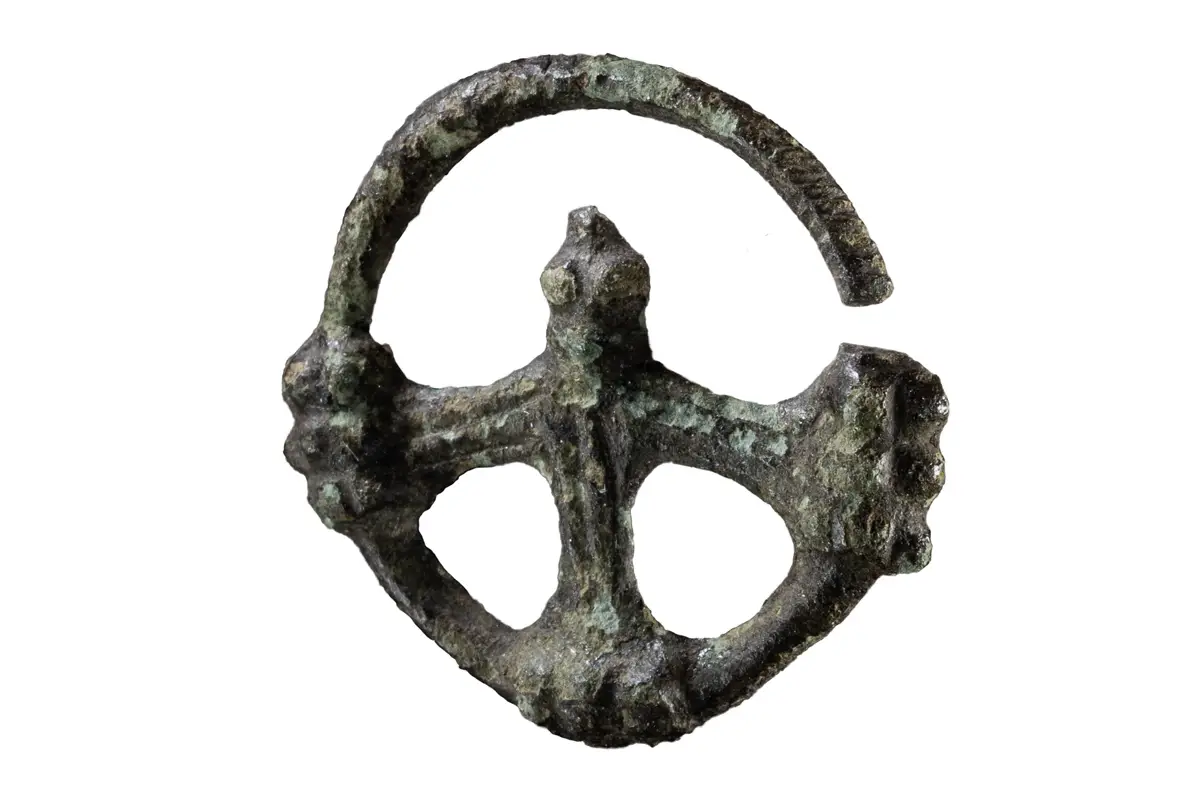
Experts have determined that the cross belongs to the type commonly known as a “wheel cross,” characterised by a ring connecting the cross’s arms and a stylised depiction of Christ.
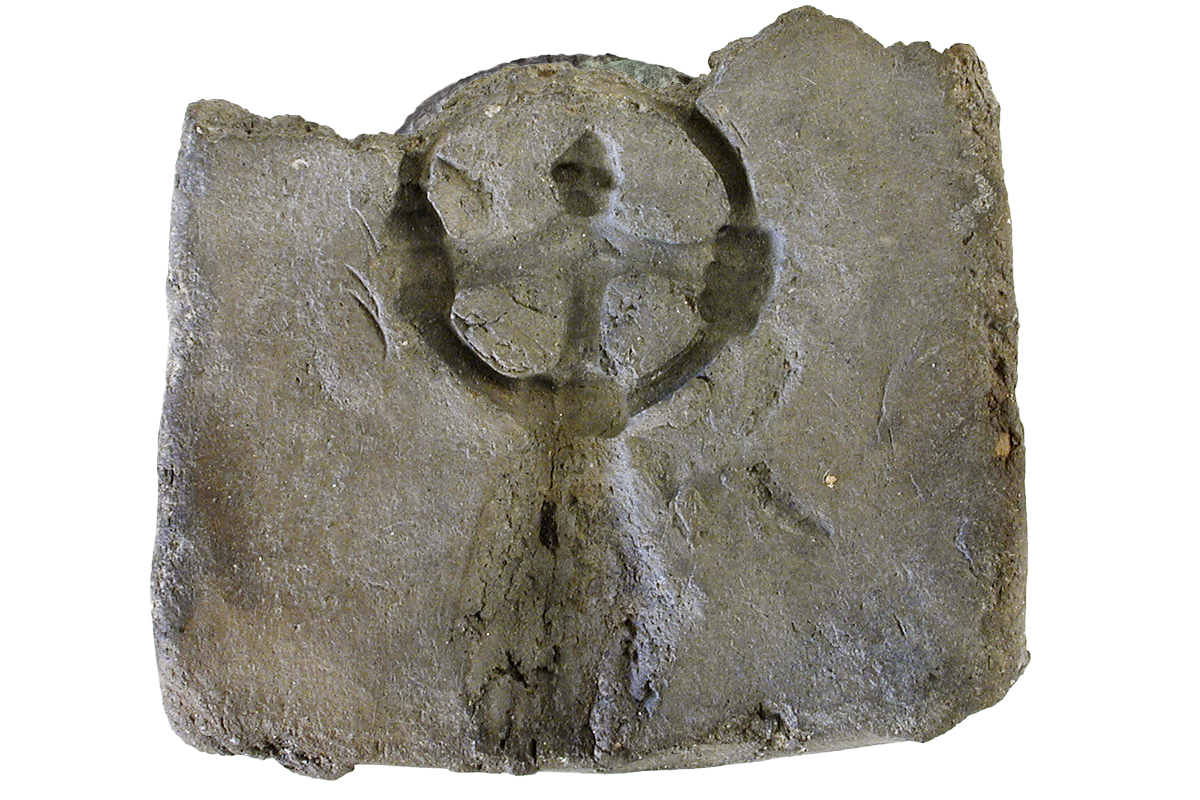
The importance of this find is enhanced by its exact match with the so-called “Spandau Cross” mould, uncovered in 1983 during excavations at the Slavic hillfort of Berlin-Spandau.
This mould, recovered near the ruins of an early wooden church, is among the earliest archaeological examples of Christian symbolism in the region between the Elbe and the Oder. Reconstruction, measurement, and comparison carried out at the Brandenburg State Archaeological Museum have confirmed that this mould was used to cast Havelland cross.
The context of this discovery is also significant. It highlights the essential role of volunteer archaeological monument conservators, who work closely with professional institutions.
In Brandenburg, hundreds of trained volunteers help document and preserve a cultural landscape with over 40,000 known archaeological sites, from Palaeolithic tools to relics of the 20th-century German division.
The Havelland wheel cross stands as a testament to both early medieval religious history and the lasting value of civic engagement in archaeological research and heritage protection.
Sources : BLDAM