
In this week’s blog post, fall into a web of knowledge with Collins Ogbeide, as he discusses his research article: “Artificial light at night and invasive signal crayfish alter aquatic-terrestrial food webs”. Collins explores predator-prey dynamics within riparian streams in a clever and unique way: artificial light! Collins also reflects on a crucial piece of advice: Adaptability matters more than having everything figured out!
About the paper
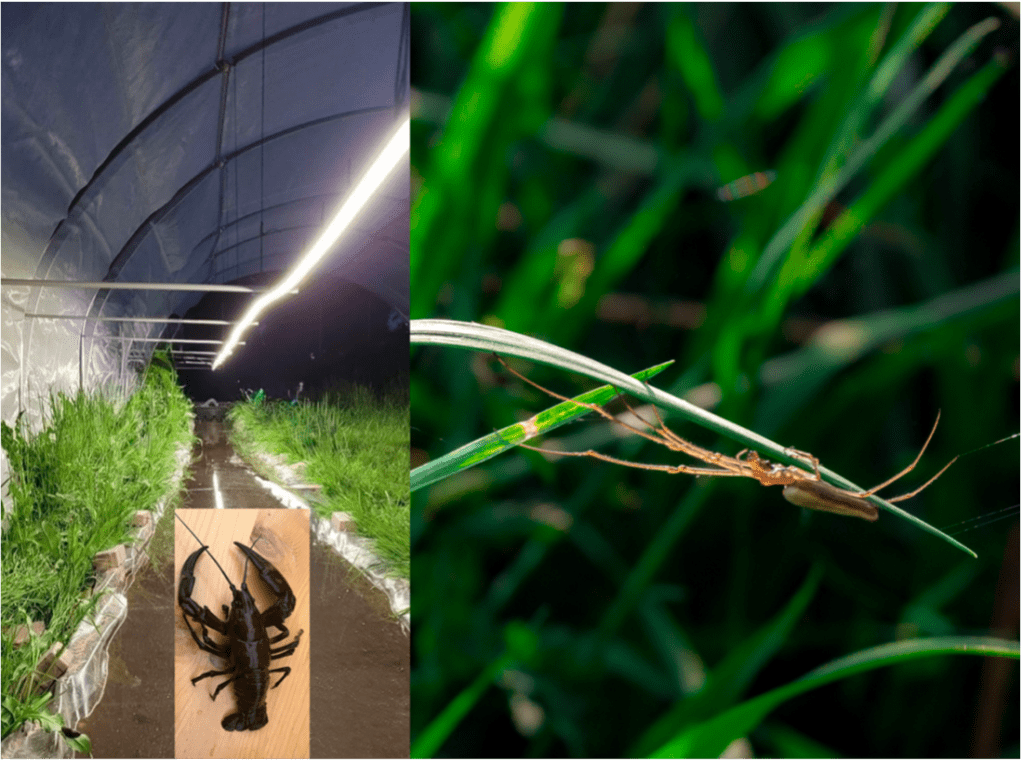
Spiders are an important part of terrestrial food webs and rely heavily on insects emerging from freshwater ecosystems. Our study explores how artificial light at night (ALAN), such as street lighting, and invasive signal crayfish (Pacifastacus leniusculus) affect the feeding ecology of riparian spiders (Tetragnatha extensa) along riverbanks, using replicated outdoor riparian stream mesocosms. We aimed to understand how these stressors influence energy and nutrient transfer between aquatic and terrestrial ecosystems and alter predator–prey interactions at the water–land interface. To do this, we used stable isotope analysis (carbon and nitrogen), a method that allow us to reconstruct food web structure and trace the origin of dietary resources across habitats.
Our result showed that aquatic prey remained an important part of spider diets across treatments. However, light pollution changed diet composition, leading spiders to consume a wider variety of prey. In turn, the invasive signal crayfish responded to light pollution by increasing predation on non-biting midge larvae and small crustaceans (gammarids). This reduced emergence of aquatic insects, an important food source!
Overall, we found that light pollution had a stronger effect on aquatic–terrestrial food web structure than the presence of the invasive signal crayfish in our system. On a broader scale, this suggests that light pollution can act as an ecological driver, reshaping how resources move between water and land. This highlights its potential to alter biodiversity in an increasingly urbanized world.
About the research
This study was conducted in Riparian Stream Mesocosms, a globally unique experimental facility in Landau (Pfalz), Germany, designed to investigate aquatic–terrestrial linkages under human influence. The facility consists of 16 artificial flumes (each 15 m long) and adjacent riparian zones, allowing realistic simulation of linked aquatic–terrestrial ecosystems. We collected ecological data on species interactions and energy transfer, focusing on aquatic and terrestrial organisms such as macroinvertebrates, emerging aquatic insects, and terrestrial herbivores as prey resources for signal crayfish and riparian spiders. Trophic linkages were quantified using carbon and nitrogen stable isotope ratios from organisms in both aquatic and terrestrial habitats, together with mixing models to reconstruct food webs connections.
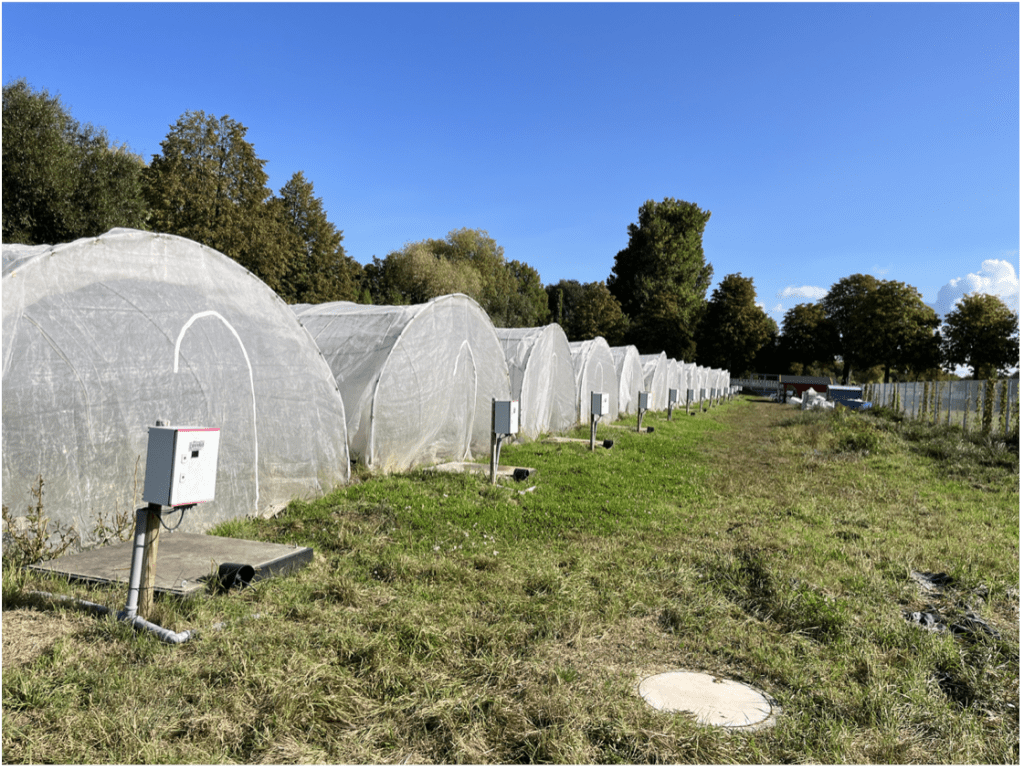
Several practical challenges emerged during data collection. Field trapping of crayfish proved difficult, and constructing the flume bank with clay required careful adjustments and substantial effort. Early in the experiment, some crayfish either escaped or died – an issue commonly encountered in semi-natural setups! However, despite these difficulties the results provided insights into how human-driven changes can propagate across ecosystems boundaries. This work was carried out within the SystemLink working group. A general-audience summary is available on the Ecotox blog.
About the author
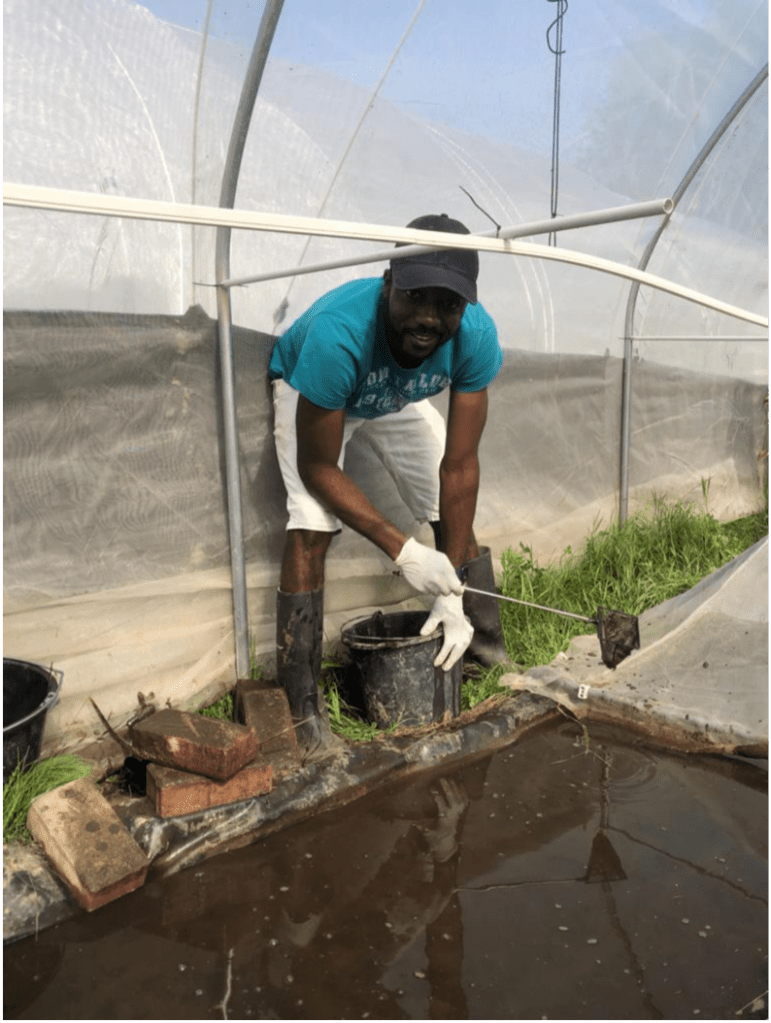
I am currently a PhD researcher at RPTU University Kaiserslautern-Landau, where I study how human-driven disturbances affect the link between aquatic and terrestrial ecosystems in freshwater systems. My interest in the topic grew during my time as a Technical Assistant in the Riparian Stream Mesocosm facility, where I became increasingly fascinated by how human activities shape ecological processes across ecosystem boundaries. I am especially interested in the mechanisms that connect aquatic and terrestrial systems, and in how disturbances in freshwater habitats can spread into nearby terrestrial environments through energy flow, nutrient transfer, and the movement of organisms.
If I could give my younger self one piece of advice, it would be to embrace uncertainty at the beginning of a scientific career. Progress in science is rarely straightforward, and in cases, persistence, curiosity, and adaptability matters more than having everything figured out from the start.