
Rich Wilson is CEO of the Iswe Foundation and co-founder of the Global Citizens’ Assembly.
The numbers are stark. According to the 2026 Global Report on Food Crises, 266 million people across 47 countries experienced high levels of acute food insecurity last year, nearly double the figure recorded a decade ago.
Meanwhile, disruptions to oil, gas and fertiliser flows through the Strait of Hormuz drove a 46% month-on-month spike in urea prices early this year, sending agricultural price indices up 8% and raising the spectre of a global affordability crisis.
This is not a blip. It is a new baseline. The EAT-Lancet Commission concluded that food systems now account for roughly 30% of total greenhouse gas emissions and are the largest single contributor to the climate crisis. The science has been clear for years.
Now some of the solutions to the problem are becoming socially acceptable too.
-

Can giant batteries unlock Africa’s green industrial future?
Battery energy storage systems (BESS) could drive clean tech manufacturing in Africa but shortfalls in finance and data are still limiting deployment at scale
Earlier this year, people from more than 60 countries and territories, selected not by vested interest, but by lottery, spent seven weeks examining the evidence on food and climate for the latest Global Citizens’ Assembly. They heard from scientists, farmers and industry. They worked through 42 hours of structured deliberation, engaging with some difficult trade-offs.
They were not asked to endorse a predetermined conclusion. They were asked an open question: what changes, if any, should we make to how we grow, share and eat food, so that everyone has enough to nourish themselves while tackling the causes and impacts of climate change?
Phase down industrial animal farming
Their answer was unambiguous. They voted to protect forests. They voted to phase down industrial animal food production. They voted for supply chain reform and corporate accountability, explicitly rejecting the idea that the burden of change should fall on individual consumers. All 22 of their Calls to Action passed with over 85% support, a super-majority of randomly selected people from every region of the world, in agreement.
Consider what the assembly was actually being asked to decide. Industrial animal food production is the primary driver of tropical deforestation. Protecting more land as forest and ecosystem means less land available for the expansion of industrial production. That is a real trade-off, with real consequences for real livelihoods. Politicians have spent years avoiding it.
Food systems are the missing ingredient from the COP30 menu
These randomly selected people looked at the evidence, deliberated across time zones and cultures, and chose the forests, with 64% in strong support and a further 20% in favour. People from livestock farming communities voted for change. Not because they were told to. Because deliberation led them there.
We estimate there have now been more than 7,000 citizen participation initiatives worldwide in the last decade. They have been organised because, as our 2025 report: People in the Lead demonstrated, people are now consistently and significantly ahead of politicians on issues ranging from climate to AI governance.
The people know best
What the research consistently shows is that ordinary people, given proper evidence and time, produce recommendations that are more effective and more aligned with public values than what emerges from elected legislatures. The gap in global governance is no longer primarily between science and the public. It is between citizens and their political leaders.
That gap matters for more than procedural reasons. When policy treats people as passive recipients rather than active participants, it leaves out the very actors whose behaviour, trust and consent the transition depends on. Institutions that speak only to other institutions, and negotiate only with state actors and industry lobbies, are missing out on the trust and energy of the people they are supposed to serve.
Governments, left to their own devices, are not moving fast enough to prove that argument wrong. At COP30 in Belém last November, countries failed to agree on a fossil fuel phaseout roadmap, and even full implementation of every submitted national climate plan still leaves the world on course for 2.3 to 2.8C of warming.
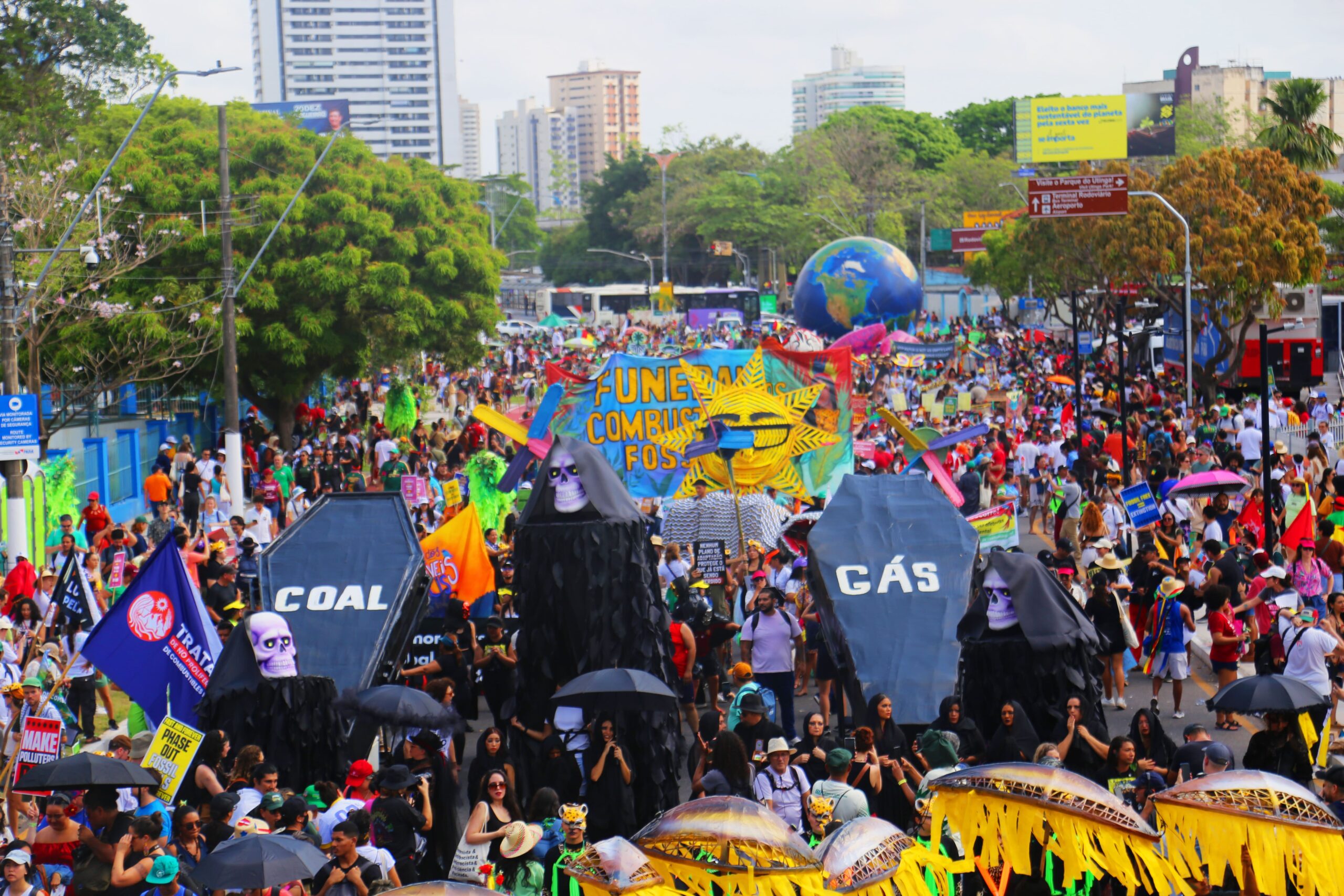
Citizens’ track at COP
But the Brazilian presidency grasped something important. Among the conference’s more significant outcomes was the formal launch of a Citizens’ Track within the UNFCCC process, a mechanism for connecting the global participation field to intergovernmental climate negotiations. Türkiye and Australia, who together hold the COP31 presidency in Antalya this November, now have the opportunity to strengthen and institutionalise what Brazil began.
In Guatemala, Indigenous women build climate resilience with old and new farming methods
The question before us is no longer whether citizens can contribute to solving these problems. Across the world, in local food networks, in community assemblies and in participatory planning processes, they already are, quietly generating more ambitious and more legitimate solutions than those emerging from formal diplomatic channels.
What is required now is the political courage to connect people to power. Not to consult citizens and file the results. Not to invite them to observe while the real decisions are made elsewhere. But to recognise the public as partners in perhaps the most consequential governance challenge of our time.
The post As food shocks spread, citizens are showing more leadership than governments appeared first on Climate Home News.