
The UK government warned the Carbon Capture and Storage Association’s (CCSA) annual conference on Tuesday that the fledgling industry should prepare to receive less financial support from taxpayers in the future.
As the left-wing Labour government, under its new leader Andy Burnham, seeks to boost military spending in line with NATO allies, it is reportedly looking to cut funding for emissions-reduction projects, with subsidies for carbon capture and heat pumps among the projects in the firing line.
Martin McCluskey, a junior minister in the UK’s Department for Energy and Net Zero (DESNZ), told the CCSA conference in Westminster that, while the government supports the industry, “it is no secret that we are operating in a challenging fiscal environment and this government remains committed to meeting its fiscal rules”.
Already have an account?
Log in here →
This story is exclusively available to paid subscribers. A free account gets you a selection of our reporting and our Climate Weekly newsletter. But a subscription gets you every story in full, our Bulletin emails from negotiations and conferences, two subscriber-only newsletters, and our monthly Editor’s column.
Subscribe for £40/quarter →
Or £130/year — best value.
The UK government warned the Carbon Capture and Storage Association’s (CCSA) annual conference on Tuesday that the fledgling industry should prepare to receive less financial support from taxpayers in the future.
As the left-wing Labour government, under its new leader Andy Burnham, seeks to boost military spending in line with NATO allies, it is reportedly looking to cut funding for emissions-reduction projects, with subsidies for carbon capture and heat pumps among the projects in the firing line.
Martin McCluskey, a junior minister in the UK’s Department for Energy and Net Zero (DESNZ), told the CCSA conference in Westminster that, while the government supports the industry, “it is no secret that we are operating in a challenging fiscal environment and this government remains committed to meeting its fiscal rules”.
“So I owe it to you today to level with you,” he said. “The next phase of the CCUS (carbon capture, use and storage) programme will be in the context of broader, difficult decisions on funding. We must ensure that public investment is targeted where it can deliver the greatest value while continuing to build confidence in the long-term future of the sector.”
He warned that this may mean “making decisions about priorities, sequencing and pace and recognising that progress will not always happen everywhere at once”. “But this will also mean opportunity as we move beyond first-of-a-kind projects,” he added.
Earlier in the day, the energy ministry’s industrial carbon capture and storage (CCS) lead Stefanie Murphy was asked by an audience member if it had become clear that the government could not afford to support future carbon transport and storage projects at the same level as in the past.
“I think yes,” she replied. “We can all see the fiscal realities that we’re facing,” she said, adding that the government’s top priority is tackling the cost of living and, while it also wants to grow the economy, there are lots of competing priorities for its money.
She urged the industry to reduce costs and demonstrate its benefits in terms of job creation and regeneration of economically deprived areas.
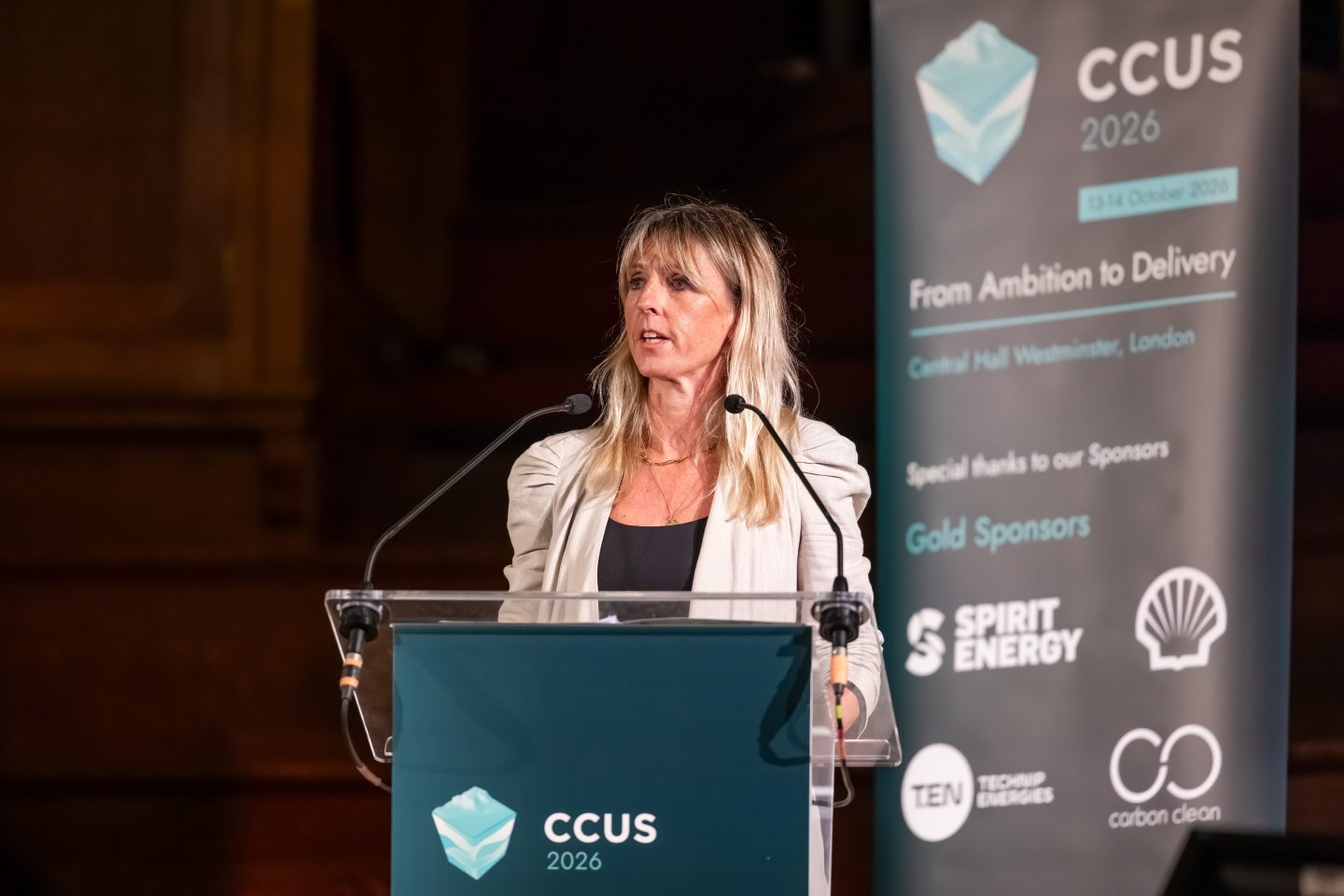
Opening the conference, the CCSA’s chief executive Olivia Powis made that case, arguing that CCS “engineers in Teesside, fabricators in Hartlepool, construction workers in north Wales” are “what reindustrialisation looks like”.
Speaking before the government officials took the stage, she warned that “this momentum is not inevitable. The first projects have created confidence because governments made commitments and industry invested against them.”
“If that commitment weakens now, investment and developers will not simply wait. They will go elsewhere. The UK has worked hard to establish itself as a global leader in CCUS. We cannot afford to lose that position just as delivery begins,” she said.
Eoin Devane, acting director of net zero for the UK government’s official advisers, the Climate Change Committee, said the government is relying on CCS to meet its carbon budgets and 2050 net zero target, but has “insufficient plans” to deliver these emissions cuts and there are “significant risks” it will fail.
Necessary but limited
CCS is when carbon dioxide is captured from a concentrated source – like a cement kiln’s exhaust – and then transported by pipeline, train or ship to be stored underground either at sea or on land.
It is controversial among many climate campaigners, as it is favoured as a solution to greenhouse gas emissions by fossil fuel companies that are keen to keep on making money both by producing more oil and gas and by storing carbon dioxide in reservoirs they have already exploited.
But experts describe it as having a necessary – although limited and expensive role – in the transition to clean energy. Scientists with the UK’s Climate Change Committee and the Intergovernmental Panel on Climate Change’s (IPCC) say it is required to help clean up the emissions of industries like cement and chemical production that are hard to replace with renewable electricity.
But the IPCC also says that CCS is one of the costliest ways to reduce climate-heating emissions. Whereas industries like solar and wind energy are now mostly profitable without subsidies, the CCS industry continues to rely on taxpayers for support.
Northern Lights, the crown jewel of Europe’s CCS industry, was 80% funded and “enabled very much” by the Norwegian government, its managing director Tim Heijn told the conference.
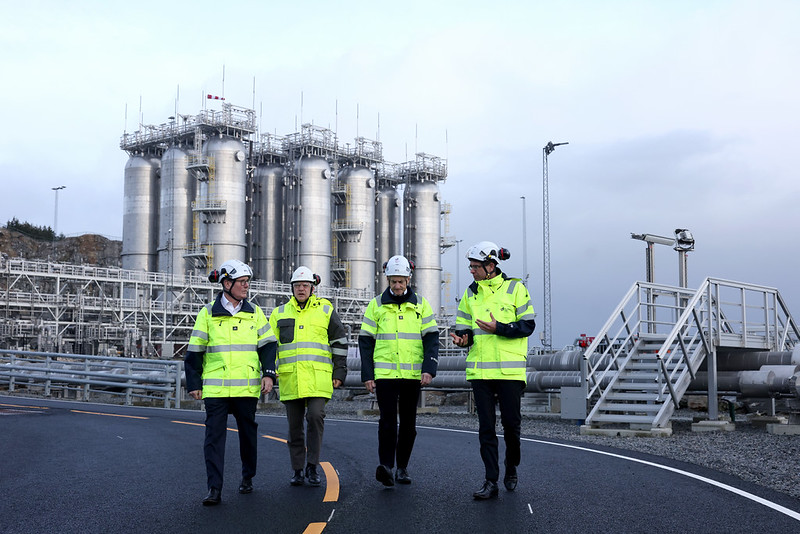
The project captures carbon dioxide from emitters across Europe, ships it as a liquid to Norway’s west coast and transports it through a 100km pipeline to be injected into a reservoir 2,600 metres below the seabed.
Carbon dioxide emitters, like cement plants, also receive government subsidies and carbon credit revenues to help them pay to store their carbon dioxide, Hejn added. They can sell their products, like low-carbon cement, for a green premium.
Ways to become financially sustainable
With subsidies in the UK likely to dwindle, panellists at the conference were asked whether – and how – their business could become financially sustainable.
Cristel Lambton, technical and operations director of Italian oil company Eni’s CCUS arm, said the industry “still needs funding at this stage”. “We all want the CCUS market to be a sustainable market but we can’t just rush towards it,” she added.
Tanisha Beebee, CCS lead at British oil and gas company Harbour Energy, said the shifting economic and political situation had led her company to try and change business models in a bid to reduce reliance on government subsidies and lower its costs.
Jack Richards, CCS lead at a company called Spirit Energy which wants to repurpose its Morecambe gas field to store carbon, argued that reliance on government funding would ease if there was a higher carbon price, making emitting greenhouse gases more expensive compared to capturing and storing them and therefore boosting demand for CCS.
Another problem is that the interest of some CCS customers in the UK appears to be waning. Hydrogen-maker BOC, a subsidiary of Linde, withdrew its interest in the Northern Endurance Partnership offshore carbon storage scheme in September 2025. BP also withdrew after cancelling a blue hydrogen project in the region, leaving just one gas-fired power plant called Net Zero Teesside as a customer.
Waste management company Viridor, however, is still interested in paying for its emissions to be captured and stored. Its CCUS director James Eyton said the timeline for becoming independent of government support is “tricky”, adding that the sale of carbon credits could be a “fundamental alternative revenue source” for the CCUS industry.