
Britain’s new prime minister announced in his first week that he will cut the cost of public transport and electricity, making lower-emission technologies like bus travel, electric vehicles and heat pumps more affordable for voters. But some of the funding for those policies will come from the budget for international climate finance, the government has said, raising concerns about fairness.
Former Manchester Mayor Andy Burnham took over from Keir Starmer as Labour Party leader and prime minister on Monday, appointing climate advocates Ed Miliband as foreign and development minister and Miatta Fahnbulleh as climate and energy minister.
On Tuesday, Burnham said his government would cut the value added tax (VAT) households and some small businesses pay on their electricity bills from 5% to zero from October 1, saving households £45 ($60) a year.
On Wednesday, he said the maximum fare bus companies in England can charge for a single journey will be reduced from £3 ($4) to £2 ($2.67) from January 1, 2027. The government said the subsidies to achieve this would be mostly funded by switching money set aside for overseas climate finance projects from grants to loans. It did not give further information in its announcement, while the UK’s transport minister told Sky News the plan is still being worked out.
-

UK halves Green Climate Fund contribution, as it spends more on security
After promising £1.6 billion to the UN’s flagship climate fund in 2023, the UK government has now said it will only hand over half as much -

EU, UK lead push for electrification as “powerful weapon” against fossil fuels
A group of dozens of countries seeks to build momentum for a COP31 pledge to electrify 35% of global energy use by 2035 as an alternative to fossil fuels
The floated changes to the climate finance budget were immediately criticised by groups working on climate justice for developing countries, including Bond, the UK network for NGOs, which described the decision as “disappointing”.
“Robbing Peter to pay Paul is not the answer and pitches marginalised communities in the UK against marginalised communities in lower-income and climate-vulnerable countries,” BOND CEO Romilly Greenhill said in a statement. “Climate finance must not worsen the debt burden of countries that are already suffering the worst – and most costly – impacts of a climate crisis they did not cause.”
Hunt for money
Burnham promoted both policies as measures to combat the rising cost of living and “give people breathing space”, with climate campaigners and industry groups noting they are also likely to reduce the UK’s climate-heating emissions by encouraging bus travel and the use of electric vehicles and heating.
But thorny questions remain over how the policies will be paid for. The government said Tuesday’s VAT cut for electricity would be funded by scrapping the previous government’s digital ID programme, but Darren Jones, a former minister involved with that policy, said it had been “unfunded” – a statement that dominated media coverage.
A day later, the government said the new bus fare cap would cost £454 million ($606m). Transport minister Heidi Alexander told Sky News that £54 million would be taken from an under-spend in the budget of the Department for Energy Security and Net Zero (DESNZ) and £400 million would come from changing unspecified international climate finance from grants to loans. The details “still need to be worked through”, she said, adding that the government “had wanted to make an announcement today”.
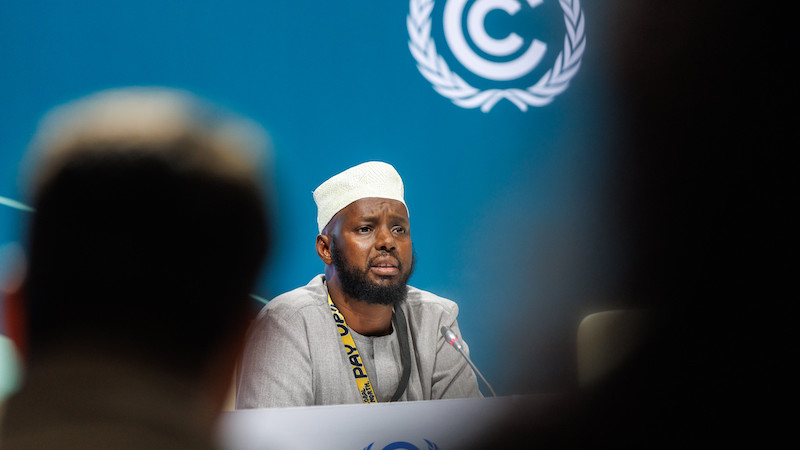
Mohamed Adow, director of Nairobi-based think-tank Power Shift Africa, said “climate finance was never meant to be a pot of money that governments raid when they need to pay for domestic spending”.
DESNZ had not responded to a request for comment at the time of publication. “We’re not wanting to fleece anyone here, and we actually want to maximise the development potential of this money that is available,” minister Alexander said in her TV interview.
Aside from the controversy over their funding, the policies themselves were widely welcomed by climate campaigners. Jess Ralston, energy lead at the Energy and Climate Intelligence Unit (ECIU), said the tax cut on electricity bills “could help households to switch to electric heat pumps, protecting UK homes from becoming ever more exposed to the whims of Putin and Trump when turning on their gas boiler”.
The last few months have seen global momentum build behind electrification, spurred by the US-Iran war disrupting oil and gas supplies and driving up prices. The Turkish and Australian COP31 presidencies have announced a global target to boost electrification, backed by the European Union, Canada, Philippines, UK and others.
Campaigners call for lower power prices
While reaction to the VAT cut was supportive, some questioned whether £45 a year of savings per household is enough and called for more measures to cut electricity bills.
Friends of the Earth’s energy lead Imogen Dow said those on the lowest incomes should be given cheaper electricity through a “social tariff” and the Institute for Public Policy Research (IPPR) think-tank – which is close to the Labour Party – said levies on energy bills should be shifted to general taxation.
Matthew Paterson, a politics professor at Manchester University, told Climate Home News that the most effective way to reduce electricity bills is to take on the UK’s private electricity companies, while consumer-oriented measures like the VAT cut are “tinkering around the edges”.
Jarrod Birch, head of policy and public affairs for the EV charging industry association Charge UK, said that while the policy would make home-charging cheaper, people who charge their vehicles at public points will still have to pay 20% VAT. The UK’s tax authority is fighting a court ruling that ordered it to reduce the tax motorists pay on public chargers to the current household rate of 5%.
Further measures will be the responsibility of Secretary of State for Energy Security and Net Zero Miatta Fahnbulleh, who is relatively new to politics after a career at left-wing, pro-climate think tanks the IPPR and the New Economics Foundation.
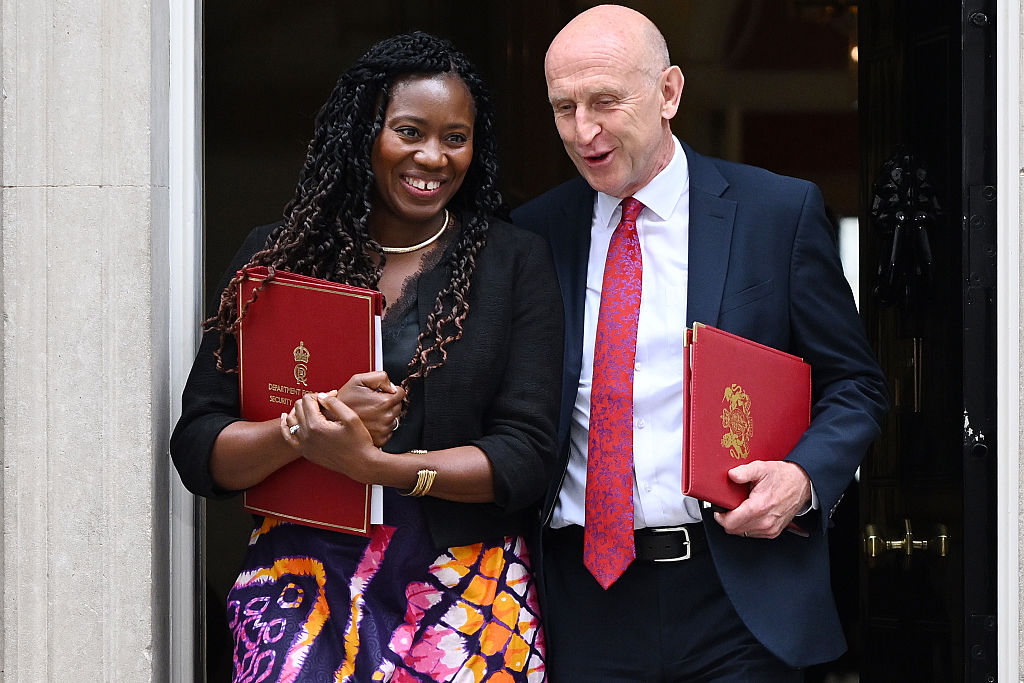
Michael Jacobs, political economy professor at Sheffield University and former adviser to UK Labour prime minister Gordon Brown, said Fahnbulleh would be a “climate advocate” who would continue the “progressive climate agenda” of her predecessor Ed Miliband.
“She’s a very creative policy wonk so I expect there to be lots of policy innovation under her,” he said, “I think she will be looking at new ways to encourage take-up of heat pumps and domestic batteries.”
Aid budget in Miliband’s hands
Despite reports he could be made finance minister, Miliband has been appointed Secretary of State for Foreign and Commonwealth Affairs. Miliband has attended many climate COP meetings over several decades, most recently representing the UK at COP29 and COP30, and has been targeted by the right-wing media for his support for climate action and opposition to new oil and gas drilling in the UK’s part of the North Sea.
In his new role, Miliband will be responsible for the UK’s overseas aid budget including its international climate finance, which the Starmer government had slashed to fund increases in defence spending.
UK cuts support for climate action abroad to fund military instead
Jacobs said he expected Miliband to prioritise climate and development in the UK’s foreign policy and to push Burnham and new finance minister John Healey to reverse Starmer’s aid cuts.
But there are fears Healey could try to cut the aid budget further to fund the military. Healey was a surprise pick for Chancellor of the Exchequer and grabbed headlines when he resigned as Starmer’s defence minister in June over what he saw as insufficient defence spending.
The post Will new UK PM’s green measures at home cause climate finance pain overseas? appeared first on Climate Home News.
