
In this blog post, author Evan Perkowski – a postdoctoral research associate at Texas Tech University – delves into his research article “The negative effects of an allelopathic invader on native plant photosynthesis are amplified after tree canopy closure“, which was published in Functional Ecology in July 2026. Evan shares how garlic mustard “sows the seeds” of havoc on native plant photosynthesis, the challenges of working on slippery soil plots, and the importance of pausing to enjoy the present.
About the paper
Our paper investigates the physiological mechanisms driving native plant responses to garlic mustard invasion and whether these responses change across the growing season. Garlic mustard (Alliaria petiolata) is an invasive species of Eurasian origin that has spread rapidly across the northeastern and upper midwestern United States. Its establishment in novel environments is largely attributed to its ability to release antimicrobial compounds into the soil that disrupt arbuscular mycorrhizal (AM) fungal communities. Many native species in these regions form symbiotic associations with AM fungi, exchanging sugars produced from photosynthesis for nutrients and water acquired by AM fungi.
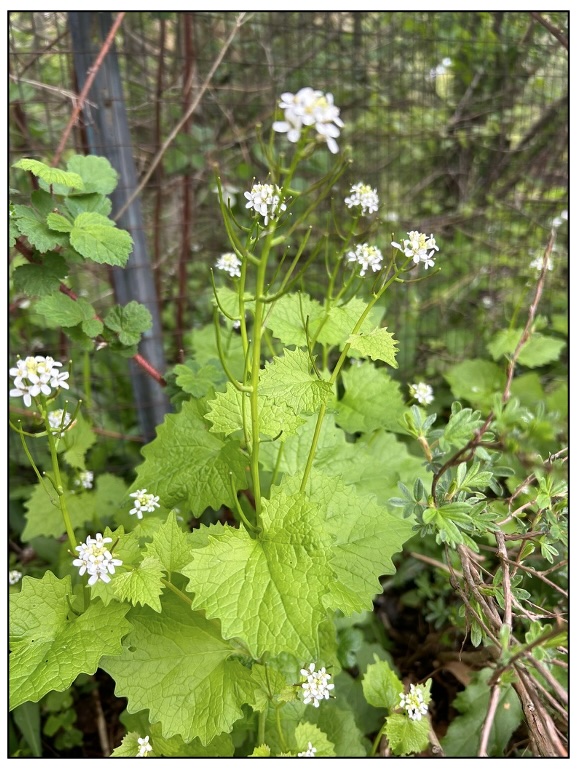
Given that nutrients and water are required to move photosynthetic reactions forward, disruptions in AM fungal communities due to garlic mustard may cause native plants to have fewer resources to support photosynthesis. Previous work has shown that garlic mustard reduces native plant photosynthesis by causing plants to close their stomata, exhibiting a classic water-stress response. Until this study, it was unclear whether photosynthetic responses to garlic mustard were also due to nutrient stress, as indicated by photosynthetic capacity, or the maximum capacity by which a leaf can fix carbon dioxide. Photosynthetic capacity is often used as an indicator of nutrient stress due to many photosynthetic enzymes having large nutrient requirements to build and maintain. It was also unclear whether native plant responses to garlic mustard varied across the growing season, as previous work has assessed garlic mustard impacts at a single time point in the growing season. Invasion impacts occur year-round and are likely influenced by dynamic changes in ecosystem nutrient cycling and light availability as tree canopies open and close.
Our study addressed both outstanding questions. We found that one native species (Trillium spp.) with a shorter growing season experienced a reduction in net photosynthesis in the presence of garlic mustard that stemmed from a reduction in photosynthetic capacity, indicating increased nutrient stress. The other native species (Maianthemum racemosum) with a longer growing season experienced a similar reduction in net photosynthesis that was driven by a reduction in stomatal conductance, indicating increased water stress. Despite photosynthetic responses to garlic mustard being driven by different mechanisms, both species exhibited remarkably stronger responses later in the growing season after the tree canopy had closed and soil resources were depleted. These findings point to two novel insights: (1) garlic mustard influences both nutrient and water economies in native plant communities; and (2) garlic mustard effects on native plant physiology appear to dynamically shift with environmental changes across the growing season.
About the research
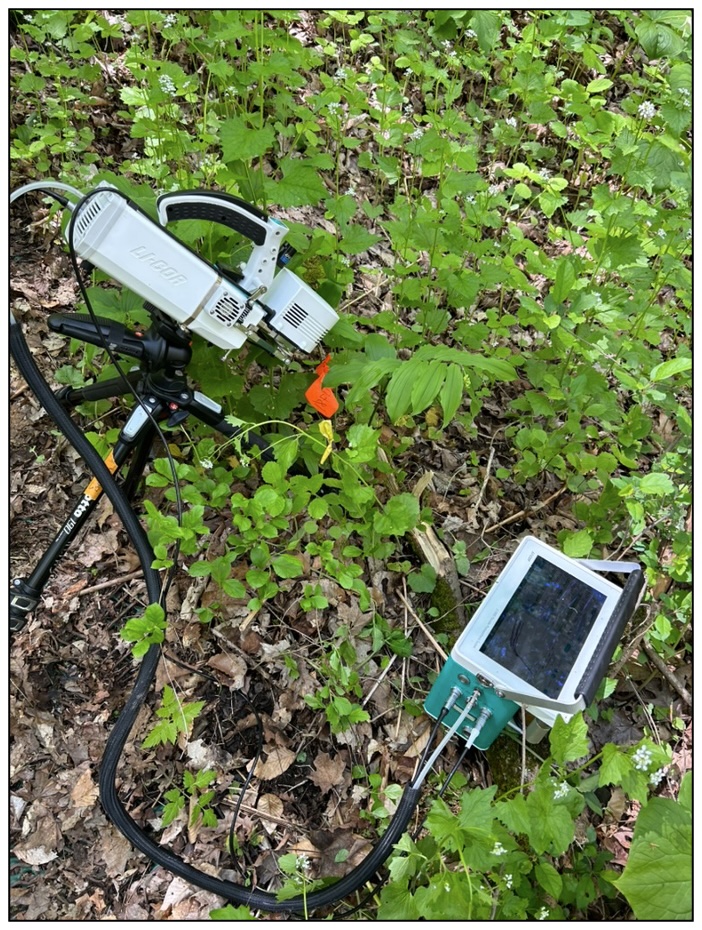
We conducted this work just outside of Pittsburgh, Pennsylvania, USA, in a long-term garlic mustard removal experiment that has been in operation since 2006. This experiment has already taught us a lot about the impacts of garlic mustard invasion on native plant and AM fungal communities. Previous studies conducted in this experiment have shown that garlic mustard alters AM fungal community composition by decreasing fungal biomass and root colonization rates, and that these patterns are associated with shifts in native plant community demographics. However, no one had yet dug into detailed physiological mechanisms that serve as the link between the AM fungal and the plant community responses to garlic mustard. Additionally, no one had yet examined how these physiological effects might change across the growing season.
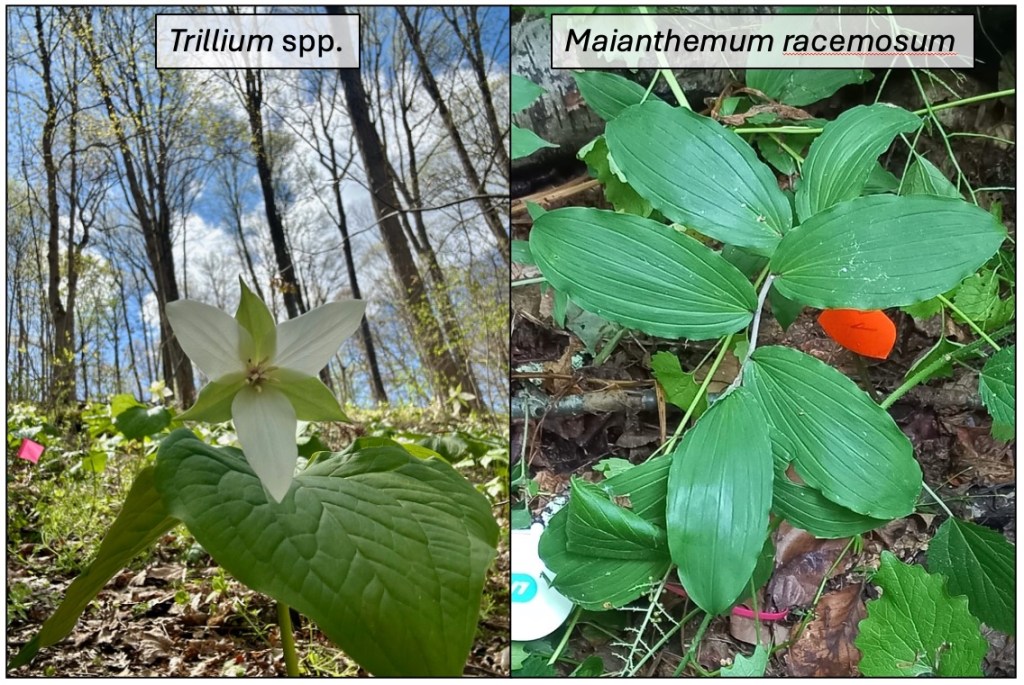
We collected CO2 response curves in two understory native species (Trillium spp. and Maianthemum racemosum) growing in this experiment at two time points – once before the tree canopy closed and once after the tree canopy closed. These response curves allow us to extract snapshot net photosynthesis and stomatal conductance rates while also estimating photosynthetic capacity. While these curves provide a useful viewpoint into mechanisms driving environmental perturbations, procuring these curves is tedious and time-consuming. It is not uncommon for a response curve to take 30 or 45 minutes to complete. In this study system, collecting these measurements was particularly challenging because plots were situated on steep slopes of slippery soils made up of sandstone and shale. With careful footwork, steady determination, and strong ankles, we collected measurements for 65 individuals (33 Trillium spp. and 32 M. racemosum individuals). This hard-earned effort often led to recurrent sweet treats after field work had concluded for the day. For those in the Pittsburgh area or fixing to visit at some point, do consider going to visit Tazza D’Oro or Commonplace Coffee for a phenomenal coffee and pastry experience (but we honestly didn’t find a coffee shop we didn’t enjoy in this city).
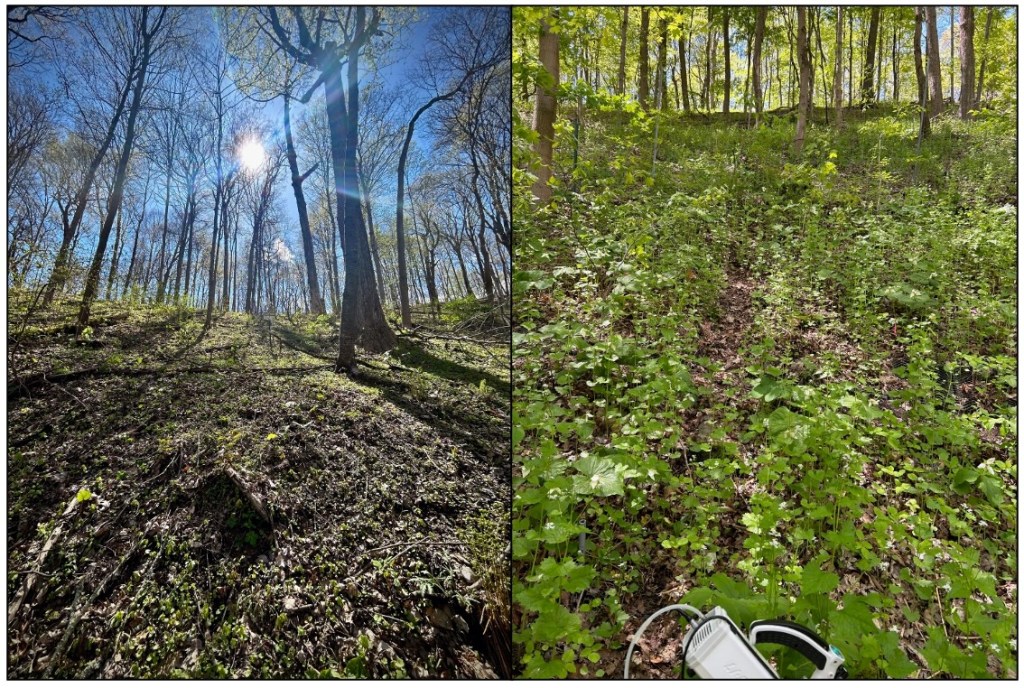
We were thrilled that the results supported our hypotheses. We were especially surprised by how the two species’ responses to garlic mustard were enhanced later in the growing season, even though the mechanisms explaining their response to garlic mustard differed. While we now have strong evidence that garlic mustard induces either nutrient or water stress in native plants, we still need to directly tie these physiological responses to the disruption of soil fungal communities and plant community demography. We’re actively working on these things now, and the early results look quite promising.
About the author
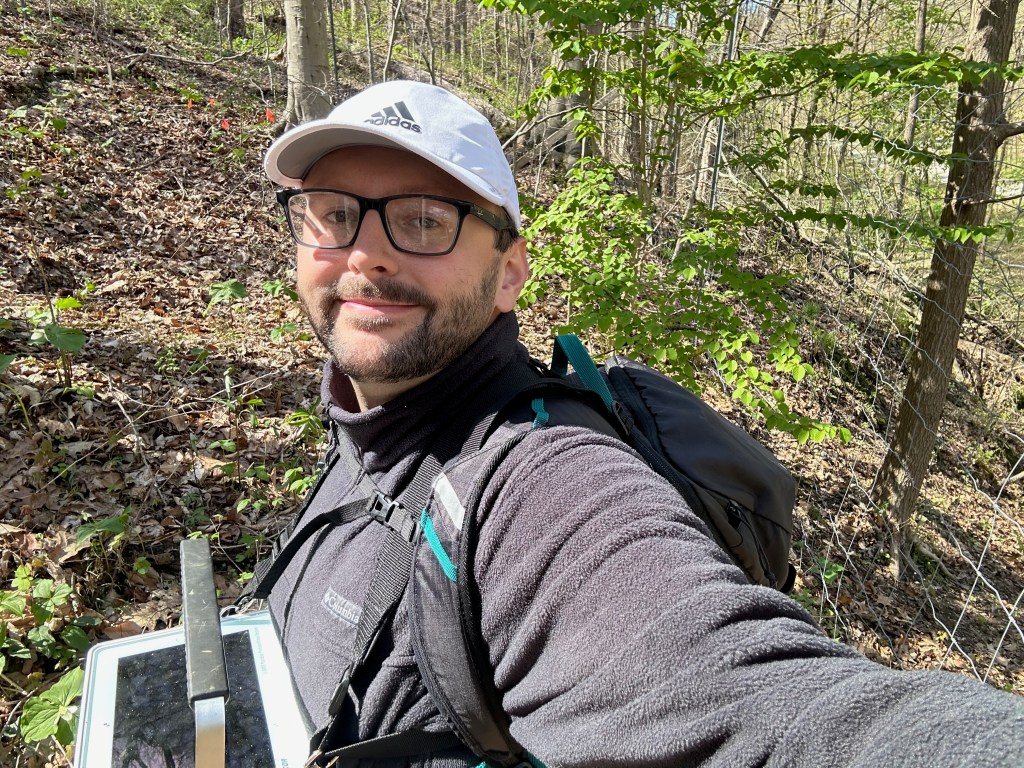
I started my journey in ecology as an undergraduate biology student at Widener University, a small liberal arts university just outside of Philadelphia, Pennsylvania. I joined a lab in my sophomore year with the primary goal of boosting my resume for physical therapy school. I had a fantastic research advisor who showed me how fun and intellectually rewarding a career in research could be. Long story short, I changed paths and earned my Ph.D. in Biology at Texas Tech University, where I now work as a postdoctoral research associate who studies plant ecophysiological responses to global change.
My background is mostly centered around understanding how nutrient availability and acquisition strategy modify plant responses to environmental change. This postdoctoral appointment has allowed me to branch out into invasion ecology – linking invasion-driven changes in native plant leaf-level physiology to changes in soil microbial communities and native plant community demographics. My work often blends manipulative experiments, environmental gradient studies, and global syntheses to identify and generalize mechanisms that drive plant physiological responses to global change.
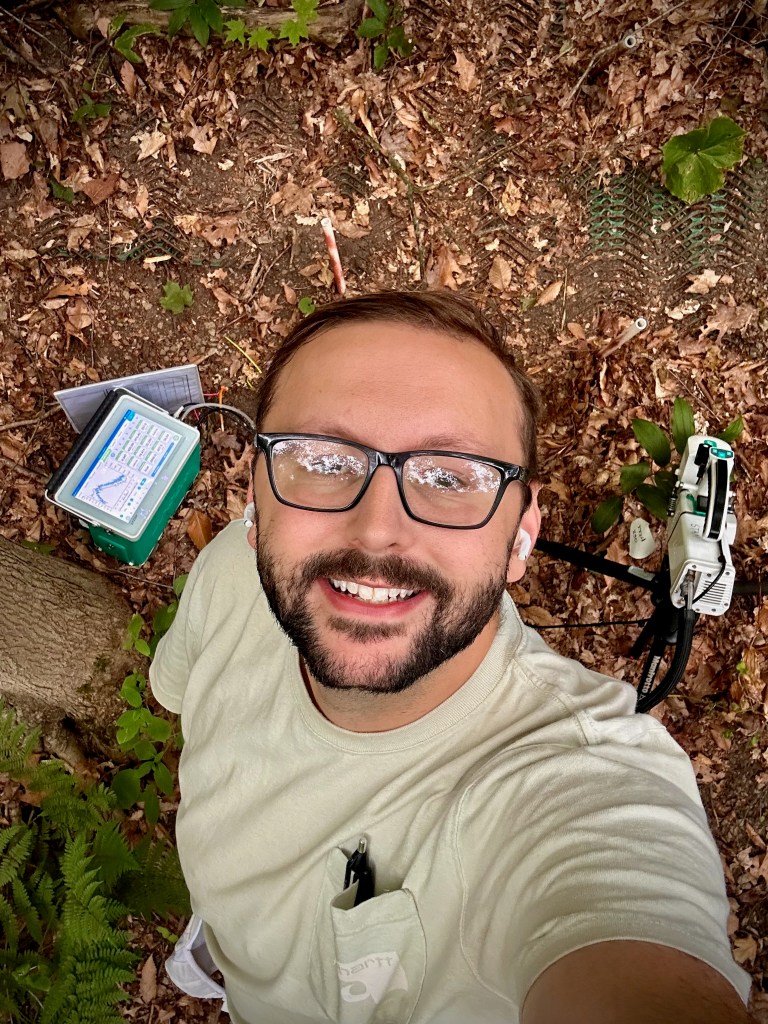
Outside of research, I enjoy curating the perfect cup of coffee, cooking for family and friends, reading, and hanging out with our dogs. I swam competitively growing up and through college, so I try to find what little pockets of time I can to stay active in the pool.
I’ve been relatively fortunate in my scientific career so far. However, it is hard to ignore the volatile and ever-changing funding landscape in science and, coupled with a limited number of tenure-track faculty positions available each cycle, it often seems like an uphill battle to progress your career. I am hitting the job market this fall and expect it to be tough.
If I could tell my younger self one thing, it would be to let myself live a little more. Travel more. Embrace the stage of life you’re in. I’ve found that constantly chasing the next goal/career stage/life achievement without pausing to enjoy the present causes you to miss out on some of life’s best moments.
